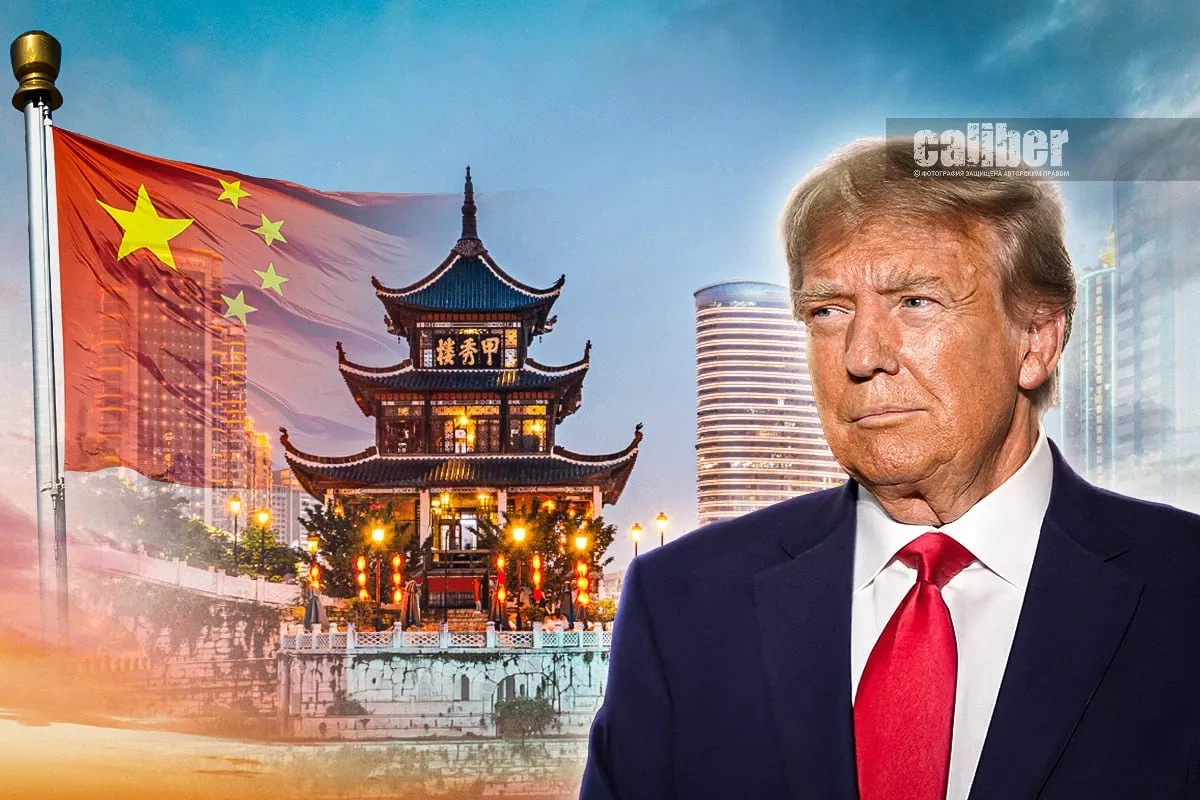
The state visit of US President Donald Trump to China, scheduled for May 13–15, is at the centre of intense attention from leading global media outlets. Initially, the White House chief had planned to visit Beijing at the end of March, but remained in Washington to focus on the war with Iran.
Overall, as international media report, the upcoming visit is considered critically important for the global economy and geopolitics. In particular, according to Politico, citing sources, China may offer the United States lucrative deals during the May 14–15 summit in exchange for concessions on American tariffs and other trade restrictions.
With the understanding that the meeting between Donald Trump and Xi Jinping in Beijing is far from being about friendship and instead revolves around tough bargaining, it is worth examining the objectives behind the White House chief’s visit to the Middle Kingdom.
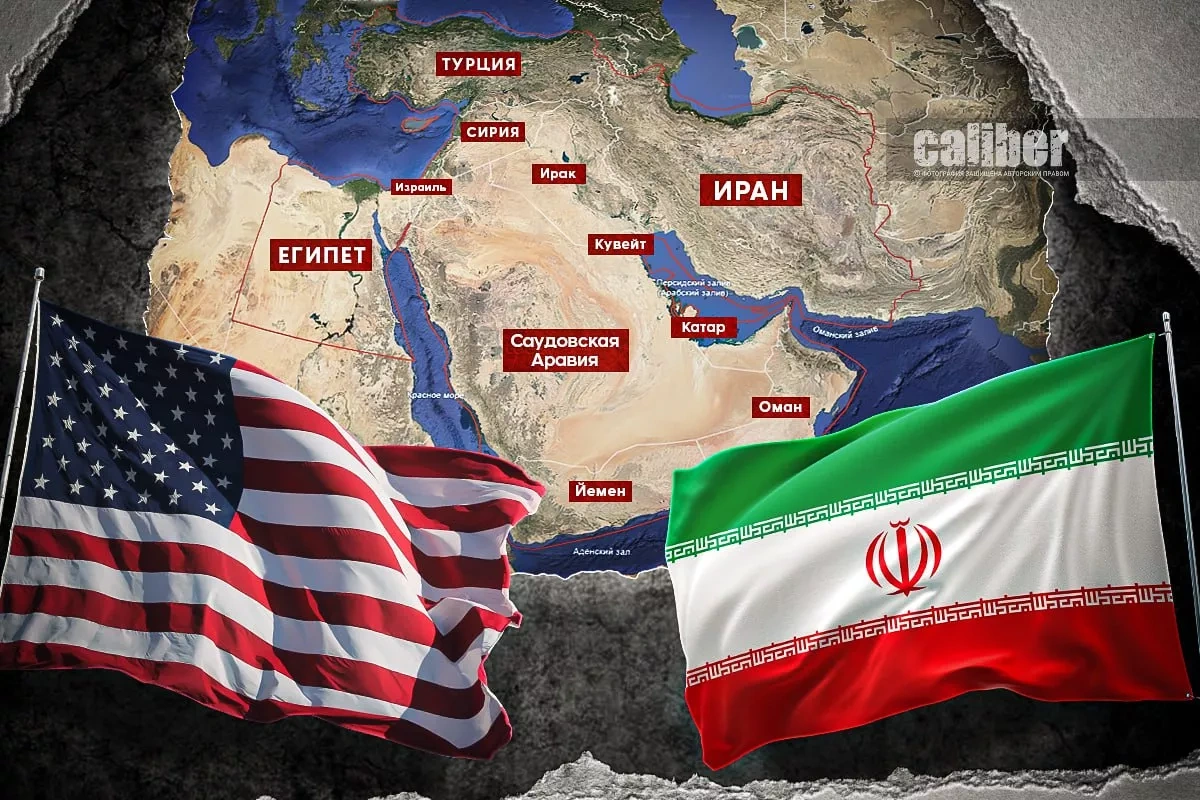
Given the current highly complex geopolitical realities, particularly in light of the war in the Middle East, one of the central topics in the talks between Donald Trump and Xi Jinping will be the influence of the Chinese factor on Tehran’s policies. This is because, for the United States — now at the epicentre of the Middle Eastern crisis — it is fundamentally important to secure economic concessions from the People’s Republic of China. This is only natural, as China is Iran’s main trading partner, accounting for 80–90% of Iranian oil exports.
As is well known, fluctuations in oil prices caused by the de facto blockade of the Strait of Hormuz continue to deal heavy blows both to the global economy and to the United States itself. For this reason, the American side has been actively urging Beijing to provide military and political support for reopening this critically important waterway.
In particular, US Treasury Secretary Scott Bessent publicly recommended that China join the international operation aimed at unblocking the strait, while President Donald Trump declared his intention to reopen Hormuz “permanently” and called on other countries, including China, to dispatch naval vessels to the area. Washington argues that such a position is justified by the fact that China receives up to 90% of its oil imports through this route and therefore should be directly interested in restoring navigation there.
For its part, the Chinese side, relying on its policy of “soft power”, continues to advocate exclusively diplomatic methods for resolving the issue, emphasising the need to restore freedom of navigation. Therefore, there is little doubt that the situation surrounding the Strait of Hormuz will be one of the key topics discussed during the planned negotiations.
Secondly, it cannot be ruled out that the United States, seeking to use China as a means of containing Iran, may propose that Beijing act as a mediator in the Middle Eastern conflict. This appears logical, given that the People’s Republic of China has already demonstrated successful experience in restoring relations between the Islamic Republic of Iran and Saudi Arabia.
Incidentally, back in March 2023, Washington’s reaction to China’s mediation efforts was publicly restrained and formally positive. However, US officials repeatedly sought to downplay the significance of the Chinese role, stressing that the agreement had been the result of years of negotiations in Iraq and Oman, while Beijing merely “finalised” the process.
It may be assumed that, at the time, Washington’s concerns were linked to China’s steadily growing influence, which signalled a decline in American dominance in the region. It is entirely possible that similar concerns persist today, since the United States is fundamentally opposed to any strengthening of Beijing’s hegemony in regional and global politics.
At the same time, under the current critical circumstances in the Middle East, China’s potential mediation mission appears to align with American interests, particularly within the framework of a scenario that could be described as “geopolitical bargaining in exchange for selective economic concessions”. In practical terms, such an arrangement could look as follows: Beijing exerts “soft” pressure on Tehran, while Washington correspondingly reduces tariff pressure on Chinese goods.
Thirdly, it cannot be ruled out that Donald Trump may propose that China use its influence to limit support for proxy forces, such as Hezbollah, which was established in 1982 with Iranian backing and has since become a powerful paramilitary force operating in Lebanon.
In this context, it is worth recalling that China’s Foreign Ministry already stated in 2024 the need to respect Lebanon’s sovereignty, a message that was also indirectly directed at the above-mentioned group. Given these circumstances, there is a possibility that the parties could reach a certain consensus on a number of issues during the negotiations, since both sides are interested in stabilising the situation in the Middle East — a region of vital geo-economic importance.
At the same time, China is unlikely to “play by American rules” on issues that contradict its policy of neutrality. In particular, Beijing is highly unlikely to join Washington’s sanctions against Tehran or, even more so, assume responsibility for regional security by acting as a “global policeman”. Most likely, China will continue urging all sides to exercise restraint while remaining active within the United Nations Security Council, where it may block harsh anti-Iranian resolutions. Such, broadly speaking, is the political dimension of the issue.
At the same time, China is likely to continue purchasing Iranian oil in circumvention of Western sanctions, thereby sustaining the economic viability of the Islamic Republic, while avoiding direct military supplies to the Iranian side. It cannot be ruled out that this issue will also be discussed during the negotiations in Beijing, especially considering that, in April of this year, US intelligence reportedly detected preparations by China to transfer new air defence systems to Iran. More specifically, there were reports suggesting that Tehran could receive spare parts and missile components.
China’s Foreign Ministry, for its part, denied the allegations, describing them as baseless rumours spread by the American press. Meanwhile, international experts believe that such actions by the Middle Kingdom could significantly alter the balance of power in the region.
Taken together, the above-mentioned factors suggest that expectations of a grand bargain emerging from Donald Trump’s visit to China are likely unrealistic. Most probably, the White House chief will return from Beijing with a set of partial agreements rather than any sweeping breakthrough.
On the other hand, the very fact that the leaders of the world’s two superpowers are meeting already signals a reduction in tensions between them — an outcome that suits both China and the United States under the current circumstances. Nevertheless, despite their overlapping interests, a strategic China–US alliance still appears, at least for now, to belong more to the realm of fantasy than political reality.