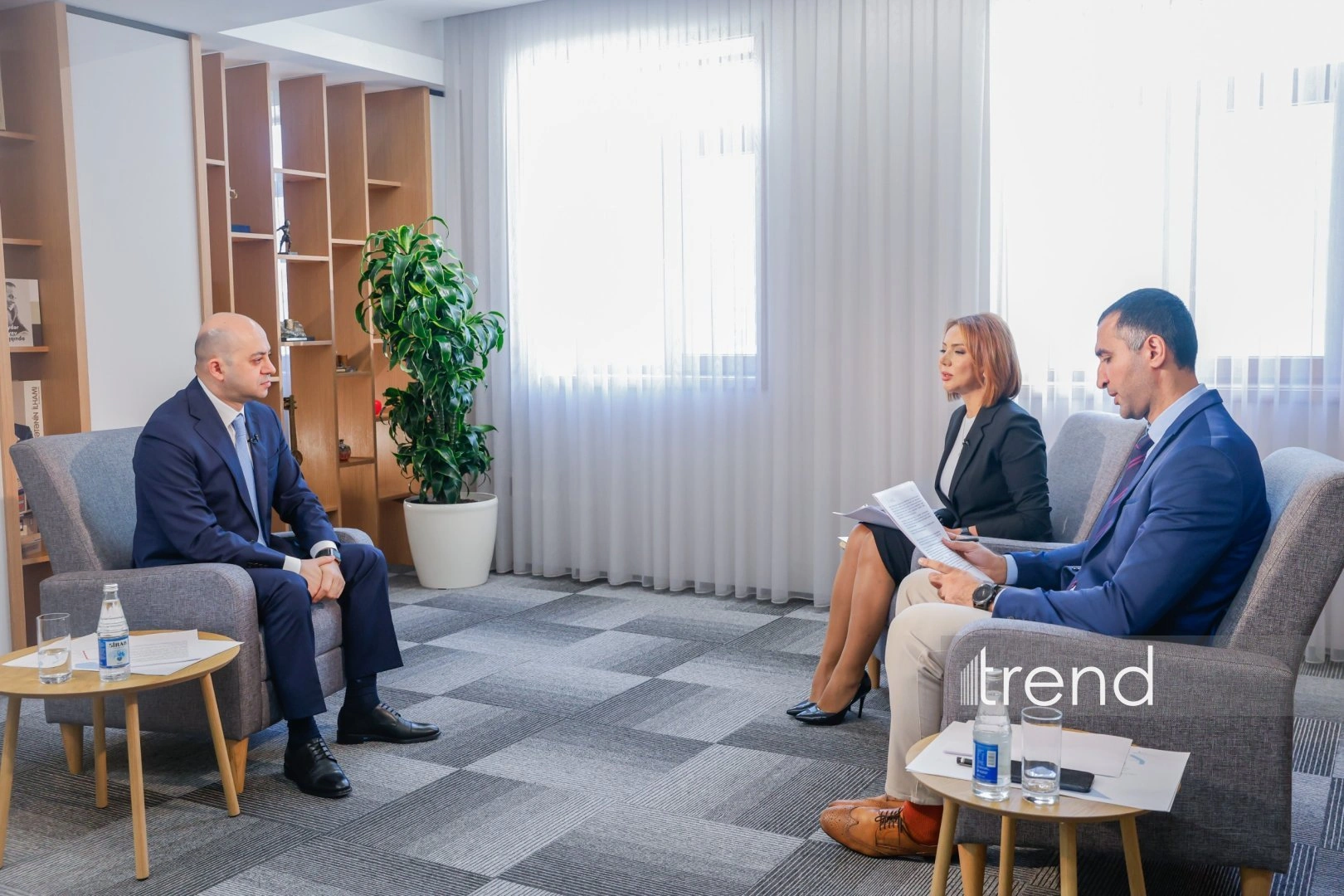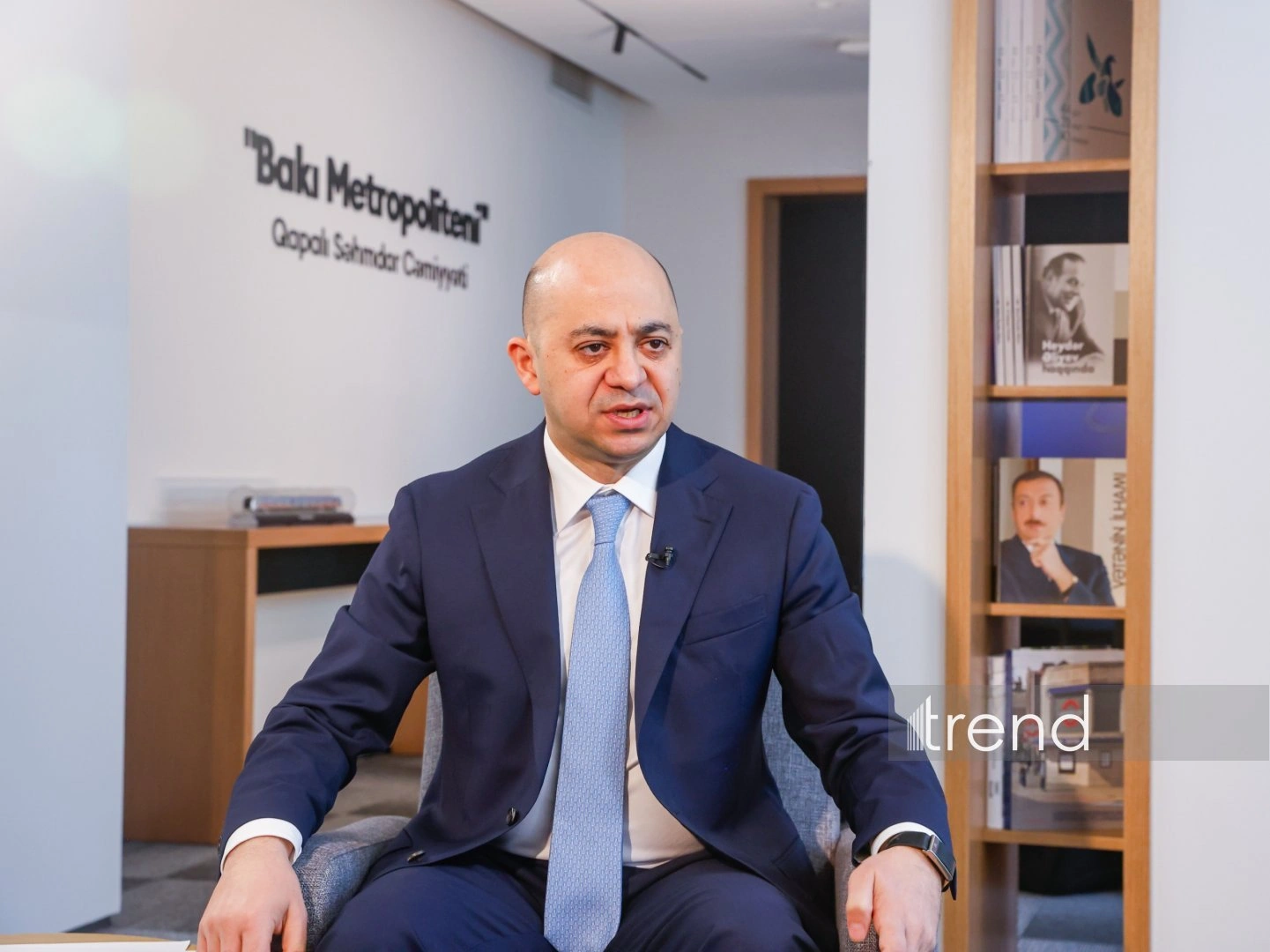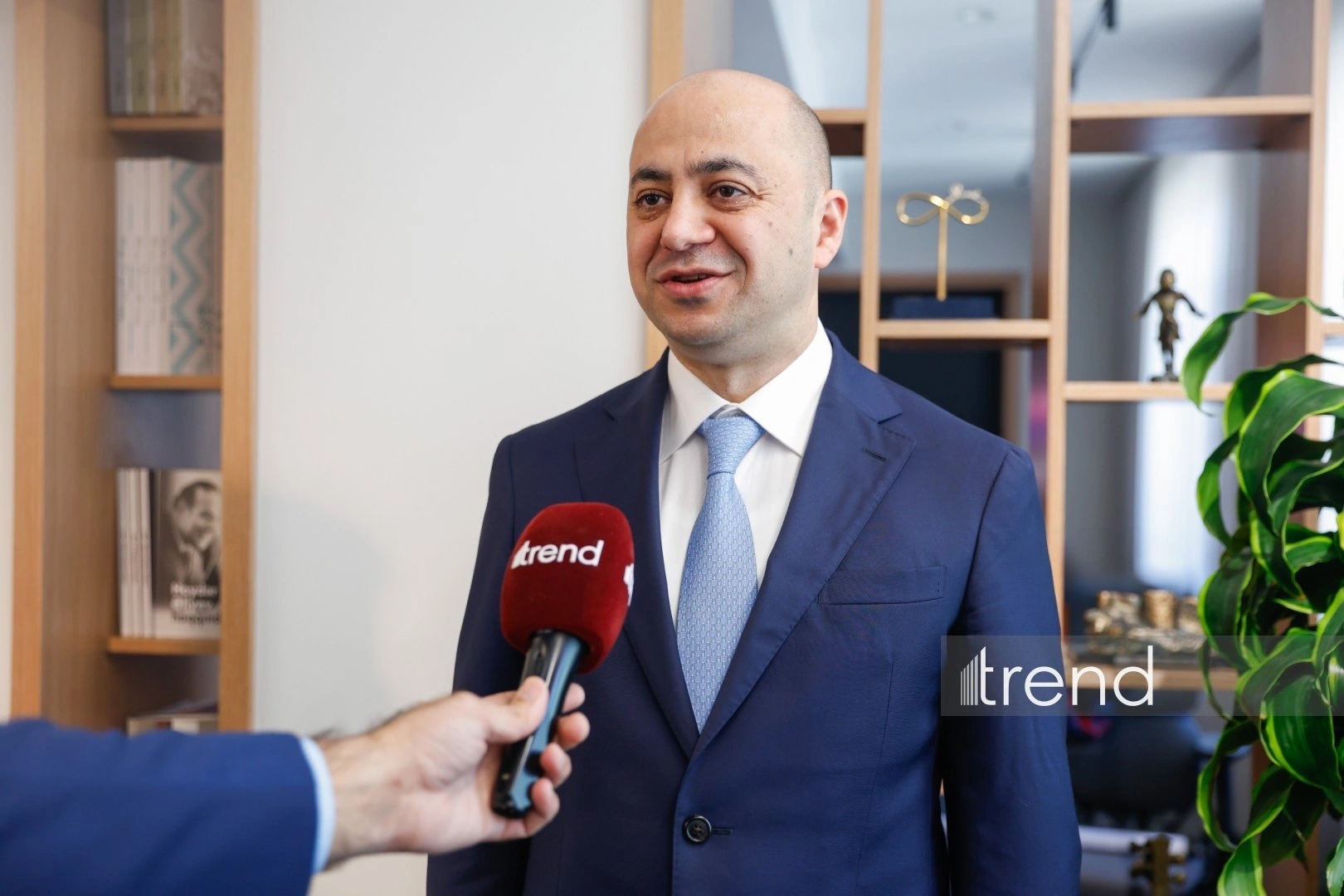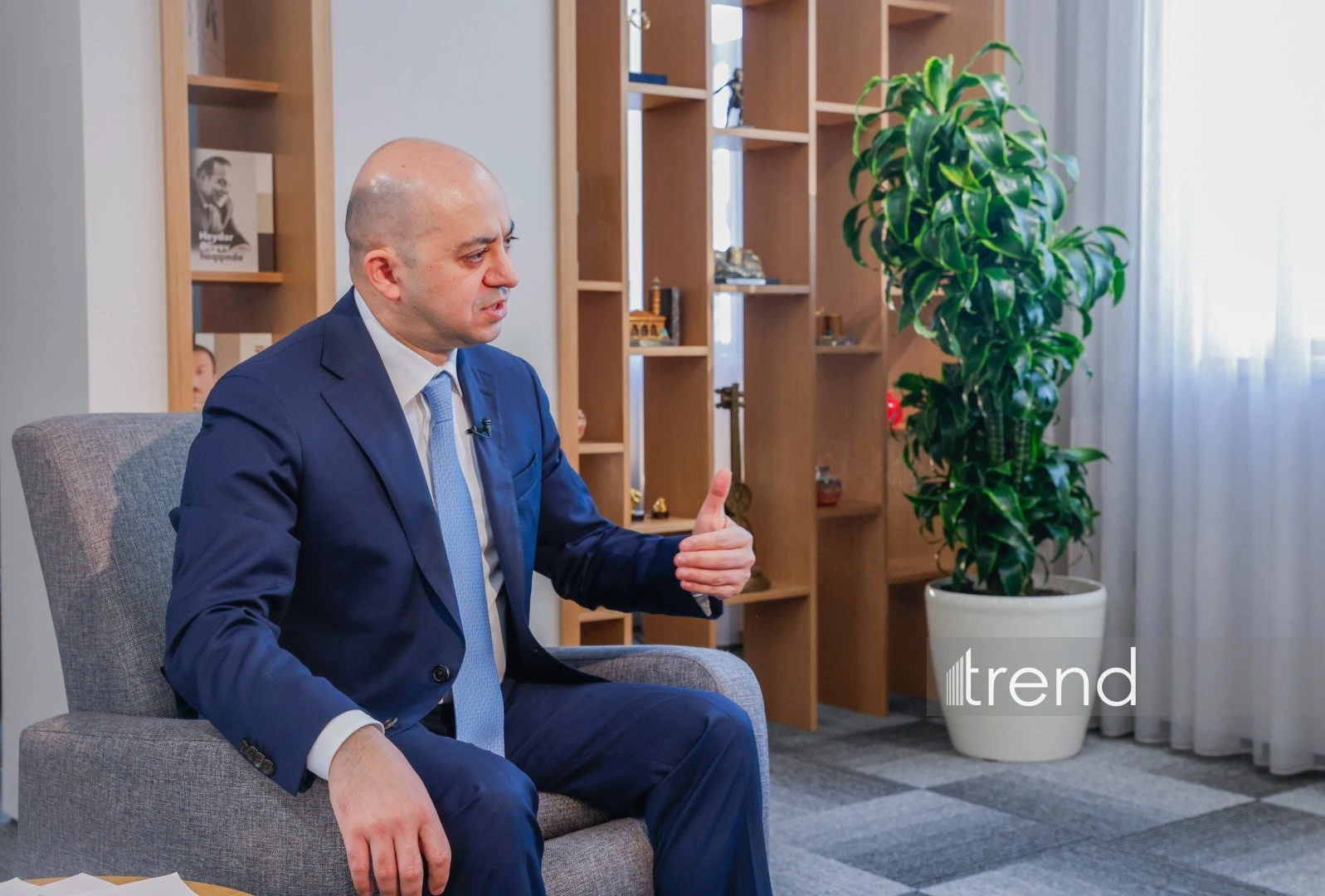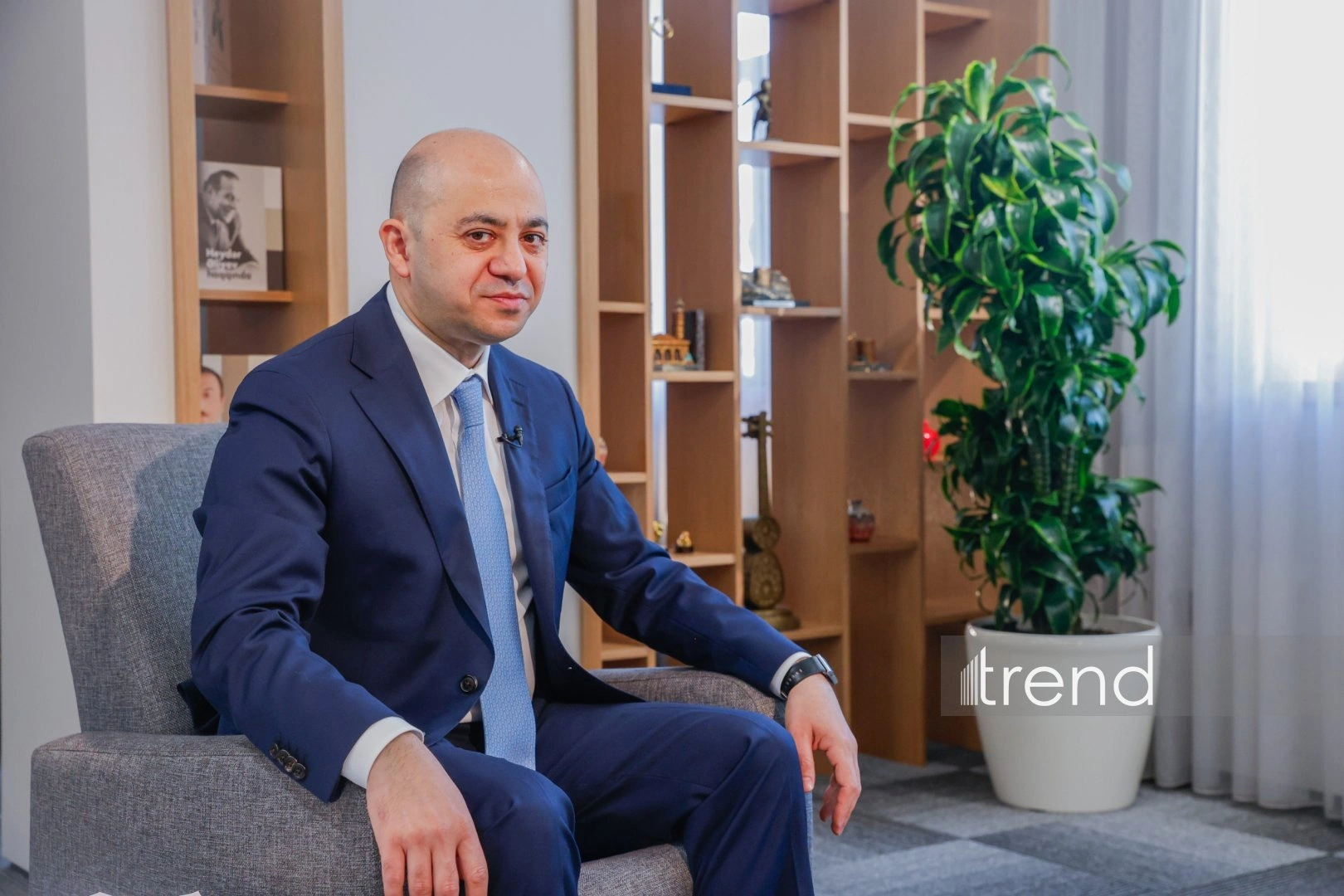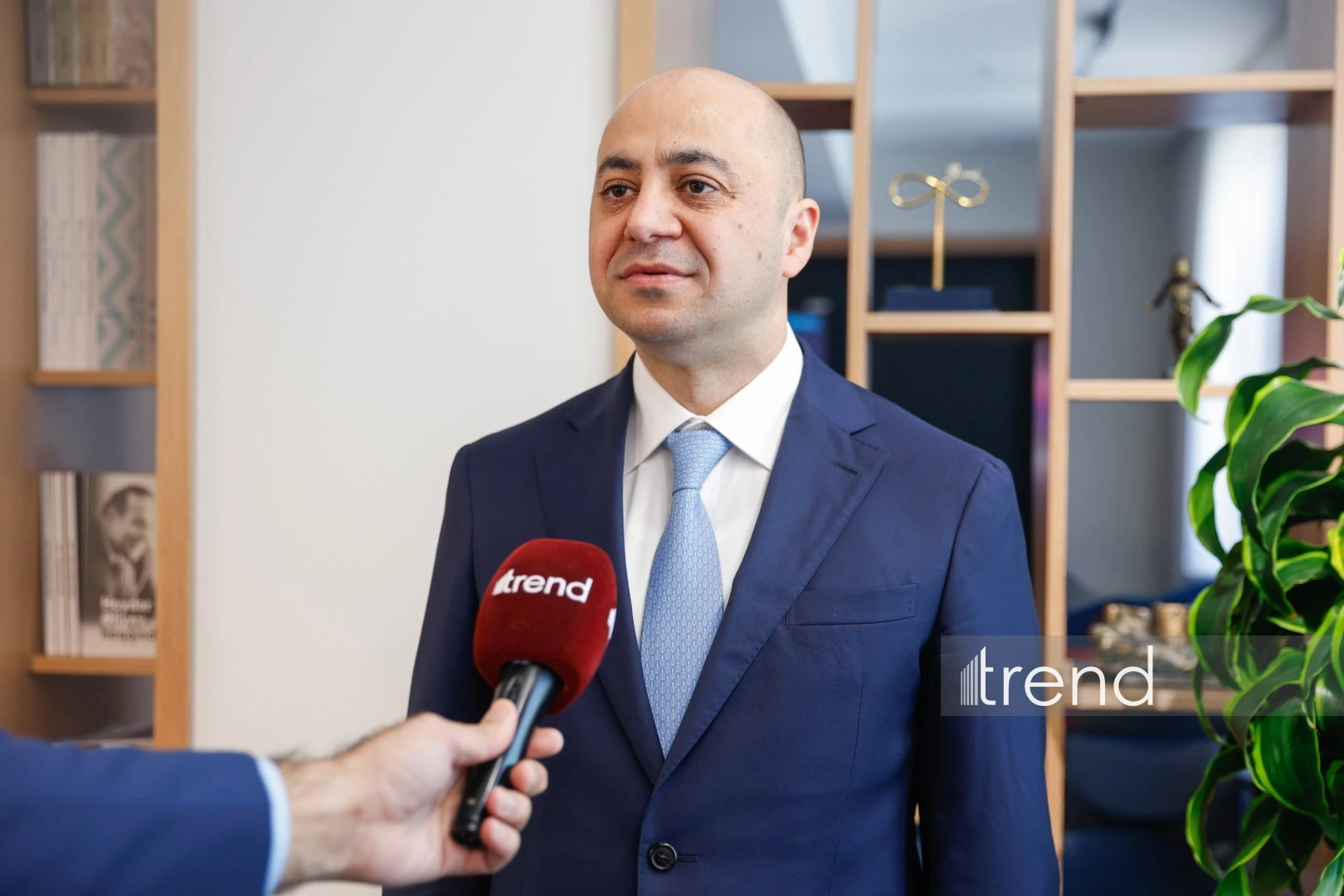
BAKU, Azerbaijan, May 12. Passengers will use a
unified transport network, Chairman of Baku Metro CJSC, Vusal
Aslanov, said in an interview with Trend News Agency and Azad Azerbaijan
Independent Television and Radio Company.
He noted that the reorganization of Baku Metro CJSC in the form
of the merger of BakuBus and Baku Taxi Service LLCs is the
beginning of a qualitatively new stage in the development of public
transport in the country, especially in the capital city.
According to him, today the world is discussing not individual
means of transport, but the general mobility of cities as a
whole.
"This mechanism, which has been applied in leading cities of the
world for more than 15 years, aims to provide passengers with more
accessible, more coordinated, more comfortable transport.
Passengers will no longer use the metro, bus, tram, and other
modes of transport separately, but as elements of a single
transport network that complements each other. The data obtained
from the modes of transport will be processed and analyzed in a
single center and will serve to make data-based decisions. This
practice has been applied for a long time in cities such as London,
Paris, Berlin, Hong Kong, and Singapore. This decision is also a
strategic step in that direction.
Our main goal is that metro, bus, and taxi services do not
duplicate each other, but rather complement each other. When a
passenger leaves the metro and moves to a bus or taxi stop, he
should feel the continuation of a single service chain. This will
further facilitate the implementation of both a single payment
system and single travel schedules in the future.
This decree covers the companies BakuBus and Baku Taxi. BakuBus
is a state-owned company that operates many routes in Baku, as well
as in the cities of Ganja and Khankendi. Baku Taxi consists of
special taxis that our passengers call London taxis. The decree
covers this area. Other routes, other bus services will continue
their independent activities.
Aslanov pointed out that passengers will be able to switch
between modes of transport more easily.
"In the cities I cited as an example, there are weekly, hourly,
and monthly packages. This is one of the first steps towards
launching these payment solutions. In the future, we'll be able to
move towards the goal of implementing complex payments," he
explained.
Tram coming back
Aslanov said that the tram has been one of the topics that has
been discussed for a long time.
"The 2025–2030 state program includes special provisions on the
tram. Currently, a conceptual plan for the tram is being prepared.
Initially, it is planned to lay a tram from the Mehdiabad area to
the center of Baku, discussing several alternative options. It is
planned to have a tram in Baku in the future, in 5 different
directions. The initial perspective is to lay a tram in densely
populated areas that do not have access to mass public transport
solutions. The goal is for the tram not to replace the metro and
buses, but rather to be a means of connecting them," he
clarified.
Baku metro preparing for major changes
According to Aslanov, the 2025–2030 State Program has defined
specific tasks for all agencies related to road and transport
infrastructure.
"We can mainly summarize the tasks related to the Baku Metro
into three groups: ensuring the stable operation of the existing
infrastructure, its modernization, and expanding the metro
network.
According to this, current operational work is focused on
reducing passenger density. Currently, if we compare the Baku Metro
with 213 metros operating in the world, it is in the top 10 in
terms of density. Considering that it is impossible to expand the
infrastructure in a short time, work is being done to partially
eliminate passenger density by reducing the intervals.
Previously, 30 pairs of trains operated in the direction of Hazi
Aslanov - 28 May, the busiest route of the Baku Metro. For a long
time, this was considered the maximum limit of the technical
capabilities of the Baku metro. From 2025, we began to gradually
reduce the intervals: first to 32 pairs of trains, then to 34, and
now to 36 pairs of trains during the evening peak hours. This is
based on infrastructure improvements and the digitalization of the
timetable. This is, in fact, the new upper limit of our existing
infrastructure.
Besides, we reduced the intervals on the Purple line from the
Khojasan station to the Avtovağzal station from 16 minutes to 8
minutes, and from the Avtovağzal to the 8 Noyabr station from 10
minutes to 5 minutes. We reduced the 12-minute interval to 7
minutes on the Jafar Jabbarli - Khatai section of the Green Line.
In the Hazi Aslanov - Ahmadli direction, our 10-minute interval was
reduced to 5 minutes during peak hours.
How to reduce the interval between trains?
The chairman of Baku Metro CJSC noted that the separation of the
Red and Green lines is one of the main conditions for further
reducing the interval.
"We have already approached the maximum that our current
infrastructure allows. We need to do fundamental work to reduce the
interval even further.
Firstly, the signaling system that controls the trains must be
updated - a tender will be held this year, and the implementation
of this project will allow us to shorten the distance between
trains and reduce the interval.
Secondly, there is the issue of line separation. Our Red and
Green lines merge at the 28 May station, and in the 28 May - Hazi
Aslanov area, an interval of 100–110 seconds is required to ensure
technical safety. Considering that these trains come alternately
from the Icherisheher and Darnagul directions, our interval in the
opposite direction will automatically be less than 200 seconds. If
we don't separate these lines, we won't be able to reduce this
interval to less than this.
Each line must operate independently and have an independent
depot. The construction of the Darnagul depot is ongoing. After the
separation of the lines, the 28 May station will be used only by
passengers using trains going in the Icherisheher direction.
Passengers going in the Darnagul direction will use the Jafar
Jabbarli station. We'll even put into operation the construction of
an additional passenger tunnel connecting Jafar Jabbarli and 28 May
in the summer months. This will be the first completed work under
the separation of lines project.
One of the elements affecting the reduction of intervals is the
'return' issue. Construction work has begun behind the Icherisheher
station - after the work is completed there, the train will enter
the station, move to the cul-de-sac behind the station, and the
next train to the Sahil station will arrive much faster. This
project also has an interesting aspect in terms of urban planning:
a car park will be built on the underground infrastructure, and
greenery and a park area will be prepared above ground," he
said.
10 new metro stations are being built in
Baku
Aslanov stressed that the construction of 10 new metro stations
in the capital is planned within the framework of the state
program.
"The station, whose code name is B4, is expected to be
commissioned by the end of this year, as the main engineering work
has been completed there and the interior design process has begun.
Tenders will be announced for the other 9 stations this year, and
construction work will start next year.
The development on the Green Line will mainly cover the eastern
part of the city, and by 2030, the gap from Khatai station to Hazi
Aslanov station will be filled with the construction of four new
stations — Y-14, Y-15, Y-16, and Y-17. These stations will be
located at strategic points such as Agh Sheher (Baku White City), 8
Noyabr avenue, and Nargila circle. On the Purple Line, it is
planned to build 6 new stations — B-4 to B-8 — in order to create
diversification in the city center. Stations B-5 (Nizami), B6A
(Sahil), and B7 (Khatai) will intersect with the existing lines and
perform the function of junctions and transitions.
The lack of metro construction in areas such as Binagadi,
Yasamal, and Khirdalan is explained by technical reasons. If lines
are built directly from the outskirts of the city without branching
out to the central part of the city with alternative connections,
the existing central infrastructure may be overloaded and
paralyzed. According to simulations conducted on the 'digital twin'
of Baku, first of all, the goal is to fully integrate the Purple
line into the city center. After this line is fully extended to the
center, it will be possible to effectively meet the flow of
passengers coming from Khirdalan, Masazir, Sumgayit, and
Baku-Shamakhi," he said.
What will change at the 28 May station?
The chairman of Baku Metro CJSC announced that the operation of
the 28 May station won't be completely stopped within the framework
of the line separation project.
"This means that the Green line will operate between the
Darnagul and Nizami stations within the framework of the line
separation project. 28 May will continue its operation. However,
passengers using the Green line will not be able to get to 28 May
directly, because construction work will be carried out in the
tunnels between 28 May and Nizami. Nizami will actually act as the
last station of the Green line.
Certain restrictions are inevitable when separating lines in
urban transport. We have analyzed the departure and arrival data of
our passengers with artificial intelligence-based digital
solutions. We have an analysis of line changes from 20 Yanvar,
Ganjlik, and all other stations. We have shared this information
with the Azerbaijan Land Transport Agency, and alternative bus
lines will be determined.
About 1,600 passengers are transported on one train arriving at
the Nizami station at 3-minute intervals. To transfer them to 28
May, 20 buses would be needed every 3 minutes, which is both a
technically difficult issue and can create serious congestion in
the city center. Therefore, it is planned to regulate this issue
with alternative bus routes. Detailed information about this will
be provided to the public in cooperation with the Azerbaijan Land
Transport Agency," he said.
According to him, the Hazi Aslanov-2 station is envisaged in the
conceptual plan under the conditional name Y-17.
"Hazi Aslanov-2 is a station designated in our conceptual plan
under the conditional name Y-17. That station will not operate
independently - it must be connected to the Khatai station, and for
this it's necessary to build tunnels with the next three stations.
The new tender package that has been prepared also includes that
station. Active construction work will begin next year, and it will
be commissioned by 2030," he said.
In the complex geological territory of the city, how
will the B-5 station be built?
Aslanov emphasized that the area where the B-5 station will be
located has been seriously analyzed from a geological point of
view.
The B-5 station is the next station on the Purple line. The
Purple line has great potential - the infrastructure has been built
for the movement of 7-car trains, and it is directed from the
northern part, where the most passengers enter the city, to the
center. This area was chosen to ensure interline interchange around
Nizami.
As for the construction issue, yes, the geology of the area is
complex, the caisson method used in the 1960s-1970s no longer
exists, and I would even say that it is now prohibited. Modern
construction techniques have developed greatly. The area where the
station will be located has been seriously analyzed - the station
and the tunnel will be located below the groundwater level. In
world practice, tunnels are passing under rivers and straits; this
is not difficult with modern construction technology," he
noted.
Energy sustainability in the Baku metro
Aslanov said that the evacuation of passengers during the
incident at the Narimanov-Ulduz apartment building was carried out
promptly.
"First of all, I would like to express my regret for the
incident and apologize to our passengers once again. There were no
injuries among passengers or employees during the incident, and the
evacuation was carried out promptly. I would like to express my
gratitude to the employees of the Ministry of Internal Affairs, the
Ministry of Emergency Situations, the employees of the
Administration of the Regional Medical Divisions who provided
primary medical care during the evacuation, and to the media
representatives who played a special role in promptly communicating
information about the Baku metro to the public and preventing
confusion.
As for the essence of the incident: a short circuit occurred at
the substation supplying power to the Narimanov-Ulduz point, smoke
was observed in the tunnel in that apartment. To ensure the safety
of passengers, we first eliminated the consequences of the incident
and then restored traffic.
In general, the Baku Metro's electrical network is built
sustainably - any area is powered by two different alternative
energy sources. Ensuring the energy sustainability of the Baku
Metro is included as a special item in the State Program. In 2025,
we invited foreign experts and conducted a full technical audit of
the energy system and developed an action plan. Since 2025, work
has been underway to reconstruct two existing substations, build
one new substation, renew the cable network, and reconstruct the
SCADA system.
Baku Metro has 21 diesel generators, which undergo regular
technical inspections. The function of these generators is to
automatically start up in the event of an interruption in the
external energy supply. We conduct emergency drills twice a
year.
However, in this case, there was no problem with the external
power grid — a short circuit occurred at the metro's own
substation. The main role of diesel generators is focused on
replacing external power supplies, so their use in this case is
impossible."
Aslanov announced that the metro's digital strategy for 2025 was
approved, and its implementation began.
"We developed and approved the Baku Metro's digital strategy for
2025 and began work on that strategy. It covers two main areas.
Firstly, operational efficiency: automating the maintenance of
trains, escalators, and infrastructure, and taking preventive
measures.
Secondly, passenger-oriented solutions: in pilot mode,
artificial intelligence is being developed on the software for
managing passenger density. We have launched an artificial
intelligence-based video surveillance system at the initial stage -
the camera system determines the general background of which
station passengers enter and exit from.
Some innovations are already noticeable: not the time of the
departing train, but the time of the next train is displayed. In
the near future, the mobile application will show which carriages
on the arriving train are relatively empty. Sending empty trains to
stations is already being implemented — empty trains are sent to
the Koroghlu, 28 May, Ganjlik, and Elmler Akademiyasi stations at
different times of the day so that passengers gathered there can
board comfortably and congestion is eliminated.
Escalator control is also no longer carried out based on
graphics, but on real-time data. The movement schedule has been
fully digitalized — precisely digital solutions underlie our
increase in the train interval from 30 to 36," he explained.
Passengers will be able to see empty cars in the metro
in advance
Aslanov said that the new mobile application will allow
passengers to use the metro more conveniently and efficiently.
"Passengers will be able to pay via QR code in the mobile
application. They will be able to see in advance which station to
get to which station faster, at what time of day the crowd is less
or more, and which train car is relatively empty."
By the way, we recently held a hackathon - more than 1,200
applications were received, and 78 people were involved. For the
first time, we held this event on the platform of the Icherisheher
station, which is closed to passengers, creating visual conditions
on real infrastructure. The questions and wishes of a large number
of participants were related to the mobile application. Work is
ongoing to continue the projects and recruit some of the
participants who participated in that hackathon.
In addition, the 'AYNA MaaS' software currently displays train
intervals of the Baku Metro. Through this software, passengers can
use micromobility, bus, and metro services together to get from
point A to point B. This information is also integrated into Google
Maps. Our modern generation carriages have already been equipped
with equipment that measures the percentage of occupancy; we are
currently continuing the test mode. As the train approaches the
platform, the passenger will know in advance which carriage of the
five-car train is relatively empty. "The main problem at the moment
is the uneven distribution of passengers on the platform - as a
result, some train carriages are densely packed, while others
remain half-empty. We plan to reflect this information both on the
electronic scoreboard and in the mobile application. This solution
will be ready in our fourth-generation trains; for third-generation
carriages, additional equipment will need to be installed," he
said.
Aslanov noted that the distance-based payment system should be
implemented not only in the metro, but throughout the entire public
transport network.
"It's more appropriate to discuss this issue in general for
public transport in Baku, because there is bus transport, and in
the near future there will be a tram. First of all, the
infrastructure needs to be ready for distance-based payment. At our
old stations — the Green and Red line stations — there are no
turnstiles at the exit, and their placement could create
congestion.
Therefore, we will begin work on establishing a payment system
in the form of certain packages from a single center for public
transport in Baku as a whole, not just the metro," he said.
The chairman of Baku Metro CJSC said that the metro will operate
in an enhanced mode during the WUF13 event.
"During mass events, it's also possible to extend the working
hours, and the public will be informed about this in advance.
Regarding the payment system: previously, only cards issued by
Azerbaijani banks, Apple Pay, and Google Pay were accepted.
Currently, bank cards issued by foreign banks will also be accepted
as a means of payment. This will create an opportunity for tourists
and guests visiting our city to use public transport in a more
accessible way," he noted.
Aslanov said that new artificial intelligence-based systems in
the metro serve to increase passenger safety.
"All installed systems serve the comfort and safety of our
passengers. The new artificial intelligence-based video
surveillance system also analyzes passenger behavior. For example,
if a passenger falls on an escalator, the system immediately
detects this and transmits information to the dispatch center. The
facts of falling onto the station track are also transmitted in
real time to both the duty officer and the central system. We have
a high current of 825 volts on the platforms, so it is important to
take immediate action in such cases, and these steps will help
maximize passenger safety," he said.
The chairman of Baku Metro CJSC noted that all necessary
infrastructure is taken into account for the comfortable movement
of people with disabilities at new metro stations.
"All the infrastructure for the comfortable movement of people
with disabilities — elevators, ramps, etc. — is provided at all the
new stations that we plan to build. However, unfortunately, this
infrastructure is not available at our existing stations, which
were commissioned 20, 30, and 40 years ago.
In this area, the 'Accessible Metro' project has been launched
in the Baku Metro. When informed in advance by calling the short
number 964, our employees meet those people at the entrance to the
station and accompany them to the train with special technical
means. At the exit station, they also remove them from the train
and direct them to the exit of the station.
Renewal of wagon fleet
According to him, the renewal of the wagon fleet is currently
one of the main priorities of the institution.
"We currently have a fleet of 381 wagons. 180 of them are new
generation wagons equipped with a modern air conditioning system,
which allows for passage between wagons. The remaining wagons are
of the third generation; we are gradually decommissioning them as
their service life expires. By the end of this year, 36 wagons will
expire. The rest, based on their technical specifications, will be
phased out of service by 2042. More than 35–40 percent of our wagon
fleet now consists of modern wagons. The service life of old wagons
is 31 years; wagons that have expired are being phased out and
replaced with new ones. According to our forecasts, within the next
10–12 years, the wagon fleet will be completely equipped with
modern wagons.
The state program envisages the purchase of 299 new wagons -
this is to meet both the demand created by new stations and the
additional need arising from the reduction in intervals. We have
held meetings with several manufacturers; technical specifications
are being prepared. When selecting, we take into account not only
the price of the train, but also the repair costs during its
operation. After all the proposals are collected, a decision will
be made, and work will be continued with the selected supplier.
The old generation wagons do not have a cooling system; they
only have forced ventilation. All of our new generation wagons are
equipped with a modern climate control system. This system operates
automatically and adjusts itself according to the number of
passengers and the temperature in the carriage. Our technical staff
regularly monitors the correctness of these systems. We ask our
passengers to be understanding of this issue for the sake of their
own health and the comfort of others."
Aslanov called on passengers to behave more orderly on the
platforms.
"You have covered almost all the topics. I have one request: our
passengers should pay attention to the even distribution on the
platform. This causes inconvenience to other passengers. I myself
often ride the metro - both because it is the fastest means of
transport and to directly observe passenger habits. At the 28 May
station, especially in the part near the arch, the first carriage
remains empty, even when it is crowded. Our employees are
constantly providing information; I ask you to follow those
instructions. I also have one request: when the door opens, give
way to those who are getting off first, then board. Moving in both
directions at the same time not only creates difficulties, but
every second of extended stopping time affects the entire schedule.
Making these small changes by our passengers is an issue that
directly affects the quality of our service," he concluded.