BAKU, Azerbaijan, May 12. The International
Road Transport Union (IRU) outlined specific measures needed to
improve the speed, predictability, and investment attractiveness of
the Middle Corridor during a round table in Brussels, Trend reports via IRU.
Among the key findings the IRU noted that the corridor
efficiency is determined not only by infrastructure but also by the
level of coordination and simplification of procedures; reducing
time at border crossings is a key factor in increasing
competitiveness; instruments such as the TIR system, eTIR, and eCMR
can ensure rapid efficiency gains; and coordinated political action
is necessary to transform strategic initiatives into
investment-attractive projects.
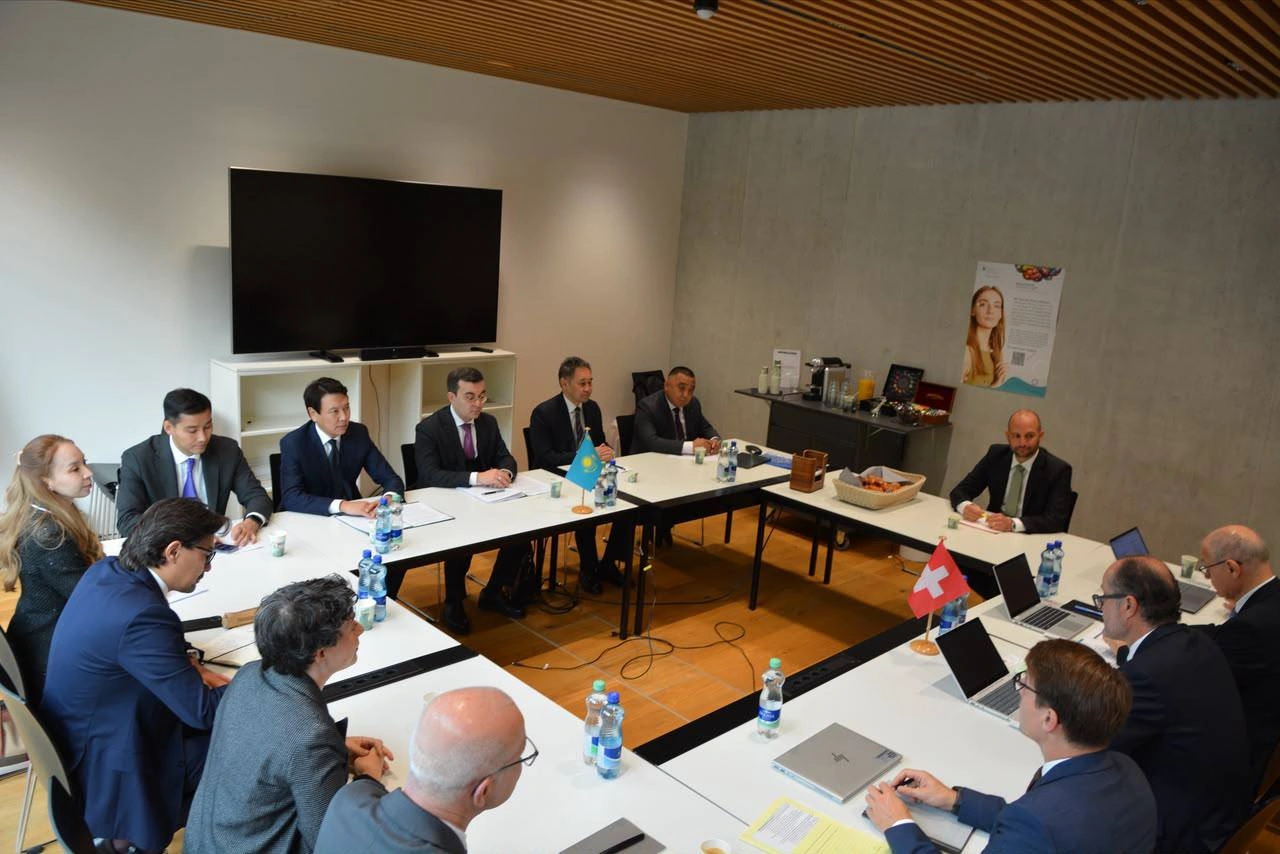
The Brussels discussions on “Sustainable Middle Corridor – from
strategic coordination to bankable implementation”, organized by
the Kazakhstan–EU Gateway in collaboration with FERRMED and the
European Institute of Asian Studies, brought together government,
financial and industry representatives.
The participants examined concrete initiatives to strengthen the
competitiveness and resilience of the Middle Corridor as a growing
Europe–Asia trade route. The corridor is increasingly seen as a
driver of regional trade, connectivity and economic development
across the countries along the route.
The Middle Corridor, also known as the Trans-Caspian route, is a
multimodal transport corridor linking China to Europe via Central
Asia, the Caspian Sea and the South Caucasus. Combining rail and
maritime segments, it connects key logistics hubs across
Kazakhstan, the Caspian ports, Azerbaijan and Georgia before
reaching the European Union. Its growing relevance reflects efforts
to diversify trade routes and strengthen supply chain resilience
between Europe and Asia," IRU explained.
IRU EU Goods Transport Associate Director Marc Billiet stressed
that connectivity along the route goes beyond infrastructure. The
performance of the corridor depends equally on facilitation,
predictability and cooperation across countries, particularly given
its multimodal nature and multiple border crossings.
"Billiet discussed infrastructure and operational challenges for
sustainable and green logistics, including bottlenecks at border
crossings and modal transfer points. He also presented IRU’s work
in support of the corridor’s development through the deployment of
facilitation tools, including TIR Green Lanes and digital solutions
that reduce delays and improve the efficiency of transport
operations.
IRU further pointed to its engagement in piloting eCMR under the
EU’s Global Gateway strategy, supporting the digitalization of
transport documents and processes along the corridor.
Combining political commitment with the full deployment of
facilitation and incentive tools can significantly reduce time lost
at borders and strengthen the competitiveness of the Middle
Corridor," IRU said.
IRU emphasized that discussions in Brussels confirmed broad
alignment among policymakers, financial institutions and industry
stakeholders on the strategic importance of the Middle
Corridor.
"While challenges remain, participants underlined that ongoing
investments, regulatory improvements and digital integration
efforts are strengthening the corridor’s competitiveness and
reliability.
If sustained and coordinated effectively, these efforts can help
transform the Middle Corridor into a core pillar of Eurasian
connectivity, offering a more resilient, efficient and competitive
trade route between Europe and Asia.
The Middle Corridor is a transport and trade route that passes
through a number of countries in the region and connects Asia with
Europe. It serves as an alternative to the traditional Northern and
Southern Corridors.
The route begins in China and runs through the countries of
Central Asia. It then crosses the Caspian Sea, Azerbaijan, Georgia,
and Türkiye, before reaching Europe. The Middle Corridor is a land
route that bypasses longer sea routes, connecting the eastern
regions of Asia, including China, with Europe.
Stay up-to-date with more news on Trend News
Agency's WhatsApp
channel