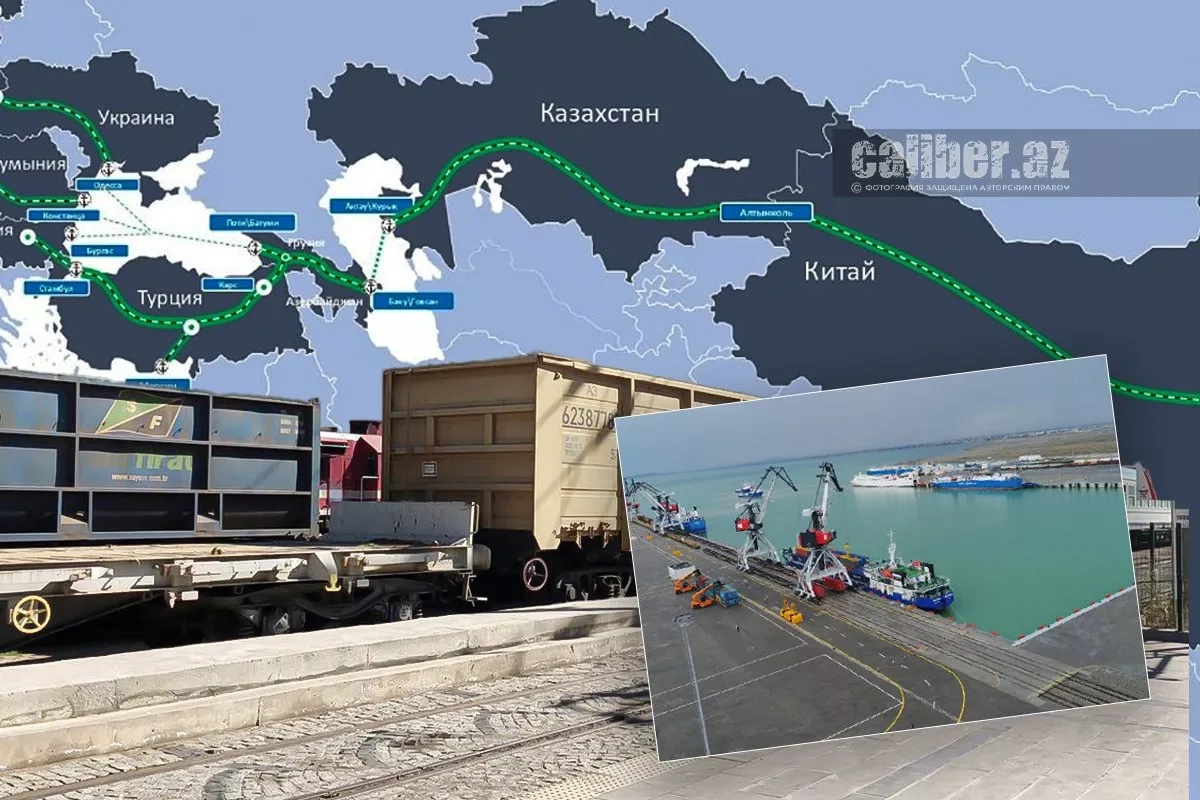
As a key transport hub of the Middle Corridor, Azerbaijan has been steadily strengthening its logistics links with China, the countries of Central Asia (CA), Türkiye, and European states. A major trend has been cooperation with the Old Continent in the joint development of the Europe–Caucasus–Asia international transport route (TRACECA), which today has evolved into integration projects with the Trans-European Transport Network (TEN-T).
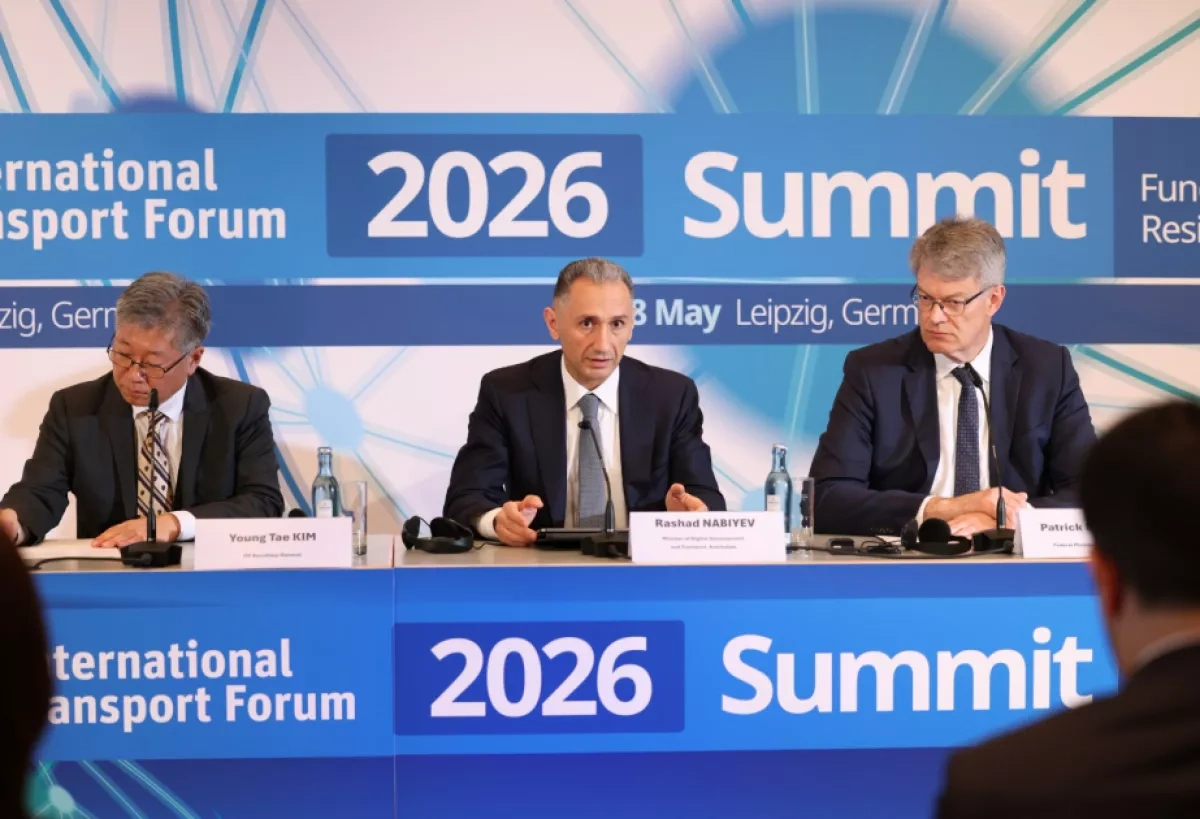
The fifth year of the war in Ukraine and the ongoing conflict in the Persian Gulf have only increased the importance of Azerbaijan’s transport potential for the European Union. Baku’s efforts to expand connectivity, along with issues of financing and technical modernisation of the Middle Corridor, are being discussed on May 6–8 in Leipzig at the “International Transport Forum” summit.
Azerbaijan is a key participant in the TRACECA corridor, launched nearly three decades ago and originally aimed at the transit of hydrocarbons, fuel, and petroleum products to EU countries. Cargo transshipment along this route has experienced periods of growth and decline, yet it has never been completely interrupted.
The country’s partnership with the European Commission has also intensified within the framework of the Trans-Caspian International Transport Route (TITR), established in 2018–2019, as well as the Lapis Lazuli Corridor. In addition, together with Bucharest, Tbilisi, and Ashgabat, Azerbaijan is involved in the development of the promising Black Sea–Caspian Sea transport route.
All of these projects have acquired particular significance for Brussels following the onset of the geopolitical crisis surrounding Ukraine. The sanctions confrontation between the collective West and Russia, and the de facto suspension of cargo transit via the Northern Corridor, have acted as a catalyst that has fundamentally reshaped Eurasia’s transit and logistics map.
The situation has been further aggravated by the ongoing, now three-month-long conflict between the United States and Iran, the closure of the Strait of Hormuz, as well as intermittent threats to navigation in the Red Sea — the Bab-el-Mandeb Strait and the Suez Canal region. All of this further increases the importance of combined land-and-sea Trans-Caspian routes, which are recognised as the shortest, fastest, and safest corridors for transporting goods from China to Europe, and in the reverse direction from the EU and Türkiye to Central Asian countries and onwards to China.
In this context, Azerbaijan’s position in this transport vector is essentially without alternative, just as is the case with the country’s regional role in ensuring Europe’s energy security. And despite the periodically emerging provocations of certain aligned members of the European Parliament, which recently adopted yet another anti-Azerbaijani resolution and acted as a trigger for the scaling back of inter-parliamentary ties, European countries are lining up to secure Azerbaijani gas supplies and are accelerating cooperation with Baku in the transport sector.
In short, real economics and transport geography almost always prevail over questionable political adventurism.
In this regard, Azerbaijan’s participation in the annual International Transport Forum (ITF) Summit in Leipzig is highly indicative. In recent years, the event has brought together over 1,200 delegates — ministers, financiers, heads of international organisations, business representatives, and experts from around eighty countries worldwide.
Today, the ITF is the only global intergovernmental organisation dedicated to transport policy, and Azerbaijan has been a full member of this structure since 1998. Moreover, by unanimous decision of ITF member states, the presidency of the Summit for 2025–2026 was transferred to the country last year.
This year, the Summit is taking place from May 6 to 8 with the participation of 69 ministers from member states and is dedicated to the theme “Funding Resilient Transport.” The forum is addressing issues related to ensuring the resilience of transport systems amid climate change, urbanisation, technological transformations, and geopolitical crises.
“We participated in the opening press conference and opening plenary session within the framework of the summit of the International Transport Forum held in Leipzig, Germany, under the presidency of Azerbaijan. We provided information about the work carried out on the priority directions identified during our country's presidency period. We noted that the main attention is directed toward strengthening the resilience of transport systems,” Azerbaijan’s Minister of Digital Development and Transport, Rashad Nabiyev, wrote on his X account.
The minister also expressed gratitude to the ITF, which is marking its 20th anniversary this year, for its cooperation and the high level of organisation of the event.
Within the framework of the theme “Funding Resilient Transport”, forum participants are discussing the critical situation surrounding global transport infrastructure, which is facing a range of geopolitical and technical challenges. ITF delegates are examining investment strategies needed to strengthen long-term connectivity and ensure the efficiency and reliability of transport systems.
This is not a simple issue, as it requires the mobilisation of substantial funds for the construction of alternative transport routes and the modernisation of existing ones. At the same time, developing countries lack the financial capacity to invest in reserve infrastructure, while developed states, amid growing geopolitical fragmentation, are often reluctant to engage in financing large-scale infrastructure projects in distant regions.
Nevertheless, ITF participants are seeking compromise in this regard, and in particular, Middle Corridor projects — which form the backbone of modern Eurasian logistics — are seen as optimal for the European Commission’s (EC) strategic objectives aimed at expanding transport connectivity across the Old Continent.
Demand for these transport networks is expected to remain high, as evidenced by growing European interest in initiatives being implemented in the South Caucasus. It should be recalled that Azerbaijan has been cooperating for several years with the European Investment Bank (EIB), which recently completed an advisory project aimed at improving the efficiency and safety of Azerbaijan Railways (ADY) infrastructure.
These initiatives are being implemented through the EIB advisory programme JASPERS, within the framework of grant-based technical assistance designed to enhance transport connectivity. Particular attention has been paid to improving safety at railway crossings along the key 503-km Baku–Boyuk Kasik line, which connects the capital and the Baku Port with Georgia’s railway network, providing access to the Black Sea.
In turn, in January of this year, Azerbaijan and the European Union discussed the inclusion of the Zangezur Corridor in the Trans-European Transport Network (TEN-T). Among the issues considered were the development of transport infrastructure in the Nakhchivan Autonomous Republic (NAR) and the initiation of preparations for a feasibility study (FS) in this regard.
This is not surprising, as with the implementation of the “Trump Route for International Peace and Prosperity” (TRIPP) project in Armenia, as well as the connection of NAR’s railway infrastructure with Türkiye via the under-construction Kars–Iğdır–Aralık–Dilucu line, which is 224 km long, the total freight handling capacity of the future Zangezur Corridor railway lines is expected to reach 15 million tonnes.
European countries are deeply interested in leveraging this potential, and as early as 2019 the European Commission announced its participation in transport projects in Azerbaijan totalling €1.1 billion under the “Indicative TEN-T Investment Action Plan”, prepared jointly by the EU and the World Bank.
In subsequent years, the European Union also announced $10 billion in funding for the development of port and railway infrastructure along the Middle Corridor across the wider Caspian region, as well as support for the introduction of digital solutions to ensure seamless cargo transit, and the expansion of container and ferry fleets.
In the long-term perspective, the European Commission envisages expanding cooperation with Eastern European and Asian TRACECA member states within the framework of the Trans-European Transport Network, including the creation of a South-Eastern axis aimed at increasing multimodal transport and ensuring the convergence of the TEN-T network with the infrastructural potential of the TITR.