ASTANA, Kazakhstan, May 8. The International
Atomic Energy Agency (IAEA) and the Agency of Kazakhstan for Atomic
Energy discussed expanding cooperation in the nuclear sector,
Trend reports via
IAEA.
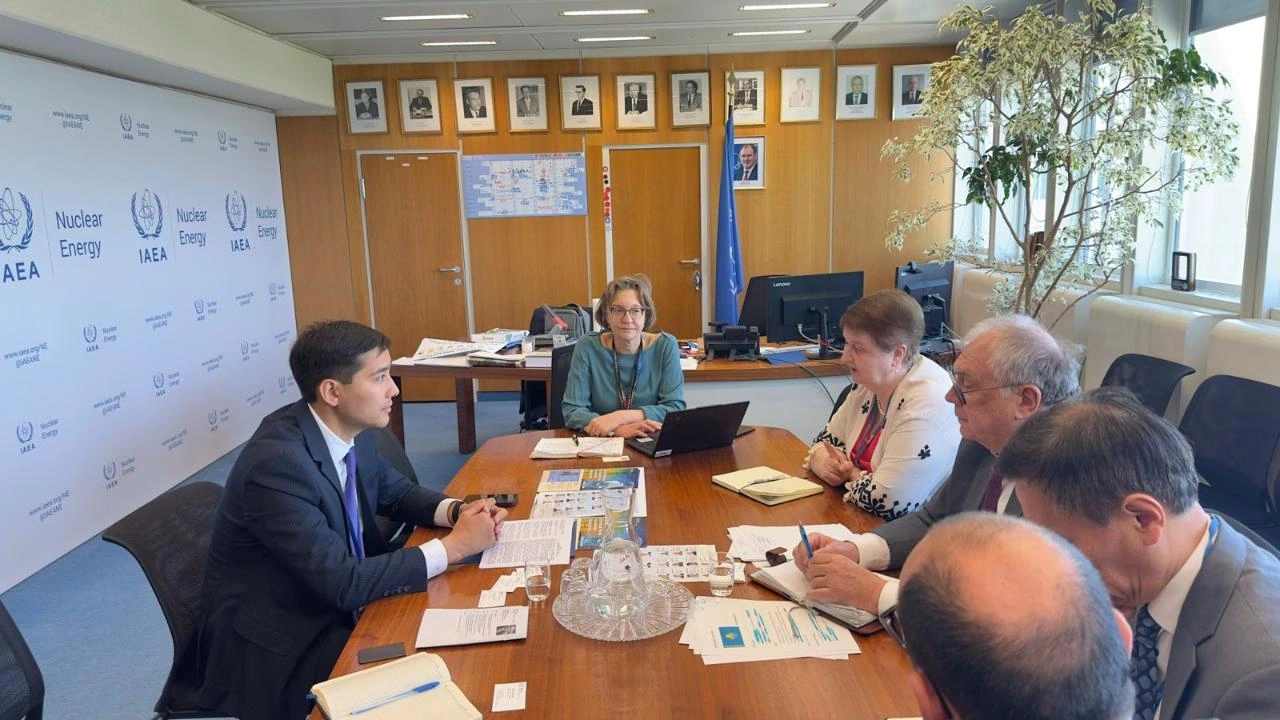
The Kazakh delegation, headed by Deputy Chairman of the Agency
Gumar Sergazin, visited the IAEA headquarters from May 4 through 8
and held meetings with the agency’s deputy directors general and
heads of relevant departments.
The sides discussed cooperation in nuclear energy development,
nuclear medicine, technical cooperation, and nuclear and radiation
safety.
During talks with IAEA Deputy Director General and Head of the
Department of Nuclear Sciences and Applications Najat Mokhtar, the
parties reviewed the development of nuclear medicine in Kazakhstan,
the use of radiation technologies in food security, and cooperation
under the IAEA’s “Rays of Hope” and “Atoms4Food” initiatives.
Special attention was also paid to cooperation with the National
Academy of Sciences of Kazakhstan on the introduction of nuclear
and radiation technologies to strengthen food security,
agricultural sustainability, and scientific research.
The delegation and IAEA representatives also discussed training
specialists in nuclear medicine, radiology, radiation oncology, and
medical physics, as well as improving quality assurance systems in
radiation therapy and nuclear medicine in line with IAEA
recommendations.
At a meeting with IAEA Deputy Director General and Head of the
Department of Nuclear Energy, Mikhail Chudakov, the sides discussed
the development of Kazakhstan’s nuclear energy infrastructure and
updated the joint work plan for 2026–2027 to support the
construction of a nuclear power plant in Kazakhstan. They also
reviewed joint measures related to the environmental rehabilitation
of nuclear and radiation-hazardous facilities in the Caspian
region.
In addition, talks with IAEA Deputy Director General and Head of
the Department of Nuclear Safety and Security Karine Herviou
focused on nuclear physical security, radiation protection
training, and the development of Kazakhstan’s regulatory framework
and infrastructure in nuclear and radiation safety.
The agreements and initiatives discussed during the visit are
expected to be included in a cooperation roadmap between Kazakhstan
and the IAEA.