BAKU, Azerbaijan, May 7. The 4th High-Level
International Conference on Water Resources will be held in
Dushanbe from May 25–28, 2026, serving as a pivotal stage in the
implementation of the UN initiative “Water for Sustainable
Development” (2018–2028) and as a preparatory platform for the
forthcoming UN Water Forum in Abu Dhabi.
The conference represents a continuation of the Dushanbe Water
Process, which encompasses the conferences held in 2018, 2022, and
2024, and functions as an interim forum bridging the current UN
Water Decade with future global decision-making in this domain.
Against this background, Azerbaijan’s involvement in the
international water agenda has been steadily expanding. Ambassador
Extraordinary and Plenipotentiary of the Republic of Tajikistan to
Azerbaijan, Ilhom Abdurakhmon, emphasized that the cooperation
between the two countries has consistently been strong and mutually
reinforcing.
“For Tajikistan, it is a distinct honor that Azerbaijan has
consistently been among the countries supporting Tajikistan’s water
initiatives. This sustained collaboration has established
Tajikistan as a recognized leader of the ‘Water Process,’ convening
the international community to address critical challenges such as
water scarcity, glacier melt, and environmental sustainability,” he
stated.
The ambassador further underscored that the International Water
Decade represents a continuation of a series of Tajikistan-led
initiatives, including the International Year of Freshwater (2003),
the Water for Life Decade (2005–2015), and the International Year
of Water Cooperation (2013). He also highlighted the significance
of the UN Water Conference 2023 in New York, which culminated in
the Water Action Agenda encompassing over 840 voluntary
commitments.
Moreover, the water agenda holds not only international
political significance for Tajikistan but also a central economic
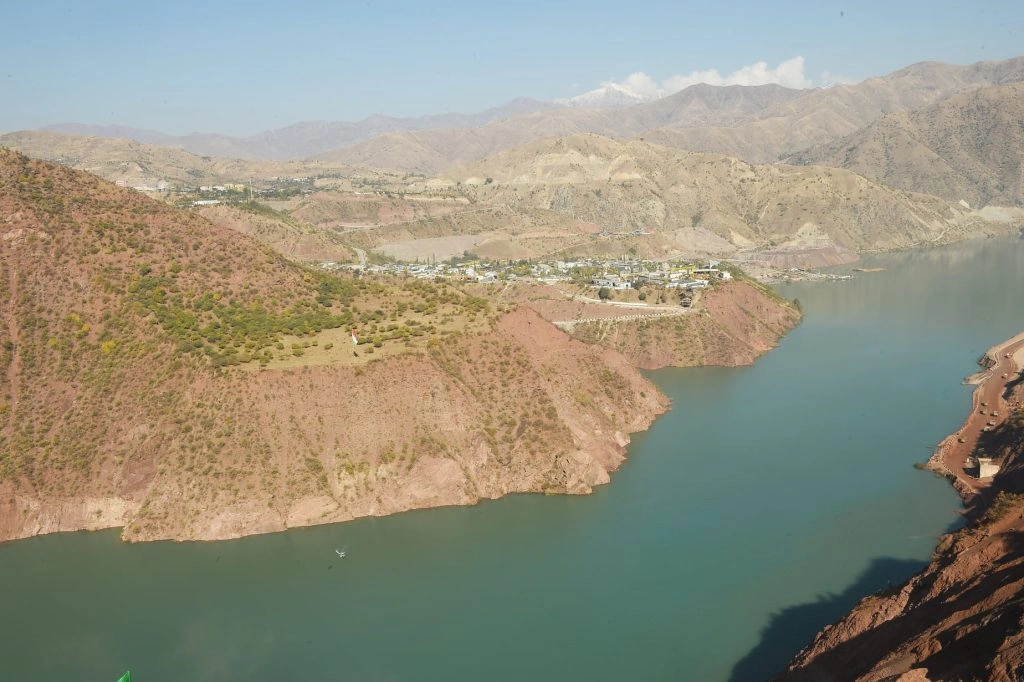
role. The country possesses abundant water resources, primarily
comprising glaciers, rivers, lakes, reservoirs, and groundwater.
The average annual river runoff is approximately 64 km³, with more
than 55% of the surface runoff in the Aral Sea basin originating
within Tajikistan.
In the energy sector, water constitutes a system-forming
resource: over 95% of the country’s electricity is generated by
hydropower plants. Consequently, hydropower serves not only as the
backbone of the national energy balance but also as a crucial
factor in ensuring economic stability and enhancing potential
export capacity.
Agriculture is another key sector where water resources play a
decisive role. Irrigated agriculture accounts for around 80% of
agricultural production and serves as the main source of employment
for a significant part of the rural population, creating a direct
link between water policy and food security.
Thus, for Tajikistan, water policy serves both as an instrument
of international diplomacy and as a fundamental driver of domestic
economic development, employment, and energy sustainability.
As part of the 2026 conference, participation is expected from
representatives of 46 countries and 39 international organizations
and financial institutions, as well as more than 2,500 delegates,
including senior government officials and representatives of the UN
system.
The program includes plenary sessions, nine thematic sessions,
panel discussions, and an international exhibition. Special
attention will be given to regional coordination through an ESCAP
meeting, which will allow countries of Asia and the Pacific to
align their positions ahead of the 2026 UN Water Conference in Abu
Dhabi.
The agenda also includes the adoption of three outcome
documents: a final declaration, a co-chairs’ summary, and the
document about contribution of the Dushanbe Process to the
preparation for the UN forum in Abu Dhabi. The latter is seen as a
bridging document between regional and global agendas.
In a broader context, the development of the water agenda
reflects the growing importance of transboundary resource
management and the increasing role of climate factors in
international politics. The emerging cooperation architecture
remains multi-layered, combining political, technical, and
financial mechanisms.
Possible future scenarios include further institutionalization
of international water commitments, expansion of practical
cooperation between countries and regions, the continued
predominantly voluntary nature of initiatives, as well as potential
fragmentation of approaches depending on national and regional
priorities.
Thus, the Dushanbe Conference 2026 serves as an interim platform
linking the current stage of international water cooperation with
future global decisions at the UN level.