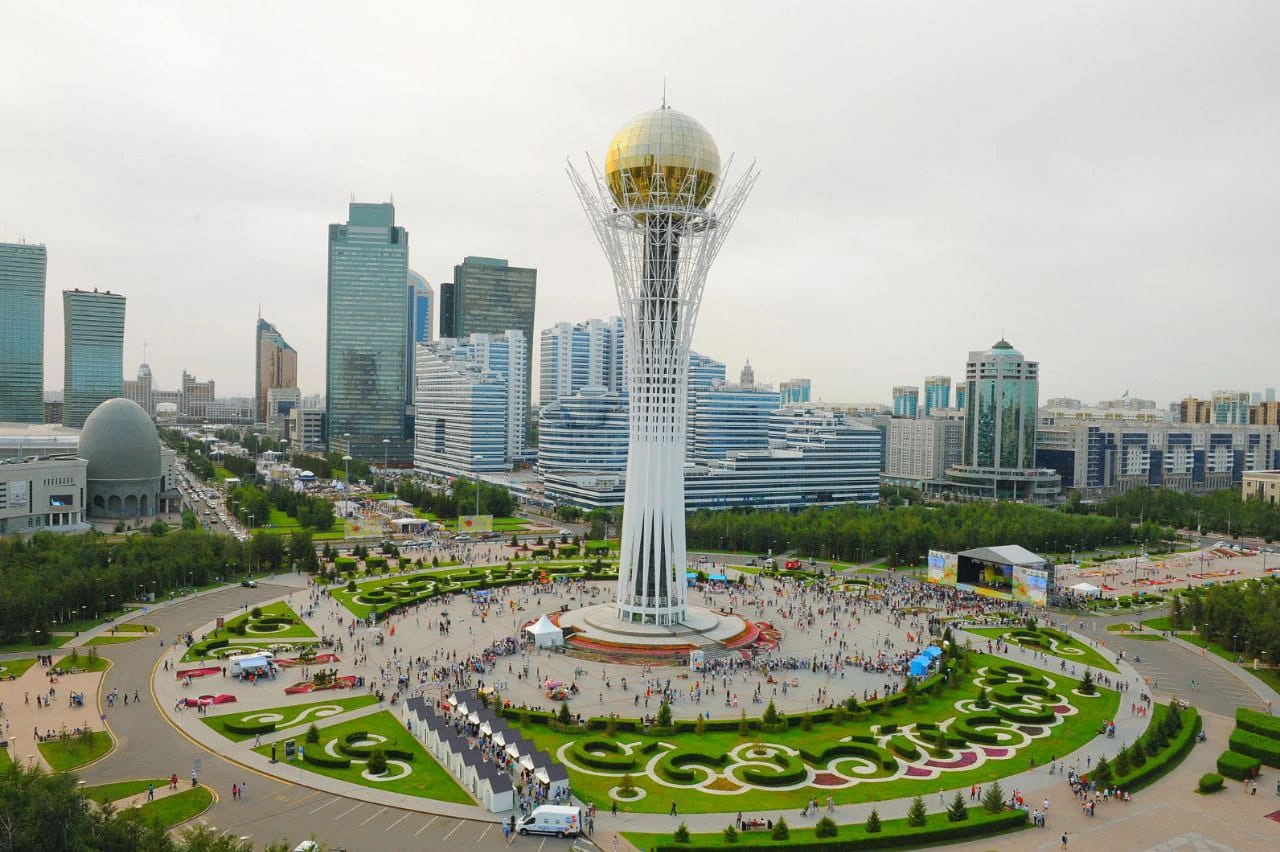
BAKU, Azerbaijan, May 4. In 2026, Kazakhstan is
reinforcing its position as one of the key diplomatic centers of
Central Asia, with Astana and Almaty increasingly serving as venues
for international forums, high-level meetings, and major business
events.
May is expected to be particularly active. On May 4–5, Almaty
will host GITEX AI Central Asia & Caucasus, the region’s largest
technology and artificial intelligence event. For Kazakhstan, this
represents an opportunity to further consolidate its role as a
regional platform for digital development. In recent years, the
authorities have actively promoted this agenda, and 2026 has been
designated the Year of Digitalization and AI. Hosting GITEX AI
Central Asia & Caucasus aligns with this strategic priority.
On May 15, an informal summit of the Organization of Turkic
States will be held in Turkestan. In advance of the summit,
President of Türkiye Recep Tayyip Erdoğan is expected to pay an
official visit to Kazakhstan. In recent years, cooperation among
Turkic countries has intensified, particularly in logistics, trade,
and transport projects. In this context, convening the summit in
Kazakhstan appears consistent with these developments, as the
country is gradually emerging as a key platform for dialogue within
the Turkic world.
Another significant event will be the V Eurasian Economic Forum,
scheduled for May 28–29 in Astana. The main theme of the forum is
artificial intelligence and digital competition. It is notable that
associations such as the Eurasian Economic Union are increasingly
addressing issues related to future technologies. For Kazakhstan,
participation in this agenda is important for several reasons,
including attracting investment and strengthening its position as a
modern, technology-oriented economy.
The events in May continue the diplomatic activity demonstrated
by Kazakhstan since the beginning of the year. At the end of April,
President of Israel Isaac Herzog visited the country. Almost
immediately after this visit, Prime Minister of the Czech Republic
Andrej Babiš arrived in Astana. Within the framework of the visit,
a major business forum was held with the participation of Kazakh
and Czech companies. As a result, six memorandums of cooperation
were signed in the fields of energy, transport, engineering, and
insurance. The Czech Republic also expressed interest in long-term
supplies of Kazakh oil and the development of cooperation in
nuclear energy.
From April 20 through 23, Kazakhstan hosted the president of
Mongolia Ukhnaagiin Khürelsükh. Following the visit, the sides
signed 13 documents on cooperation in various fields. During the
same days, events related to the Regional Ecological Summit and the
meeting of the Council of Heads of State – founders of the
International Fund for Saving the Aral Sea were held in Astana. On
the sidelines of these meetings, Kassym-Jomart Tokayev held talks
with the president of Tajikistan Emomali Rahmon and the president
of Georgia Mikheil Kavelashvili. In February, the president of
Serbia Aleksandar Vučić paid an official visit to Astana.
In 2026, Kazakhstan is not only hosting international events but
is also actively expanding its foreign policy contacts. In April,
Kassym-Jomart Tokayev participated in the Antalya Diplomacy Forum
in Türkiye and paid a working visit to Uzbekistan. At the beginning
of the year, the president made a state visit to Pakistan.
All this shows that today Kazakhstan is trying to establish
itself as a reliable platform for negotiations, investment
attraction, and regional dialogue. For the West, Kazakhstan is
important as a supplier of resources, a participant in transport
routes, and an energy partner. For the East, it serves as a
connecting link between Central Asia, the Caucasus, and Europe.
This position is largely due to the fact that Astana builds
interaction with several centers of power simultaneously and
combines political dialogue with practical economic interests.