BAKU, Azerbaijan, April 30. On April 28, 2026,
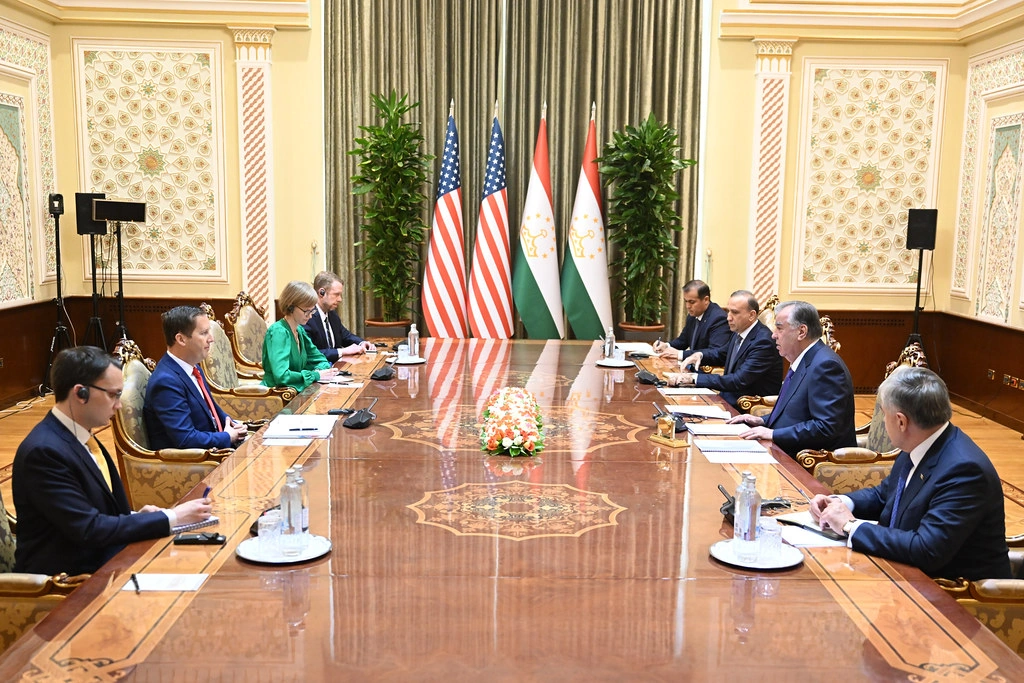
meetings were held in Dushanbe between the U.S. Special Envoy for
South and Central Asia Sergio Gor, and the President of the
Republic of Tajikistan, Emomali Rahmon, as well as the Minister of
Foreign Affairs, Sirojiddin Muhriddin, during which the sides
discussed the current state and prospects of bilateral relations
and cooperation at the regional level.
The negotiations focused on a broad range of cooperation areas,
including political dialogue, trade and economic relations,
investment cooperation, humanitarian issues, and security. Both
sides confirmed their mutual interest in further deepening
practical partnership and expanding contacts between relevant
government agencies.
Particular attention was paid to the implementation of
agreements reached within the "Central Asia - US (C5+1)" format,
which is regarded as a key mechanism of regional interaction.
This includes agreements on expanding trade and investment
cooperation, developing the Trans-Caspian International Transport
Route, and enhancing collaboration in critical minerals, energy,
and digital infrastructure. In a joint statement marking the 10th
anniversary of the C5+1 format, it was noted that economic
cooperation within the platform has already contributed to tens of
billions of dollars in trade and investment flows. The document
also envisions cooperation in artificial intelligence, 5G/6G
technologies, cybersecurity, smart cities, hydropower, and support
for IT startups.
The development of the B5+1 business platform remains a separate
focus of U.S. economic policy in Central Asia. The second forum of
this platform was held in Bishkek in February 2026. The importance
of continued coordination within this platform was emphasized, with
a focus on the practical implementation of previously agreed
initiatives.
In the economic dimension, the Tajik side expressed interest in
further expanding cooperation with the US, which is among the
country’s leading investment partners.
Priority areas include hydropower, extraction and processing of
mineral resources, as well as the development of light, food,
chemical, and pharmaceutical industries. Prospects for cooperation
in the digital economy were also discussed, including artificial
intelligence, digital infrastructure, and broader digitalization
processes.
The sides also addressed the establishment of joint ventures for
the processing of agricultural products targeting export markets,
which is considered one of the key drivers of economic cooperation.
In this context, the significance of the Trade and Investment
Framework Agreement was highlighted as an institutional foundation
for further expansion of economic ties.
During the exchange on regional issues, both sides emphasized
the importance of addressing security challenges, including
counterterrorism, extremism, and illicit drug trafficking, as well
as the need for coordinated efforts amid ongoing transboundary and
humanitarian risks.
Overall, the meetings confirmed the continuation of stable
political dialogue between Dushanbe and Washington, alongside a
growing focus on economic and investment cooperation and the
strengthening of multilateral formats in Central Asia.
An additional example of expanding practical cooperation was the
five-year healthcare memorandum signed in Dushanbe on April 6
between Tajikistan and the United States, providing for
approximately $78 million in joint investments through 2030.
Future trajectories of cooperation may include a gradual
expansion of U.S. investment presence in key sectors of the Tajik
economy, particularly energy and extractive industries, alongside
increased project-based cooperation in infrastructure and
manufacturing. Another possible direction is the
institutionalization of the digital agenda, moving from declarative
initiatives toward pilot technological projects. Within the C5+1
framework, enhanced coordination on regional issues may lead to
more structured sectoral mechanisms of cooperation. At the same
time, a scenario remains in which cooperation continues primarily
through individual initiatives and targeted projects without
significant expansion of the institutional framework.