On 23 April 2026, Türkiye and the United Kingdom (UK) signed a
new strategic partnership framework. This marked an important
milestone in an already advanced and mutually beneficial
relationship, which continues to thrive both on the bilateral track
and within various institutional frameworks which both states are
part of. The new framework, which highlights the start of a “new
era” in the relationship, is designed to boost existing channels of
cooperation but, crucially, strengthen dialogue and understanding
in the context of the rapidly polarizing international
environment.
A rapidly developing relationship
Both countries are important NATO members – Türkiye’s military
is the second largest in the alliance and one of the most
technologically proficient, whereas the UK, despite not necessarily
possessing the same military capabilities as before, contributes
with nuclear deterrence and still serves as a world-leading
intelligence hub. On the bilateral level, military cooperation has
continued to develop from strength to strength. It is already a
considerably institutionalized relationship, with the Türkiye-UK
Defence Industry Council adopting a specification in May 2025 which
expanded cooperation initiatives in the defence industry sector. In
October 2025, the sides signed a deal for Türkiye to acquire 20
Eurofighter Typhoon jets from the UK, with the deal worth around
$11 billion. The value and scope of the deal is significant and was
described by President Erdoğan as a symbolic demonstration of the
growing strategic significance of the ties between the countries.
In fact, it is the largest export deal of this aircraft to date and
is expected to serve as the backbone of inter-state cooperation in
this sphere.
This momentum in the defence sector has continued to grow. In
March 2026, the sides signed another important deal, this time
related to ‘training and support’. This represents a continuation
of the Eurofighter Typhoon deal reached in October 2025, with the
multi-billion-pound agreement now envisioning the training of
Turkish Air Force pilots by UK experts to fly and operate the jets,
expected to be delivered to Türkiye by 2030. Moreover, major firms
in the UK defence sector, including BAE Systems, will be more
closely supporting Türkiye in the production of aircraft components
and spares. In total, the deal envisions the creation of 20,000
jobs in Britain in support of the agreements. Moreover, the deal
has been viewed as an important boost for the British defence
industry, with the UK government actively working on correcting the
shortcomings revealed by the Strategic Defence Review released in
June 2025. Such deals, therefore, have the necessary potential to
revive confidence in the British defence sector. The UK has a large
industrial share in the production of the aircraft, with 37% of
each aircraft being manufactured in the country.
The growing strategic proximity of the two countries is
reflected in several other developments and indicators. For
example, a key component of the relationship has been a Free Trade
Agreement (FTA) in place between the sides, signed in December
2020. The agreement has resulted in comprehensive and steadily
growing trade between the nations, valued at £28.3 billion in the
12-month period between September 2024 and September 2025 and
representing a 5.8% increase from the previous 12-month period.
However, both countries share the belief that, although
substantial, this volume is still far from the full potential. For
this reason, in January 2026, the Türkiye-UK Joint Economic and
Trade Committee announced a 16-point plan with the aim of elevating
the value of bilateral trade to £40 billion. The sides have also
been engaged, for several years now, in conversations to upgrade
the FTA and considerably expand its scope. Currently, it covers
mostly industrial goods and excludes important segments of both
economies. In this light, the fourth round of talks to modernize
the agreement was held in March 2026, with the sides negotiating on
multiple areas such as Digital Trade, Communications, easing
restrictions on the movement of businesspeople and more. There is
hope that a renewed agreement will bring the two economies and
their people closer, especially with the business communities
already in close collaboration. Untapped potential remains, which
is why there is hope that a new FTA will slightly balance the
trading relationship (Türkiye exports considerably more to the UK
than the other way around) and pave the way for even more foreign
direct investment between the two countries.
Geopolitical significance
As demonstrated, the ties between the countries are
multi-dimensional, with both the government and the societal level
in close collaboration through a range of mechanisms. This status
quo has been in place for some time, with both sides deriving
numerous benefits from the relationship. However, over time, the
relationship has gained considerable geopolitical weight, not least
because of the broader developments occurring in the system of
international relations. Against this backdrop, the ties between
Ankara and London are gaining strategic indispensability. Although
multilateral platforms remain important forums for states to
convene and discuss pressing matters, their actual weight in key
decision-making processes is weaker than ever before. Instead, it
is bilateral relationships (and also minilateral formats) that are
serving as the more potent centres of influence. Only recently,
Türkiye’s Foreign Minister Hakan Fidan put forward the idea that
powers which are not yet in the ‘great power’ category must come
together and establish their own ‘centre of gravity’. This would
enable these states to protect their interests from great power
competition and make their own decisions in line with their own
realities. Developments in the relationship between the UK and
Türkiye, two states with a wealth of resources and both of which
qualify as middle powers, are a leading demonstration of this
trend. Inter-state relations, particularly between actors which are
recognized as both influential and trustworthy, are becoming an
increasingly fundamental aspect of international relations.
Three avenues for cooperation
There are three important avenues which currently serve as
incentives for the two countries to bolster their relationship even
further. First, since the return of Donald Trump to the White
House, the United States has made key changes to its foreign policy
approach. This particularly concerns the assignment of less
importance to strengthening transatlantic relations, of which NATO
is a fundamental part. Having expressed its frustration with its
European partners over the Iran war and general defence spending
commitments, the exact future role of NATO in America’s foreign
policy remains to be determined. Therefore, the organization
requires new momentum. Here, the UK and Türkiye, as two influential
members of the alliance, can provide vital, new impetus. Both sides
openly recognize this as a strategic objective, with the newly
announced partnership framework referring to NATO as a “historic
basis” for deeper ties. The joint statement also mentions the
existence of “common perspectives” on issues of mutual interest,
which logically extends to security matters. In particular, the
Middle East is mentioned, with the Türkiye-UK partnership
possessing the necessary potential to both uphold the European
security architecture and act as responsible players on the
diplomatic stage, if necessary. This explains why both sides are so
eager to deepen their ties, strengthen existing mechanisms and come
up with new ones, all of which are key to addressing mutual issues.
As Ankara prepares to host the NATO summit in July, deepening
cooperation under the NATO framework presents an important
opportunity to cement the relationship as an important centre of
power for the coming years.
Another factor which continues to influence the relationship is
the European Union. Although both countries are not EU members,
they have demonstrated enthusiasm for closer ties and integration
with EU structures. The UK government has urged a reformulation of
the UK-EU relationship, proposing closer integration with the
single market without pursuing re-entry. Türkiye, on the other
hand, is in a customs union with the EU which is widely considered
to be outdated. The issue in this case appears to be an absence of
adequate recognition of Türkiye’s strategic importance by certain
political circles in Brussels. As the EU steps up efforts to
develop strategic autonomy, Türkiye represents an invaluable
opportunity through which it can fill existing capability gaps and
diversify its military partnerships, reducing overreliance on the
US and transatlantic relations as a whole. However, despite these
prospects, Türkiye and the UK still operate on the periphery of the
European Union. This status can actually bring the sides even
closer together. Recently, both countries saw the collapse of their
talks to join the EU’s latest SAFE (Security Action for Europe)
program, a financial instrument designed to boost the continent’s
defence readiness through the provision of loans to member states.
This was primarily due to member state objections, underlining that
even if both remain EU partners, their defence sectors remain
insufficiently integrated with EU structures. This has and will
continue to open up new incentives for closer bilateral
cooperation.
In addition to the NATO and EU avenues, Türkiye and the UK also
share mutual partners in neighbouring regions. In the South
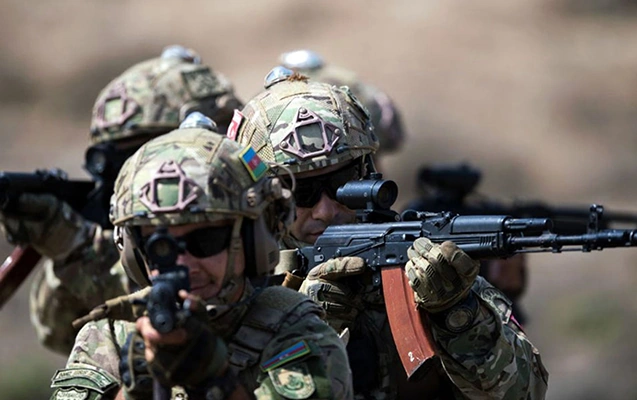
Caucasus, for example, Azerbaijan has a military alliance with
Türkiye and a developing strategic partnership with the UK, which
spans several sectors. Moreover, as the regional security
architecture evolves and Azerbaijan and Armenia edge closer to
peace, fresh opportunities for Türkiye and the UK to make
long-lasting contributions will only grow further. This is
particularly applicable to the Middle Corridor, in which Azerbaijan
is increasingly establishing itself as a regional transport and
logistics hub. In recent months, the UK has expanded its interest
in the Central Asian region, establishing a consultative track at
the level of Foreign Ministers. Moreover, London has repeatedly
stressed its desire to contribute to the Corridor, with UK firms
possessing the necessary experience which, if applied to the
opportunities on the ground, can seriously accelerate progress.
With Türkiye playing a leading role in the Organization of Turkic
States (OTS), jointly supporting evolving interregional
connectivity projects is another way Türkiye and the UK can come
together and advance mutual interests. Additionally, pursuing more
structured cooperation with Azerbaijan in the military and security
spheres is equally logical. Baku has an advanced military alliance
with Türkiye and is rapidly developing engagement with the UK in
the defence industry and broader military sectors. More pronounced
cooperation between the three countries in these directions would
be an important step in further solidifying regional security and
minimizing the resurgence of new instability.
A moment of unique opportunity
The current moment is one of strategic reflection but also of
opportunity for both Türkiye and the UK. The interests of the sides
appear to be overlapping as much as ever before. In addition to the
bilateral agenda, which is traditionally active, the sides, in
their own ways, are experiencing a process of adaptation to
changing geopolitical realities. In this complex and unpredictable
process, where traditional alliances appear less resilient than
before, the ability of states to work together with their partners
and overcome mutual challenges will determine their place in the
new international order. In this regard, the Ankara-London
partnership has the necessary potential to act as a new source of
influence in international relations, adding much-needed stability
and predictability to an increasingly volatile international
arena.
Author: Huseyn Sultanli, Advisor at the Center of
Analysis of International Relations (AIR Center)