BAKU, Azerbaijan, April 27. China’s wind power
capacity reached 640,626 megawatts (MW) in 2025, reflecting a 22.9%
increase over 2024 and underscoring the continued expansion of the
country’s renewable energy sector.
Data obtained by Trend from the International Renewable Energy Agency
(IRENA) shows that wind energy maintained consistent annual growth
and accounted for 28.4% of China’s total renewable energy
generation, highlighting its strategic role in the nation’s energy
mix.
The following figures detail total wind energy generation in
China:
| Year | Capacity (MW) | Growth |
| 2025 | 640,626 | +22.9% |
| 2024 | 521,266 | +18% |
| 2023 | 441,895 | +20.8% |
| 2022 | 365,964 | +11.2% |
| 2021 | 328,973 | +16.7% |
The steady increase in China’s wind power capacity in 2023-2025
reflects the implementation of the country’s 14th Five-Year Plan
(2021-2025), which places wind energy at the core of its energy
transition strategy. Over this period, the combined share of wind
and solar in China’s electricity consumption nearly doubled,
supported by the rapid expansion of installed capacity and
large-scale renewable deployment initiatives.
A key driver of growth has been the rollout of massive wind and
solar "mega-bases" in western China, including desert regions such
as Inner Mongolia and Xinjiang. These projects, integrated with
long-distance ultra-high-voltage transmission networks, have
enabled large volumes of wind power to be delivered to major
consumption centers in eastern provinces, improving project
scalability and economics.
The sector is underpinned by strong industrial capacity, with
Chinese manufacturers such as Goldwind and Envision contributing to
more than 70% of global wind turbine supply, alongside rapid
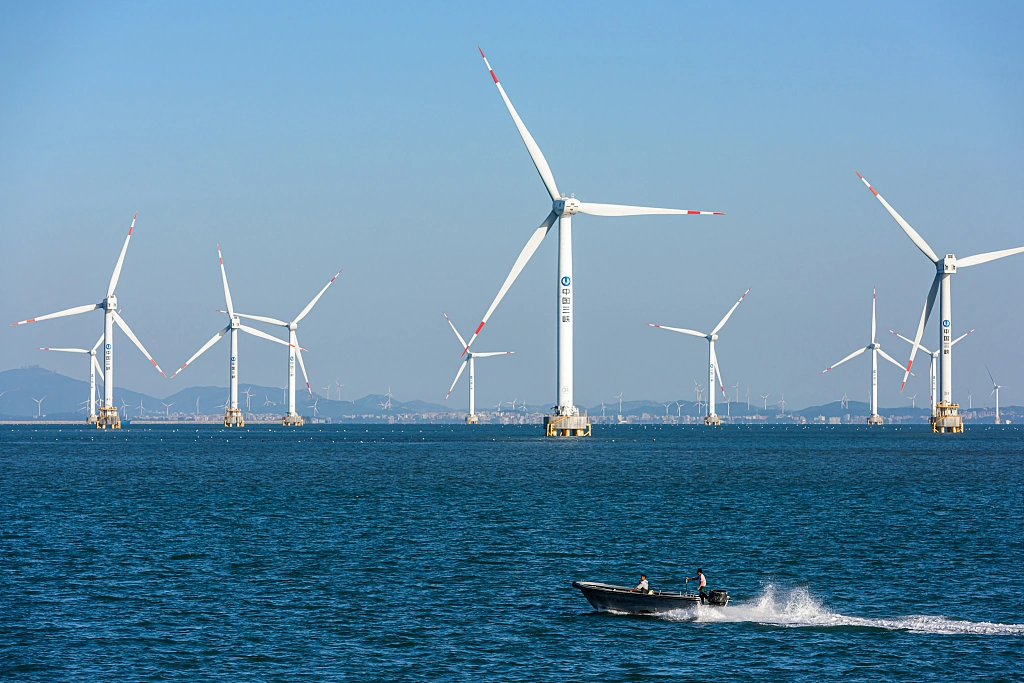
offshore deployment in provinces like Guangdong and Jiangsu, where
project clusters such as the Yangjiang and Rudong offshore wind
bases have become key growth hubs.
At the same time, China accounted for roughly half of global
wind additions in recent years, while ongoing grid reforms and
reduced curtailment risks have further enhanced the profitability
and utilization of wind power projects.