ASTANA, Kazakhstan, April 23. Kazakhstan has
reaffirmed its commitment to the large-scale development of clean
energy and achieving carbon neutrality by 2060, Trend reports via the
country's Ministry of Energy.
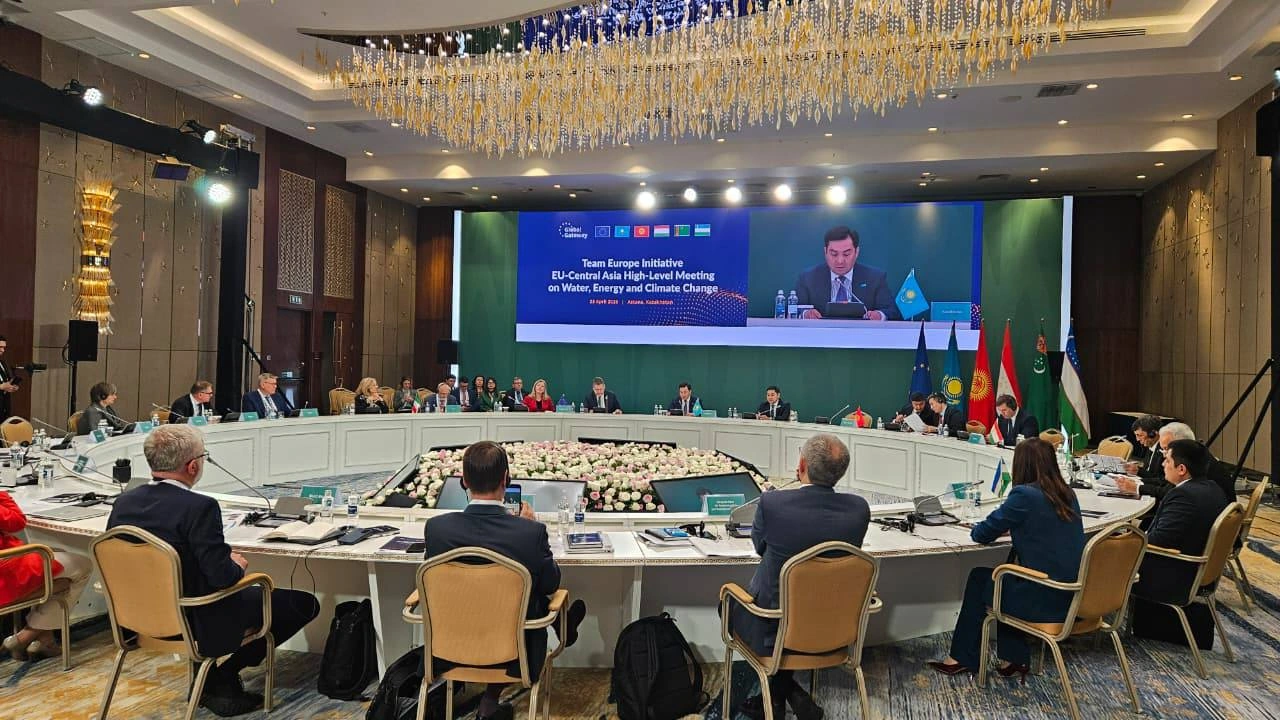
The announcement was made in Astana during the Regional
Environmental Summit (RES-2026), where a panel session was held
with the participation of Eva Kracht, Director General for
International and European Affairs at the German Federal Ministry
for the Environment, Climate Action, Nature Conservation and
Nuclear Safety, and Kazakhstan’s Minister of Energy, Yerlan
Akkenzhenov.
Akkenzhenov outlined Kazakhstan’s key priorities in advancing
energy sector development, decarbonization efforts, and
strengthening regional connectivity. He expressed appreciation to
the EU and Central Asian partners for sustained cooperation,
stressing that energy transition, supply security, and integration
of infrastructure are becoming strategically vital for the wider
Eurasian region.
“We are convinced that ensuring energy security and achieving
climate goals should complement each other. The transformation of
the energy mix and the integration of regional grids will allow
Kazakhstan to act as a reliable bridge, providing access to clean
energy from Central Asia to European markets,” Akkenzhenov
said.
Kazakhstan emphasized its long-term course toward clean energy
expansion, supported by infrastructure modernization, development
of flexible gas generation, digitalization of the energy system,
and improved energy efficiency as key elements of system stability
and cross-border cooperation.
Regional priorities also included the creation of a unified
electricity market in Central Asia under the REMIT initiative,
modernization of interstate power grids, and development of trade
mechanisms. The Kambarata HPP-1 hydropower project was highlighted
as a strategic component in balancing the region’s water and energy
systems.
Participants were also presented with the proposed green energy
corridor Central Asia - Caspian - Europe, a large-scale initiative
aimed at exporting clean electricity to the EU and expanding
long-term energy cooperation.
The minister noted the important role of the European Bank for
Reconstruction and Development (EBRD) and the European Investment
Bank (EIB) in supporting Kazakhstan’s energy modernization agenda,
while expressing interest in deeper cooperation in green hydrogen
production and sustainable financing mechanisms.