BAKU, Azerbaijan, April 22. Saudi Arabia is
developing new logistics routes whose impact extends far beyond the
country’s borders, and Azerbaijan could become part of the next
phase of this transformation, Ziya Mammadov, deputy head of the
marketing division at the Marketing and Tariff Policy Department of
Azerbaijan Railways, wrote on his social media account, Trend reports.
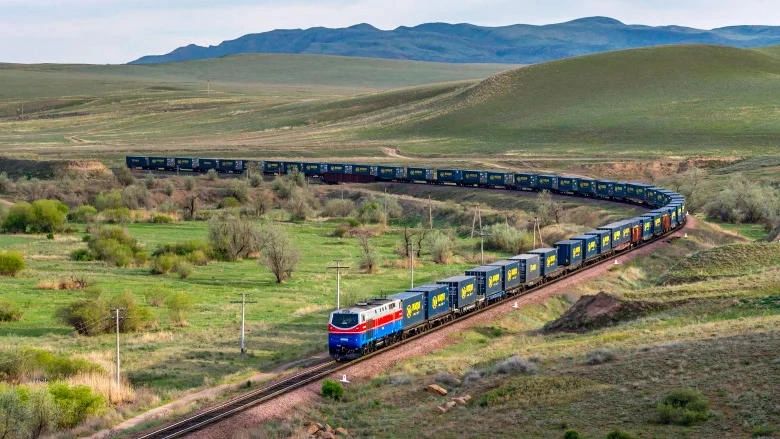
"Saudi Arabian Railways is launching five new rail logistics
routes connecting the ports of the Persian Gulf with the Red Sea,
which will reduce road transport and increase the efficiency of
global trade. “This is a strategic step within the Vision 2030
program, aimed at strengthening the country’s role as a key trade
hub between the East and the West,” the publication states.
Mamedov noted that by connecting Gulf ports with inland
industrial zones, northern regions, the Red Sea, and neighboring
markets, Saudi Arabia is creating faster and more sustainable
supply chains.
"However, the key strategic question is where these trade flows
can be directed next. Azerbaijan could play a potentially
significant role here. As a key hub of the Middle Corridor,
Azerbaijan could serve as a natural ‘bridge’ from the Persian Gulf
region through the Caspian Sea, Georgia, and Turkey to Europe.
Thanks to infrastructure assets such as the Port of Baku, the Alat
Free Economic Zone, the Baku-Tbilisi-Kars railway, and the TRIPP
corridor, Azerbaijan could become a vital link in the future
logistics networks of the Gulf states," he said.
According to Mammadov, if multimodal transport between China and
Saudi Arabia via the Middle Corridor develops, this could provide
several strategic advantages for the region in the long term.
"Given the heightened risks associated with the Strait of Hormuz,
the availability of alternative routes would enhance the resilience
of supply chains. Through the Middle Corridor, cargo flows could be
diversified, transit times reduced, and the logistical role of
regional countries, including Azerbaijan, strengthened. This would
also stimulate investment in ports, railways, warehouse
infrastructure, and digital customs solutions," he said.
The publication emphasizes that, with proper coordination, this
could mean: faster freight routes between the Gulf and Europe; new
flows of petrochemical and container cargo; greater diversification
of corridors; and increased resilience of regional supply
chains.
“The next stage of Eurasian logistics may not involve replacing
one corridor with another, but rather integrating them. In this
system, Saudi Arabia and Azerbaijan may turn out to be closer than
they seem,” Mammadov concluded.
On August 8, 2025, following a trilateral meeting with U.S.
President Donald Trump in Washington, President of the Republic of
Azerbaijan Ilham Aliyev and Prime Minister Nikol Pashinyan signed a
joint declaration on ensuring peace between Baku and Yerevan and
establishing transport links between the main part of Azerbaijan
and its Nakhchivan. This project was named “Trump’s Route for
International Peace and Prosperity.”
The Middle Corridor is a transport and trade route that passes
through a number of countries in the region and connects Asia with
Europe. It serves as an alternative to the traditional Northern and
Southern Corridors.
The route begins in China and runs through the countries of
Central Asia. It then crosses the Caspian Sea, Azerbaijan, Georgia,
and Türkiye, before reaching Europe. The Middle Corridor is a land
route that bypasses longer sea routes, connecting the eastern
regions of Asia, including China, with Europe.