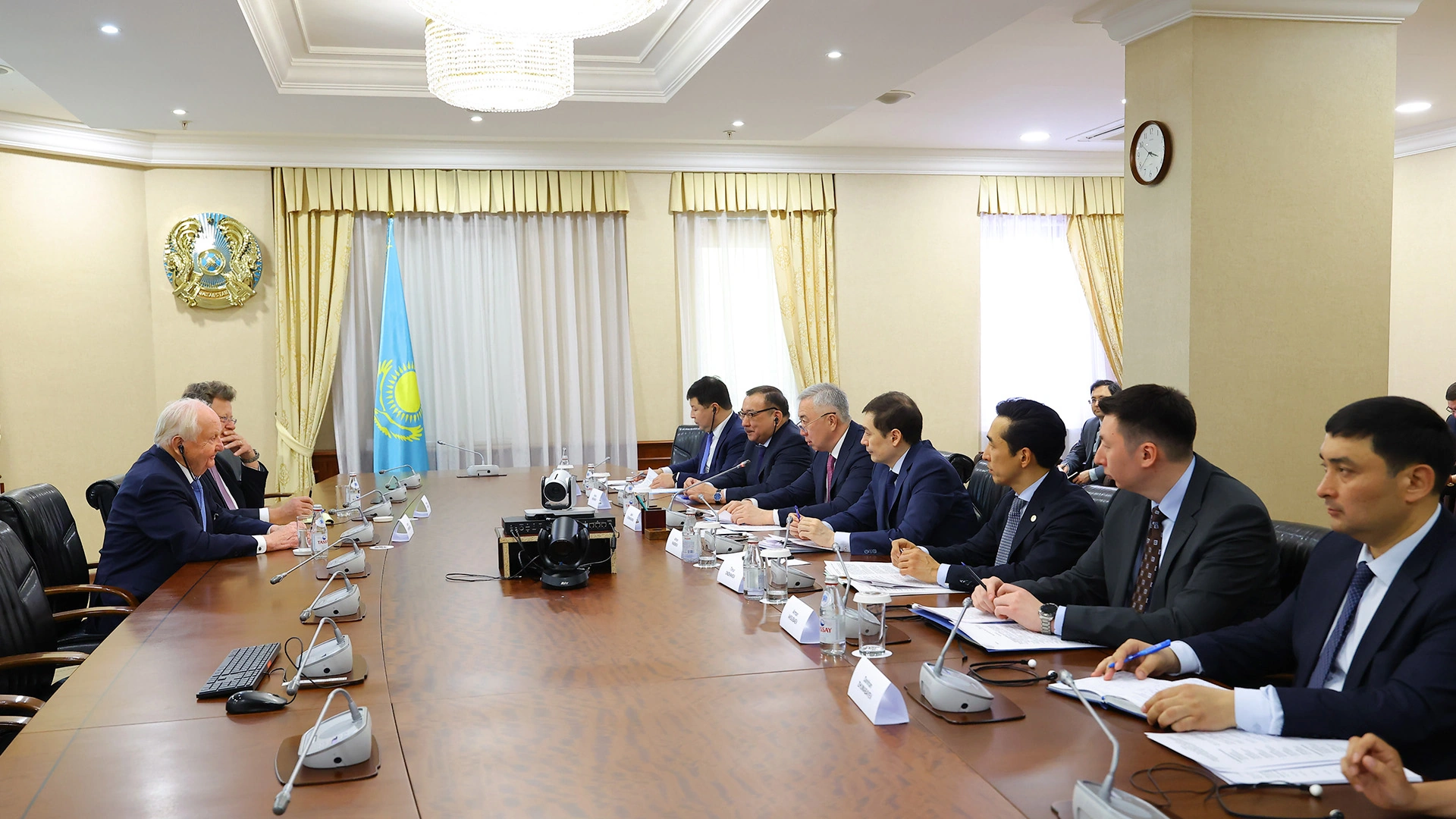
ASTANA, Kazakhstan, April 21. Deputy Prime
Minister - Minister of National Economy of Kazakhstan Serik
Zhumangarin and the head of Germany's GP Günter Papenburg Karl
Günter Papenburg, exchanged views on prospects for expanding
cooperation in the copper sector, Trend reports via the Kazakh government.
During the talks, the Kazakh side presented its vision for the
development of the copper industry and proposed considering
concrete formats of cooperation.
According to the government, the development and technological
modernization of the copper industry is one of the key priorities
of Kazakhstan’s new proactive economic policy. Within the new
growth model, priority sectors have been identified with a focus on
producing higher value-added goods for both domestic and external
markets.
It was noted that Kazakhstan has around 130 copper deposits.
Annual ore production amounts to about 170 million tons, accounting
for roughly 4% of global output. However, up to 97% of production
is exported in the form of cathodes, concentrates, and raw ore.
Most of the mined ore- around 750,000 to 800,000 tons of copper
per year-is processed into concentrate (second stage). Of this
volume, about 470,000 tons are used for cathode production (third
stage), while the remaining concentrate is exported without further
processing.
Production of higher value-added products such as wire, foil,
cables, and other finished goods accounts for less than 5%. The
potential increase in gross value added in the copper industry is
estimated at more than 20 times. In this context, the development
of deeper copper processing is considered a key direction for
increasing domestic value creation.
The German side expressed interest in further detailed
discussions. It was noted that potential supplies of copper
concentrate from Kazakhstan to Germany could also be considered,
although logistics require additional study. The company also
expressed readiness to explore the establishment of higher
value-added production facilities in Kazakhstan, stressing that the
most efficient plants should be located close to raw material
sources.
The sides agreed to further work out possible cooperation
formats with the participation of Baiterek National Managing
Holding and with the support of the Kazakh embassy in Germany.
GP Günter Papenburg AG is one of Germany’s largest private
industrial and construction groups with more than 160 years of
history. The holding operates in raw materials extraction,
construction materials production, infrastructure development,
machinery trade, logistics, and waste management. The group unites
61 subsidiaries and has international project experience, including
participation in the construction of the Astana-Borovoe highway in
Kazakhstan.