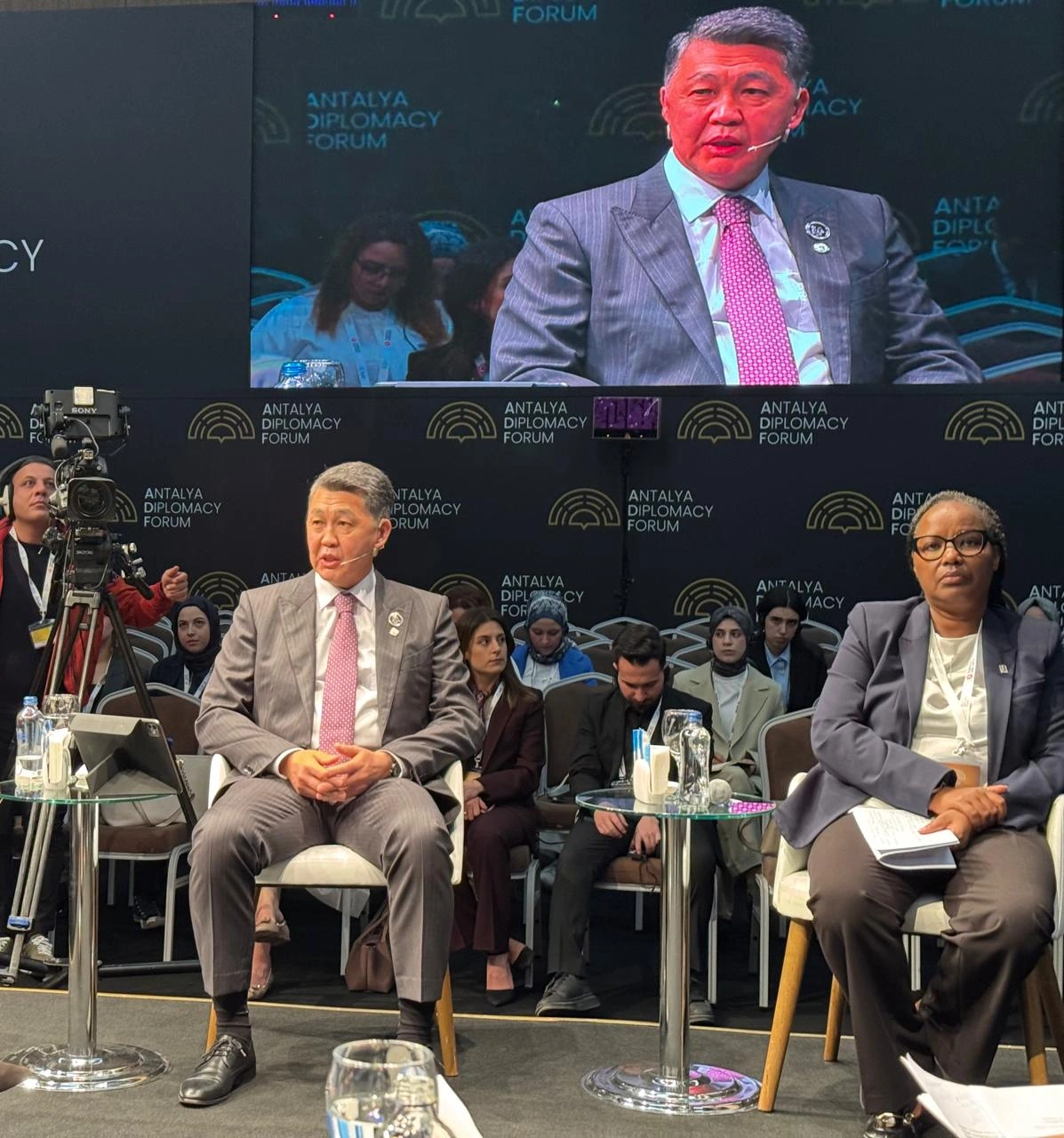
ANTALYA, Türkiye, April 18. Azerbaijan holds
strong potential as a strategic partner for the Islamic
Organisation for Food Security (IOFS), given its growing
agricultural sector, investment in infrastructure, and geographic
position as a regional connectivity hub, IOFS Director General
Ambassafor Berik Aryn said in an exclusive interview with Trend on the sidelines of the
Antalya Diplomacy Forum.
“This potential was reaffirmed during my recent working visit to
Baku on 4–5 March 2026, where the Republic of Azerbaijan expressed
its readiness to sign the IOFS Statute at the earliest opportunity,
paving the way for its accession to the Organisation. In meetings
with Majnun Mammadov, Minister of Agriculture of Azerbaijan, we
discussed expanding cooperation in sustainable agriculture,
agricultural research, food safety systems, and regional food
security initiatives,” said Aryn.
IOFS director general noted that the sides also explored
practical areas of collaboration, including strengthening agri-food
trade, developing agricultural supply chains, and enhancing
knowledge exchange.
“Azerbaijan’s experience in these areas, as well as its active
engagement in international food security efforts – including its
humanitarian contributions – positions it as an important partner
for IOFS.
At the same time, our dialogue builds on existing cooperation,
including high-level exchanges with Azerbaijani leadership and
institutions, where both sides have consistently emphasized the
importance of strengthening collaboration to address shared food
security challenges.
IOFS remains ready to deepen this partnership through joint
projects, capacity-building initiatives, and integration into our
programmes, with the aim of delivering tangible and regionally
impactful outcomes,” he added.
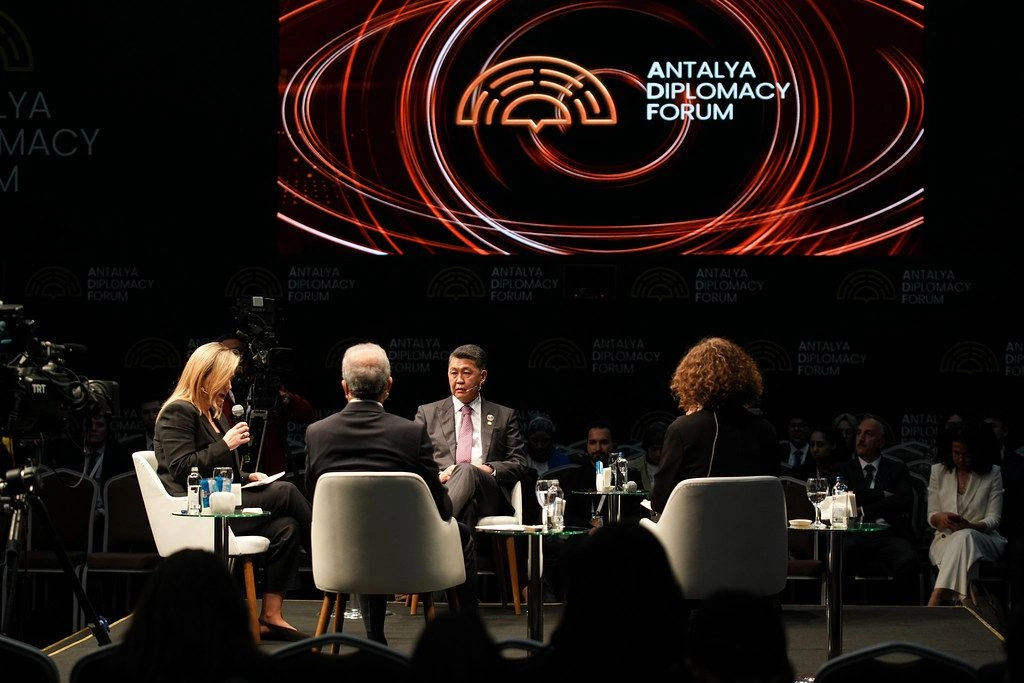
Speaking about the Antalya Diplomacy Forum, Aryn pointed out
that at this year’s event, IOFS is focusing on advancing integrated
approaches to food security in the context of climate change,
market volatility, and geopolitical uncertainty.
“Our priority is to highlight the importance of strengthening
resilient food systems through sustainable agriculture, improved
water management, and enhanced intra-OIC cooperation. IOFS is also
emphasizing the need to move beyond production-focused approaches
toward more equitable, resilient, and accessible food systems. In
line with the panel discussion theme “Overproduced, Underfed,” IOFS
highlights the global paradox where sufficient food is produced,
yet millions remain food insecure due to distribution
inefficiencies, conflict, economic disparities, and supply chain
disruptions,” said the director general.
He noted that the message of IOFS to member states and partners
is clear: food security must be treated not only as a humanitarian
concern, but also as a strategic pillar of economic stability and
regional resilience.
“This requires moving from dialogue to implementation, scaling
up practical initiatives, mobilizing investment, and strengthening
partnerships across sectors. In a nutshell, food security is not
only about food. It is about stability, dignity, and the future
trajectory of our societies. A world that remains underfed will
inevitably remain unstable,” he said.
Aryn also spoke about the upcoming 7th General Assembly, noting
that it represents an important milestone for IOFS as the
organization continues to advance the implementation of its
Strategic Vision 2031.
“The Assembly will be convened under the chairmanship of the
Republic of Kazakhstan, the Host Country of IOFS, underscoring its
sustained leadership and strong commitment to the Organization’s
mandate and priorities.
The meeting will focus on reviewing progress, aligning
priorities, and advancing key programmes that deliver tangible
impact on the ground. We expect to further strengthen Member State
engagement around flagship initiatives, including climate-resilient
agriculture, sustainable water management, and strategic commodity
systems,” he said.
At the same time, as the director general pointed out, the
Assembly will serve as a platform to enhance coordination and
reinforce IOFS’s role as a mechanism for practical cooperation,
knowledge exchange, and joint implementation.
“Ultimately, it is an opportunity to reaffirm collective
commitment and ensure that our efforts translate into measurable
improvements in food security across the OIC geography.
The current global context underscores the need for more
resilient, diversified, and self-sustaining food systems. IOFS
promotes a set of practical mechanisms to address these
challenges.
First, strengthening regional value chains and intra-OIC trade
is essential to reduce dependency on external markets. Second, we
are advancing initiatives related to strategic food reserves and
coordinated response mechanisms to enhance preparedness during
crises. Third, investment in climate-resilient agriculture and
sustainable resource management remains a priority, particularly in
water-scarce regions.
In addition, IOFS supports capacity-building, technology
transfer, and the use of data-driven tools to improve
decision-making and early warning systems. These combined efforts
are aimed at enhancing both short-term responsiveness and long-term
resilience.
Importantly, IOFS underscores that these challenges cannot be
addressed in isolation. It is, therefore, strengthening
multilateral cooperation and public-private partnerships, ensuring
that coordinated, scalable, and sustainable solutions are
implemented across member states. The overall approach is to move
from reactive responses to proactive, system-wide resilience
building in food security,” he concluded.