BAKU, Azerbaijan, March 27. Wars in the Middle East
never stay in the Middle East. They may begin as a local clash, a
volley of strikes, a campaign of intimidation, or a limited
operation, but they always end the same way: with a shock to the
global economy, inflationary pressure, jittery markets, pricier
logistics, higher insurance premiums, a rethink of investment
strategy, and a change in the very idea of what global stability
means.
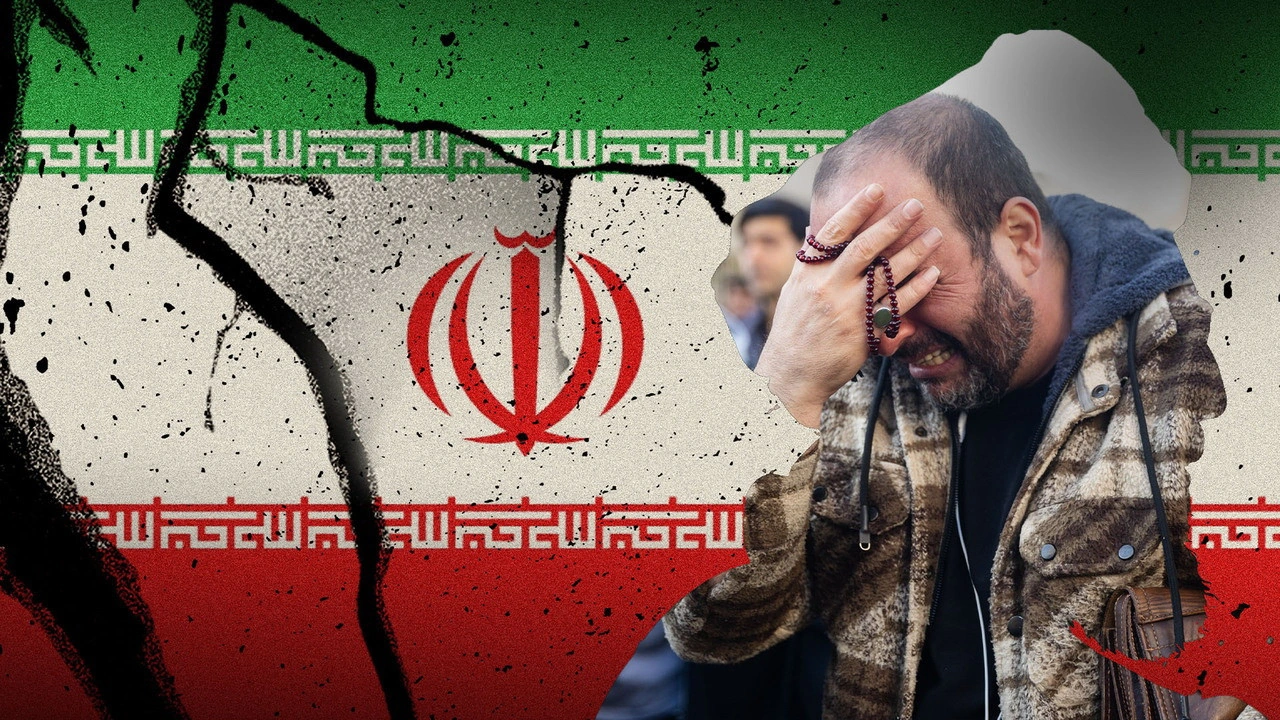
That is the true scale of a war centered on Iran. Its
consequences do not stop at the battlefield. They run through every
artery of the modern global economic system - from oil tankers and
LNG terminals to the price of bread and the cost of a mortgage.
The main intellectual mistake in analyzing crises like this is
trying to describe them solely in the language of battlefield
bulletins: who struck first, how many missiles got through, how
effective the air defenses were, which facility was knocked out,
which losses were admitted, which were denied. But for the global
economy, something else matters far more: what happens to the price
of risk. The modern economy no longer runs on production and
consumption alone; it also runs on the expectation of shocks. And
the expectation of a shock is already an economic factor -
sometimes more destructive than the shock itself.
That is precisely what a war around Iran changes. It turns one
of the planet’s most important energy hubs from a familiar
logistics corridor into a permanent source of global anxiety. The
Strait of Hormuz is not just a spot on the map. It is the central
nervous system of global energy. According to the U.S. Energy
Information Administration, roughly 20 million barrels of oil and
petroleum liquids per day moved through it in 2024. That is about
one-fifth of global liquid fuel consumption. The International
Energy Agency has likewise noted that roughly a quarter of the
world’s seaborne oil trade passes through that corridor. In other
words, this is not some side route the world can casually work
around. It is one of the key supply channels of the global
economy.
That leads to the first and most serious conclusion: after a
major war near Iran, the price of oil will no longer be determined
solely by supply and demand. It will carry a lasting premium for
route vulnerability. Before the crisis, the market could argue
about U.S. shale output, OPEC+ quotas, China’s slowdown, the
condition of European industry, or the odds of a eurozone
recession. After a conflict like this, those factors do not
disappear - but now they are overshadowed by a harsher variable:
military risk. That means that even without an immediate physical
disruption in supply, oil will cost more simply because the
probability of future disruption has gone up.
That is the key point. Markets are shaped not only by the fact
of a shortage, but by the likelihood of one. Those are two
different levels of economic reality. There may still be enough
oil. Tankers may still be moving. Export contracts may still be
honored. But a different machine is already kicking into gear - the
machine of fear, reinsurance, bigger buffers, danger premiums, and
aggressive stockpiling. Insurers raise their rates. Carriers
rewrite their terms. Traders build an extra premium into prices.
Importers try to buy more, and sooner. Governments start thinking
about reserves. Banks tighten lending terms on commodity deals. And
in the end, even without a full-scale blockade, a very real
inflationary effect takes hold.
If oil is the first wave, gas is the second - subtler, and in
some cases even more dangerous. By IEA estimates, around 19 percent
of global LNG trade passes through Hormuz. Nearly all of Qatar’s
LNG exports and the overwhelming majority of the UAE’s go through
that route. And that is no longer just a question of commodity
pricing. It is a question of energy security for entire regions,
especially Asia. Gas markets are a lot more skittish than many
people like to think. They are less universal than the oil market
and far more dependent on infrastructure, technical cycles,
terminals, LNG tanker fleets, and long-term contracts. Even a
limited disruption to stability in a zone that handles such a large
share of global LNG trade can trigger a chain reaction: higher fuel
costs, higher electricity prices, rising industrial production
costs, higher utility burdens, and ultimately greater social
strain.
When oil gets expensive, transportation gets expensive. When gas
gets expensive, modern industrial life itself gets expensive. It
hits metallurgy, chemicals, fertilizer production, glass, cement,
building materials, and electric power. Any major conflict around
Iran quickly turns into a global inflation vortex because energy is
the lifeblood of the economy. And when the lifeblood gets more
expensive, the whole body starts to hurt.
Some of the harshest consequences show up in fertilizers and
food. That is exactly the zone that usually does not make the first
headlines, but ends up hurting the world the most. Estimates
suggest that around 30 percent of global fertilizer trade is tied,
one way or another, to routes passing through high-risk areas near
Hormuz. Against the backdrop of military escalation, prices for
urea and several other nitrogen fertilizers have already jumped by
30 to 40 percent in certain market segments. In one of its
commodity market reviews, the World Bank noted that its fertilizer
price index rose nearly 14 percent in the third quarter of 2025
compared with the previous quarter and stood 28 percent above its
level a year earlier. That is not just dry data. It is an early
warning of future food inflation.
The economic chain here is ruthless. Higher gas prices mean more
expensive nitrogen fertilizers. More expensive fertilizers mean
higher crop production costs. Higher crop costs mean pricier grain,
feed, vegetable oils, meat, milk, and poultry. Then the social
effect kicks in: poorer countries face a greater risk of food
insecurity, middle-income countries see faster inflation, and
advanced economies come under heavier pressure on real incomes and
household budgets. Put differently, a war around Iran may start in
a narrow maritime corridor and end with higher prices for bread,
meat, and electricity thousands of miles away from the combat
zone.
For countries in Africa and parts of Asia, that is especially
dangerous. The share of household income spent on food there is
much higher than in wealthy countries. That means any jump in basic
prices hits not comfort, but survival. When food prices rise in a
developed country, it causes frustration and political argument.
When food prices rise in a poor country, it can trigger hunger,
street protests, political destabilization, and a new round of
internal crisis. That is how war exports instability through food
channels.
The blow to investment is no less destructive. Modern capital
does not love heroics; it loves predictability. It can operate in
risky jurisdictions, but only when the risk is legible, priced in,
and contained. But when a region that has spent decades selling the
world an image of ultramodern stability - with megaprojects,
skyscrapers, financial centers, tech initiatives, tourism clusters,
and ambitions of becoming a global hub - suddenly finds itself in
the blast radius of a major war, the entire brand of safety gets
repriced.
According to UNCTAD, global foreign direct investment fell 11
percent in 2024, dropping to roughly $1.5 trillion. That means
global capital was already getting more cautious. It is already
moving more slowly, choosing more selectively, demanding more
comfort and more insurance. Against that backdrop, any new systemic
conflict near key markets intensifies the competition for money.
And if the Gulf states once had only to project stability,
infrastructure, and growth, now they will also have to compensate
investors for geopolitical fear. And fear, as it turns out, is an
expensive commodity.
Markets responded not as though this were rhetorical theater,
but as though it were a factor capable of changing how assets are
valued. During spikes in the conflict, stock indices in several
countries across the region came under serious pressure. Certain
equities - especially those tied to real estate and development -
lost a noticeable share of their market capitalization. There were
also reports of a sharp drop in real estate transaction volumes in
the UAE: at the start of one of the crisis periods, they were down
by more than a third year over year. That is an important symptom.
Real estate, tourism, development, the stock market, and financial
services all run not just on money, but on confidence. Once
confidence is destabilized, money starts moving more slowly, more
cautiously, and at a higher cost.
This is where a war around Iran shatters one of the big myths of
late globalization: the idea that any problem can be sidestepped
through diversification. No, not any problem. Geography still has
veto power. The International Energy Agency has estimated
alternative pipeline capacity that could, in theory, partially
offset disrupted flows bypassing Hormuz at roughly 3.5 to 5.5
million barrels per day. Even the high-end estimate falls far short
of the volume that moves through the strait each day. So yes, the
world can soften the blow - but it cannot neutralize it painlessly.
That is the end of the comforting illusion that modern logistics
has somehow conquered geography.
What is more, war accelerates deglobalization not in the
propagandistic sense, but in the practical one. Companies begin
thinking less about where things are cheaper and more about where
they are safer. Less about how to squeeze maximum efficiency out of
the supply chain and more about how to survive the next crisis.
That leads to several major consequences. First, bigger
inventories. Second, larger financial cushions. Third, relocating
parts of production closer to end markets. Fourth, abandoning
hyper-optimized logistics models. Fifth, higher costs across the
entire process of international trade. The world starts paying more
not for the product itself, but for the resilience of getting it
delivered.
In that kind of world, efficiency gives way to reliability. And
reliability, as everyone knows, always costs more. That is the new
hidden tax of major wars. No single government collects it, and no
customs post stamps it into law. It is diffused across the entire
global system - through freight rates, insurance, reserves, risk
premiums, a higher cost of capital, and greater investor
caution.
There is another consequence that is often underestimated: the
return of inflation as a geopolitical phenomenon. Over the past
several decades, elites in the developed world have become used to
thinking about inflation mainly as a function of monetary policy,
fiscal deficits, demand, and productivity. But wars like one
involving Iran remind us of an older truth: sometimes inflation
does not come from the printing press. Sometimes it comes from a
strait, a pipeline, a terminal, a tanker, a destroyed warehouse, or
the threat of war itself. In that kind of situation, a central bank
can play with interest rates all it wants, but no rate hike can
quickly de-mine a shipping route, lower an insurance premium, or
restore an investor’s sense of strategic confidence.
Which means the global economy after a war around Iran becomes
not only more expensive, but also less manageable by conventional
tools. That is a crucial point. When inflation is monetary in
nature, it can be fought with higher rates, less liquidity, and
cooler demand. When it is geopolitical, those tools work far worse
- and inflict far more pain. Raising rates in that scenario does
not cure the cause; it merely restrains part of the fallout. But
the price of that restraint is slower growth, tighter credit,
weaker investment, and higher costs for business.
And let us not forget industrial raw materials. The Middle East
is not just about oil and gas. It is also a major segment of global
trade in metals and energy-intensive products. Gulf states hold a
significant place in the aluminum market, and aluminum is one of
the metals most sensitive to energy costs. If gas and electricity
prices climb, if logistics get more expensive, if anxiety around
maritime chokepoints rises, that inevitably pushes up aluminum
prices. From there, the blow spreads into the auto industry,
aerospace, construction, cable manufacturing, packaging,
electronics, and infrastructure projects. That is how one regional
military crisis begins bleeding into sector after sector of the
global industrial economy.
Taken together, all of these points to yet another turn of the
screw: a stronger state role in the economy. After wars like these,
governments can no longer afford to act like neutral market
spectators. They are forced to become architects of economic
defense. They start building up reserves, backstopping critical
supplies, securing transport corridors, subsidizing sensitive
industries, restricting exports of certain goods, capping domestic
price spikes, intervening in tariffs, and, in some cases,
sacrificing free-market purity for the sake of social stability.
The world after a war with Iran will not just be more expensive. It
will be more state-driven.
That matters all the more because we are moving into an era in
which routes, resources, and contracts once again carry a double
price tag: commercial and political. An oil terminal is no longer
just a piece of infrastructure; it is an asset of national
security. A gas contract is not merely business - it is strategic
insurance. Fertilizer is not simply agrochemistry; it is a question
of food sovereignty. A maritime strait is not just a line on a
logistics map; it is a pressure point of political leverage.
That is exactly why the claim that the old global economy is
gone is not some piece of journalistic overkill. It is a statement
of structural rupture. The old economy will not disappear because
trade collapses or production grinds to a halt. That is not what is
coming. The world will not vanish, and it will not freeze in place.
But it will begin operating by a different set of rules. Energy
will be priced higher. Risk will be baked in more aggressively.
Logistics will become more cautious and more expensive. Investment
will move more slowly and demand a steeper premium for safety.
States will intervene in markets more actively. And inflation will
increasingly be driven not by domestic overheating, but by external
turbulence.
Boiled down to its core strategic consequences, the picture
looks like this.
First, a war around Iran locks in a permanent risk premium in
global energy markets. Even if the shooting stops, the market will
not forget that one of the most critical arteries of world trade
came under a very real threat.
Second, it intensifies global inflationary pressure through oil,
gas, fertilizers, food, metals, and transportation costs.
Third, it worsens the investment climate across the region and
raises the overall cost of capital for projects tied to the Middle
East and neighboring logistics hubs.
Fourth, it speeds up the shift from a model built on maximum
cheapness to one built on maximum reliability in supply chains.
Fifth, it puts the state back at the center of economic
management as the force expected to shield society from external
shocks.
And finally, sixth, it makes the global economy less trusting.
And trust is that invisible cement without which the global market
turns into a patchwork of anxious, expensive, and unstable
connections.
That is the real historical cruelty of wars like these.
Destroyed facilities can be rebuilt. Burned warehouses can go up
again. Damaged vessels can be replaced. Terminals can be repaired.
But it is far harder to restore the feeling of predictability. And
that feeling is exactly what the modern economy rests on - the
confidence that a shipping lane will stay open, a contract will be
honored, insurance will remain available, energy prices will stay
relatively stable, and the investment horizon will extend farther
than the range of the next missile.
After a war around Iran, that confidence will never be quite the
same again. And that means the global economy will not be the same
either.