BAKU, Azerbaijan, February 18. Azerbaijan
consistently expands and deepens cooperation with Central Asia,
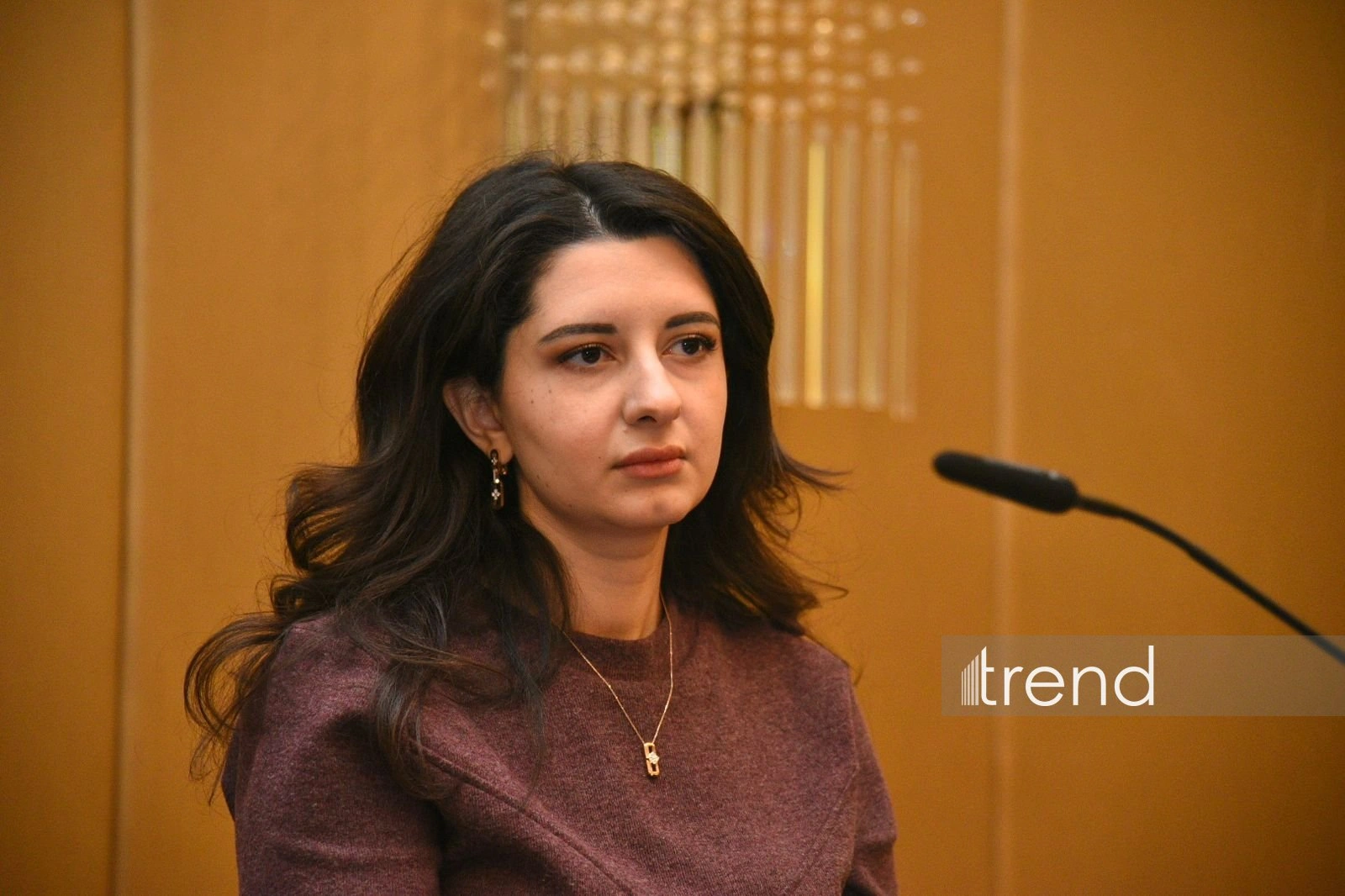
Senior Advisor at the Center for Analysis of International
Relations, Roza Bayramli, said at an international conference
entitled 'C6: One region, shared future—enhancing strategic
dialogue,' Trend
reports.
According to her, this has been recorded in a number of areas,
from trade and investment to energy, industrial cooperation,
humanitarian ties, and the development of regional connectivity in
recent years.
She explained that this interaction is systematic, relying on
regular political dialogue and growing practical interest from
businesses in sustainable and predictable cooperation channels.
"Against this backdrop, the transport and logistics agenda is
particularly relevant. In today's geopolitical realities,
infrastructure and logistics are viewed both as an economic tool
and a sustainability factor. This area of interaction
particularly impacts the ability of states and companies to support
foreign trade and transit flows, reduce costs and risks, ensure
route diversification, and maintain competitiveness. Therefore, a
discussion about transport today is a discussion about the
stability of supply chains, market confidence in corridors, and the
extent to which a region can offer predictable connectivity
services, rather than just routes on a map," she said.
The senior adviser noted that in this context, the C6 agenda
acquires practical significance.
"The topic of connectivity and transport is a key one here, as
it directly affects the interests of all participants. This context
addresses issues ranging from synchronizing infrastructure projects
and procedures at junctions to developing multimodal solutions,
digitalization, eliminating bottlenecks, and creating transparent
commercial conditions. This work is being conducted both within the
C6 format itself and in parallel—through bilateral mechanisms, as
well as trilateral and multilateral platforms, and in the context
of the Organization of Turkic States (OTS), that is, in formats
where countries in the region are clarifying the practical
parameters of cooperation, from coordinating schedules and tariffs
to exchanging data and simplifying procedures," emphasized
Bayramli.
Speaking about bilateral, trilateral, and multilateral formats,
she noted that the transport and logistics agenda between
Azerbaijan and the countries of Central Asia has already acquired
an institutional dimension.
"In particular, on September 20, 2024, in Baku, with the
participation of Azerbaijan Railways, Uzbekistan Railways, and the
railway administrations of Kyrgyzstan and Tajikistan, the Eurasian
Transport Route (ETR) international association was established.
Its mission is to develop integrated logistics products, unify
transportation technologies, develop an effective tariff policy,
implement digital solutions, and optimize costs. This aims to
create a supranational operational framework for the operation of
the 'southern branch' of the Middle Corridor, which runs through
China, Kyrgyzstan, Tajikistan, Uzbekistan, Georgia, and
Türkiye.
At the same time, work continues to eliminate infrastructure and
operational constraints at the Trans-Caspian junction, which is
critical for the region. Both framework strategic planning
documents and applicable agreements to address bottlenecks are
being formally established. For example, on September 30, 2025, an
action plan was signed between the railways of Azerbaijan,
Kazakhstan, and Georgia to eliminate bottlenecks within the Middle
Corridor. This complements "the roadmap for the development of the
Middle Corridor for 2022–2027, signed by Azerbaijan, Kazakhstan,
and Türkiye in 2022," she concluded.
Stay up-to-date with more news on Trend News
Agency's WhatsApp channel