BAKU, Azerbaijan, February 14. The modern
system of international relations has already gone beyond the
classical balance of power models. Tanks, economic sanctions, and
open political ultimatums alone are not enough to influence states.
One of the main weapons of the 21st century is information, and the
other is the human factor. Foreign special services combine these
two elements to form "special influence networks" in countries in
their spheres of interest. The irrefutable evidence and the one in
the video footage and audio recordings released by the State
Security Service of Azerbaijan about a group of individuals accused
of treason and other crimes show that these mechanisms have been
systematically and purposefully established in the post-Soviet
space, including Azerbaijan, for many years.
The essence of this strategy is simple: to influence not the
state, but individuals in important positions in the state. In
international practice, this approach is called "elite capture".
The most effective way for foreign power centers is not to destroy
state institutions, but to bring into their orbit of influence
individuals who really influence these institutions. In this case,
the formal sovereignty of the state is preserved, but political
decisions are already formed through the prism of foreign
interests.
To understand how this mechanism works in the Azerbaijani
context, it is enough to pay attention to Ramiz Mehdiyev, who
controlled the humanitarian, ideological and information spheres
for many years, and the network formed around him. During his
tenure, he not only used administrative resources, but also
established control over the intellectual space. Academic circles
and the expert environment were brought into a single ideological
framework. Positions expressed against him were either marginalized
or silenced. This wasn't accidental. The main condition for special
influence networks is the monopolization of the intellectual and
information environment because when society cannot receive
information from alternative sources, it accepts the narratives
presented to it as "objective reality". This creates ideal
conditions for forming public opinion in accordance with the
interests of foreign powers.
Several parallel lines are observed in the activities of such
networks. First, the promotion of loyal figures in the state
apparatus. Second, the creation of circles in the academic and
media environment that operate under the name of "experts," but in
fact promote foreign interests. Third, geopolitical manipulation in
the information space - suspicion, fear, and distrust of the
Western world are instilled, while alternative power centers are
presented as "fairer", "more sincere" partners. The dangerous side
of this mechanism is its invisibility. For society, these processes
may appear as political pluralism, freedom of thought, or simply
public discussion. However, behind these discussions lies
purposeful coordination and external direction.
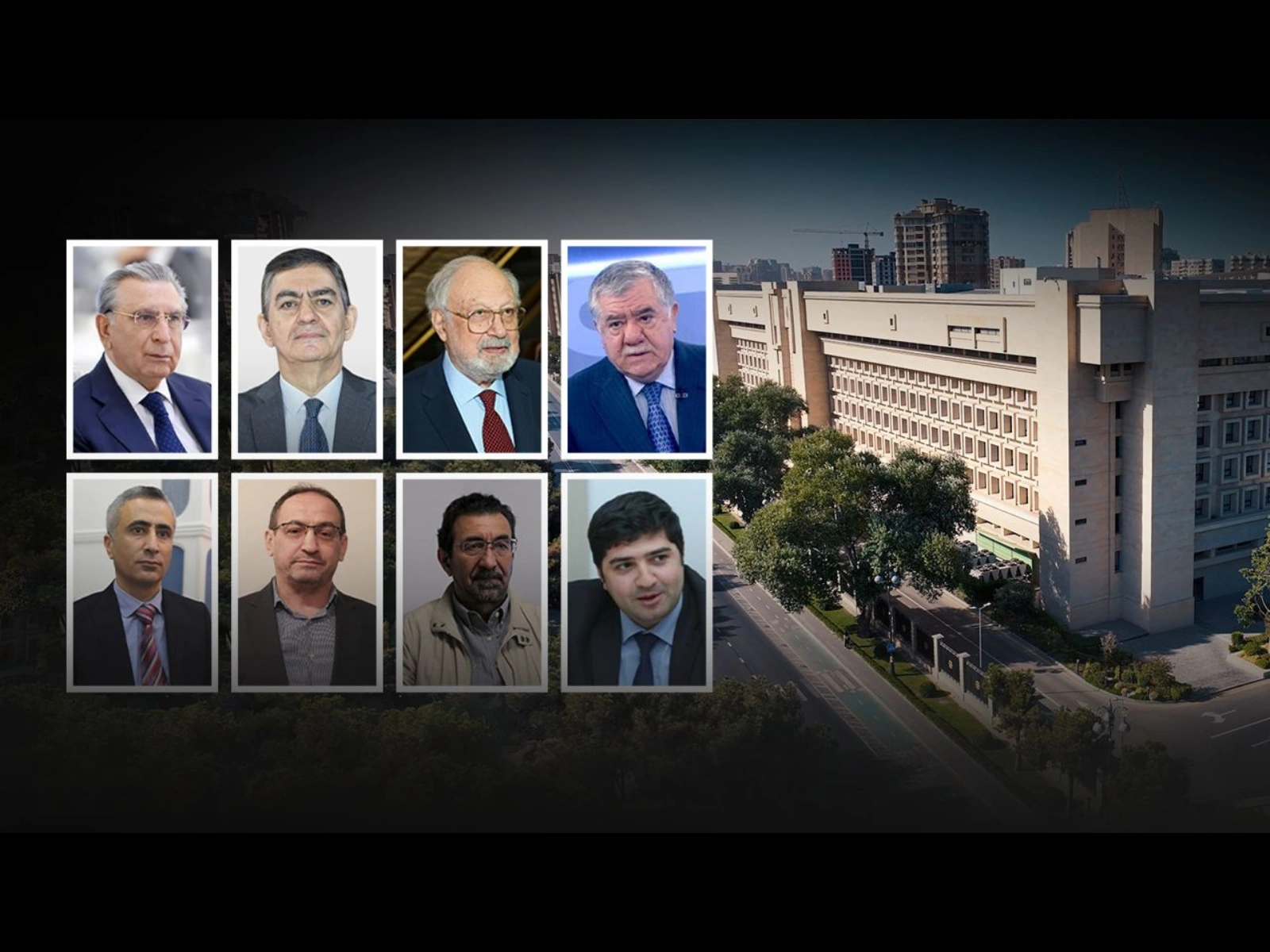
The activities of Mehdiyev and his "comrades in arms" - Ali
Karimli, Ganimat Zahidov, Fuad Gahramanli, and others should be
read precisely through this prism. The network they built over the
years created fertile ground not only for the struggle against the
authorities, but also for the operation of external influence
mechanisms within the country. In particular, the phenomenon of the
"old guard" played an important role in this process. Soviet-era
management reflexes, historical suspicion of the West, and
ideological inertia made these individuals more open to external
manipulation. The main goal for these people was not the strategic
interests of the state, but the protection of their personal
positions and spheres of influence. Foreign special services used
these weaknesses to turn them into tools for their own game. The
result of the "elite capture" strategy is different from classic
coups d'état. Here there are no barricades and military equipment.
They are replaced by memorandums, expert reports, narratives formed
in the media and technologies of "civil protest". These processes
are presented to society as democratic change, but the real goal is
to change the geopolitical course of the country and put it in the
orbit of another power center.
Failure to detect such networks timely poses a serious risk for
the strategic stability and sovereign decision-making ability of
the state. Therefore, the issue doesn't end with bringing specific
individuals to legal responsibility. The main issue is for society
to understand how these mechanisms work and to form institutional
immunity that will prevent them in the future, because in the
modern world, states must protect not only their borders, but also
decision-making centers. Failure to capture these centers, in fact,
turns a country into a political tool of other powers, even if it
remains formally independent. In this context, the plans of foreign
special services, their product Ramiz Mehdiyev and his network
weren't allowed to be implemented in Azerbaijan. The State Security
Service destroyed the network of influence established by foreign
special services within the country, fundamentally neutralizing
their attempt to seize the decision-making mechanism of the
state.