BAKU, Azerbaijan, February 9. For Central Asia,
the Trump Route for International Peace and Prosperity (TRIPP)
could serve as a safety net for Western capital in the
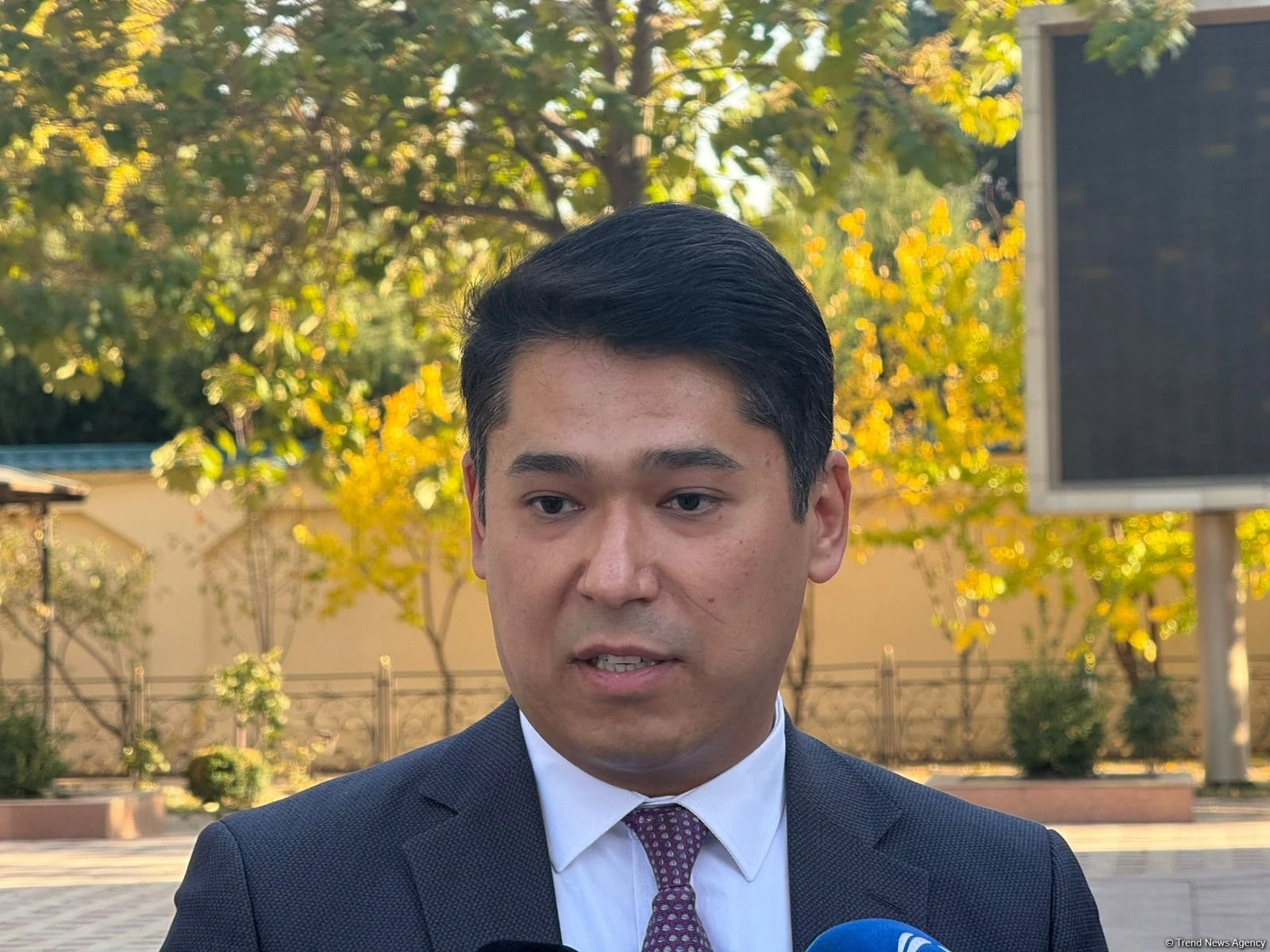
implementation of infrastructure projects in the region, Khayotjon
Ibragimov, head of the Center for Energy Diplomacy and Geopolitics
at Uzbekistan's University of World Economy and Diplomacy told
Trend.
According to Ibragimov, the visit of U.S. Vice President James
David Vance to Baku is a clear signal that Washington is shifting
from declarations to pragmatism in the Caspian region.
"TRIPP should not be seen merely as a logistics project but as a
'financial shield' for the Middle Corridor. For Central Asia, and
specifically for Uzbekistan, this changes the rules of the game:
the emergence of a route under American patronage, passing through
Azerbaijan to Europe, acts as a safety net for Western capital.
This reduces country risks and lowers costs for our infrastructure
projects," he said.
Ibragimov pointed out that the bedrock of U.S. ties with Central
Asian nations is rooted in energy and essential minerals.
"The U.S. aims to break China's monopoly on the supply chains of
rare earth metals, and Central Asia is a key piece of the puzzle.
We are seeing a shift to a new cooperation formula: 'Technology in
exchange for resources. 'Uzbekistan, with its reserves of copper,
uranium, and lithium, now has the chance to attract American
deep-processing technologies, rather than just export raw
materials," he said.
The expert pointed out that down the line, relationships will
hinge on practical resource considerations.
"I expect a growth in investment in geological exploration and
possibly in nuclear energy—the U.S. will actively promote its small
modular reactors (SMRs) as an alternative to competitors. Through
the link with Azerbaijan, we are finally gaining not only access to
the sea but also access to advanced industrial technologies, which
is critically important for our economic modernization," Ibragimov
delineated.
On August 8, 2025, in Washington, with the participation of US
President Donald Trump, President of the Republic of Azerbaijan
Ilham Aliyev, and Prime Minister of Armenia Nikol Pashinyan, a
joint declaration was signed. One of the points of the document
provides for the launch of the Zangezur corridor (“Trump Route” or
TRIPP) to unblock regional communications. In addition, the foreign
ministers of Azerbaijan and Armenia initialed an agreement on peace
and interstate relations.
In January 2026, the Armenian Foreign Ministry published the
agreement signed between Armenia and the U.S. on the implementation
of the TRIPP project. Armenian Foreign Minister Ararat Mirzoyan and
U.S. Secretary of State Marco Rubio met in Washington and presented
a framework program for the implementation of the TRIPP project.
The published document was assessed as a new step towards
fulfilling the commitments made at the White House on August 8,
2025, to support the establishment of a sustainable peace in the
South Caucasus.
The joint statement of Mirzoyan and Rubio said that Armenia
intends to approve and support the establishment of the TRIPP
Development Company, which will be responsible for the development
of the TRIPP project. The company will be granted the right to
implement the project for an initial period of 49 years. Yerevan
plans to offer Washington 74% of the shares of TRIPP Development
Company while retaining 26%.
Stay up-to-date with more news on Trend News
Agency's WhatsApp channel