ASTANA, Kazakhstan, January 31. The
Constitutional Reform Commission of Kazakhstan has released a draft
of the country's new Constitution, Trend reports via the Constitutional Court of
Kazakhstan.
This draft was developed following a thorough analysis of
proposals from citizens, political parties, civil society
organizations, and experts, complemented by open public discussions
and an examination of emerging norms and provisions.
The proposed amendments seek to align the Constitution with a
more human-centered state, embodying the contemporary values and
principles of the Kazakh people. They also aim to enhance the
effectiveness of the country's political institutions.
A key modification in the new Preamble is the declaration that
human rights and freedoms will be the state's foremost priority.
The principles of unity, solidarity, and interethnic and interfaith
harmony are established as the cornerstones of Kazakhstan's
statehood, while sovereignty, independence, unitarity, and
territorial integrity are enshrined as inviolable values.
For the first time, the new Constitution also introduces
principles such as justice, law and order, and environmental
stewardship.
The draft Constitution emphasizes that the people of Kazakhstan
are the only source of state power and the bearers of sovereignty,
signaling a stronger focus on democracy and accountability.
A central theme of the new Constitution is the emphasis on
education, science, culture, and innovation. This represents a
significant shift, highlighting that the future of the nation will
be determined not by natural resources but by human capital and the
achievements of its citizens.
A notable feature of the proposed changes is the focus on
digitalization. For the first time, the Constitution will include
provisions to protect citizens' rights in the digital environment,
marking a step towards safeguarding digital rights in an
increasingly connected world.
The draft Constitution also emphasizes the separation of
religion and state, asserting the secular nature of Kazakhstan's
educational and upbringing systems.
Furthermore, it introduces a provision that marriage is a
voluntary and equal union between a man and a woman, reinforcing
traditional values and strengthening the protection of women's
rights.
The process of constitutional reform was initiated by President
Kassym-Jomart Tokayev, who proposed the idea of establishing a
unicameral Parliament in Kazakhstan during his annual address to
the nation on September 8, 2025. The proposal aims to reboot the
political system and positively influence Kazakhstan's
socio-economic development in the era of artificial
intelligence.
On October 8, President Tokayev signed a decree to establish a
working group for parliamentary reform, which included egal
experts, political party representatives, and civil society
members. Public participation was also encouraged, with citizens
submitting their opinions and suggestions through the e-Otinish and
eGov portals.
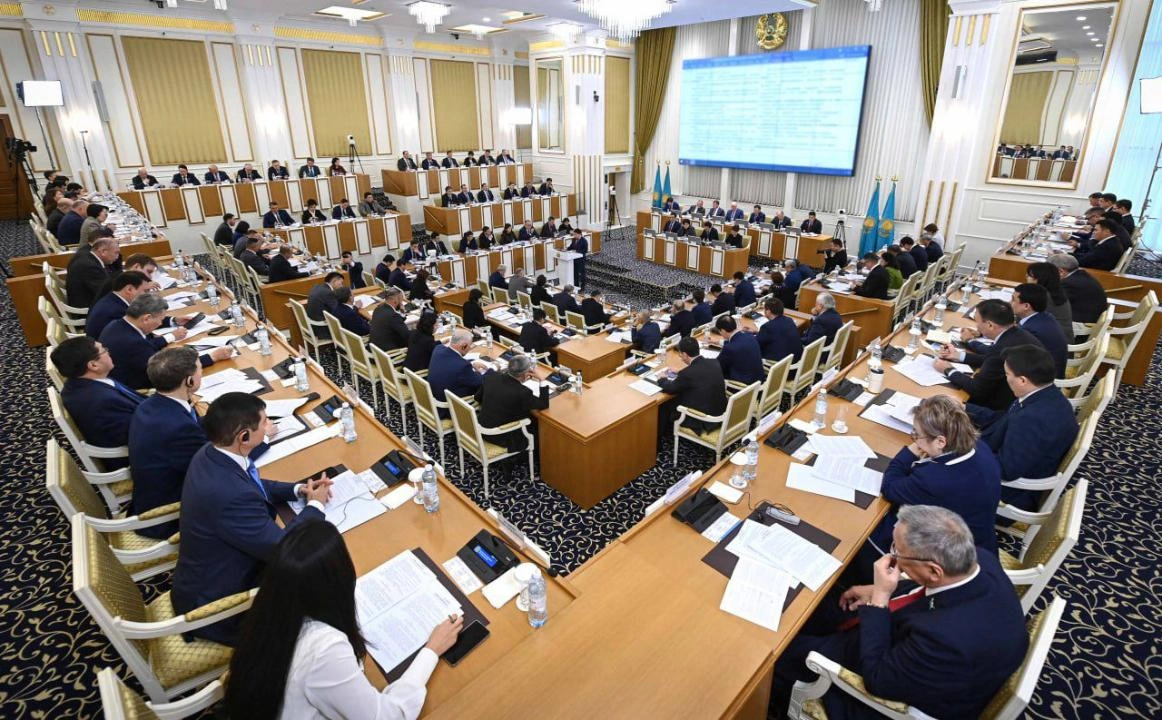
On January 21, the Constitutional Commission was officially
formed, consisting of 130 members. Over the course of its work, the
Commission reviewed proposals affecting all sections and 77
articles, which represent 84% of the Constitution’s content. As a
result, the Commission has supported the idea of preparing a
completely new Constitution for Kazakhstan.