ASHGABAT, Turkmenistan, October 21. Pakistan is
committed to implementing the
Turkmenistan–Afghanistan–Pakistan–India (TAPI) gas pipeline
project; however, to move the project forward, it is necessary to
ensure its commercial sustainability, financial viability, and the
long-term availability of the gas to be supplied, Pakistan’s
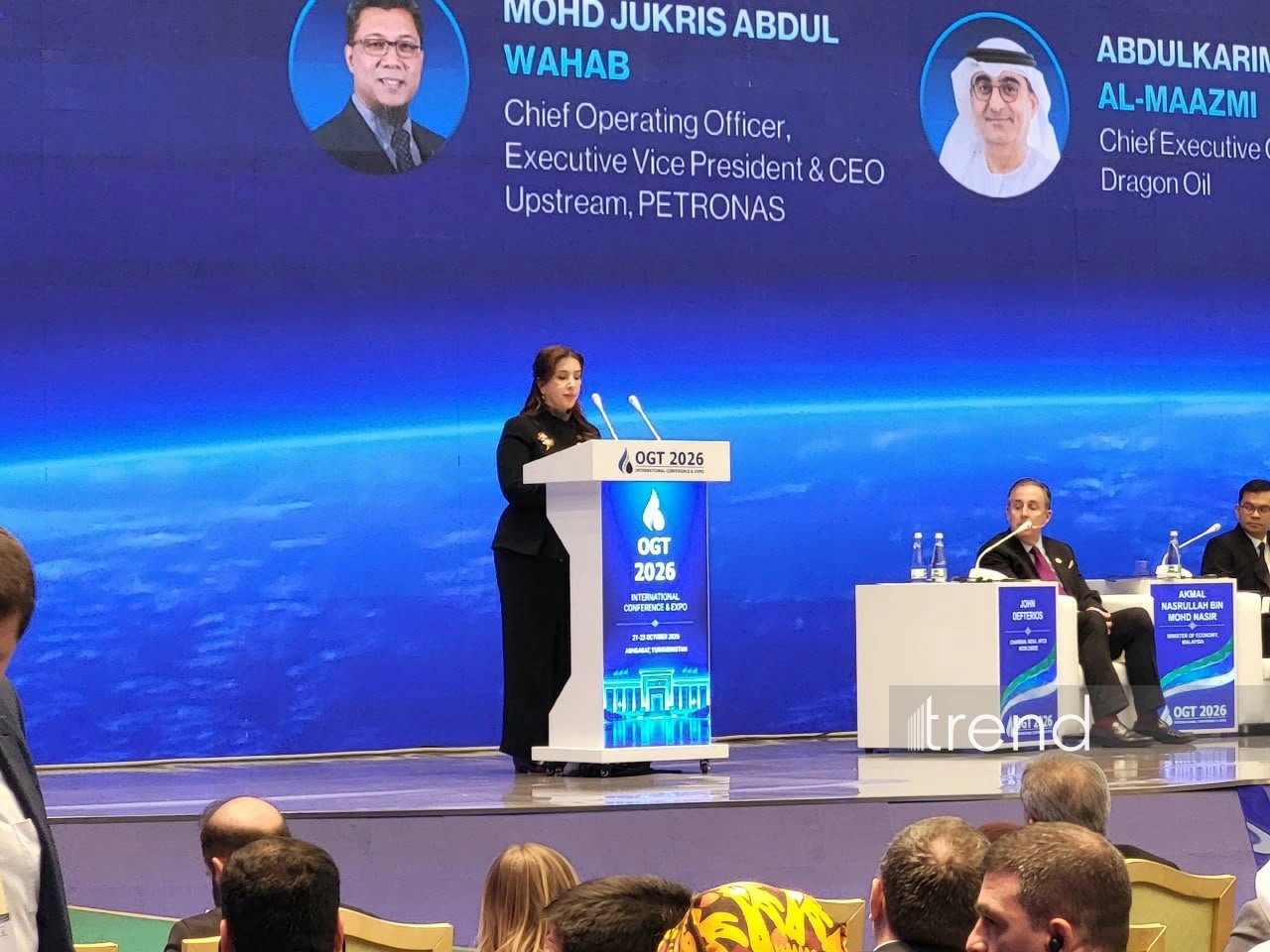
Ambassador to Turkmenistan, Faryal Leghari, said at the
international conference and exhibition “Oil and Gas of
Turkmenistan – 2026” (OGT 2026) in Ashgabat, Trend's special correspondent
reports.
“Pakistan, therefore, remains committed to constructive
cooperation with Turkmenistan and other participating countries to
advance this project,” she said.
According to Leghari, the TAPI project is of strategic
importance for regional energy interconnectivity, as it is designed
to link Central Asia’s energy resources with the markets of South
Asia.
“For Pakistan, TAPI is more than just a gas pipeline,” the
ambassador noted.
She emphasized that the successful implementation of the project
could contribute to strengthening energy security, developing
economic activity and infrastructure, and expanding ties among the
participating countries.
At the same time, the diplomat pointed out the need to create
practical and mutually beneficial conditions for the project’s
implementation, taking into account the changing energy needs and
economic circumstances of the participating countries.
“Its advancement must be based on sound commercial agreements,
the availability of financing, infrastructure security, as well as
contractual and operational mechanisms that remain adaptable to the
changing energy needs and economic circumstances of the
participating countries,” Leghari stated.
She acknowledged that the project has faced numerous challenges
that have significantly delayed its completion.
“However, Pakistan believes that these issues are best resolved
through continued consultations, flexibility, and close cooperation
among all stakeholders,” the ambassador said.
According to her, Pakistan highly values its cooperation with
the Government of Turkmenistan and the TAPI Pipeline Company
Limited and looks forward to further negotiations to reach mutually
acceptable solutions to the project’s existing challenges.
Faryal Leghari also noted the prospects for expanding bilateral
cooperation beyond the TAPI gas pipeline. In particular, Pakistan
is interested in developing trade, investment, transportation and
transit links, road and rail connections, information technology,
and agriculture.
In addition, the ambassador pointed to the potential of the
proposed initiative to transmit electricity along the
Turkmenistan–Afghanistan–Pakistan route.
She added that improving transport corridors and making more
active use of Pakistan’s ports could expand Turkmenistan’s and
other Central Asian countries’ access to the Arabian Sea and
international markets.
“Pakistan believes that energy corridors should increasingly
evolve into economic corridors that promote trade, investment,
digital connectivity, and the movement of goods and people
throughout the region,” Faryal Leghari concluded.