BAKU, Azerbaijan, October 21. Kazakhstan and
the European Union have discussed the implementation of agreements
reached during Kazakh President Kassym-Jomart Tokayev’s official
visit to Brussels in June 2026, as well as prospects for trade,
investment and transport cooperation, according to Kazakhstan’s
Ministry of Foreign Affairs.
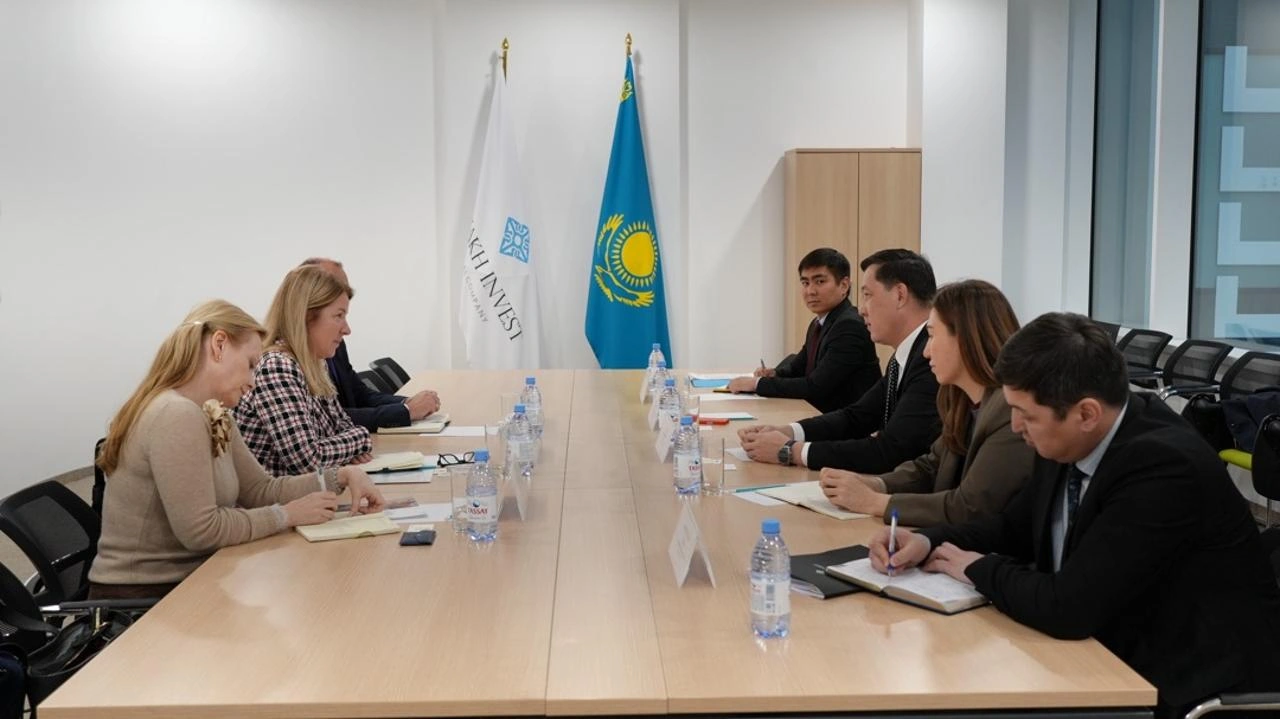
The issues were discussed at a meeting in Astana between Kazakh
Deputy Foreign Minister Ardak Zebeshev and European Union
Ambassador to Kazakhstan Aleška Simkić.
“The European Union remains Kazakhstan’s largest trade and
investment partner. In 2025, bilateral trade exceeded $45 billion,
while total investment from EU countries since 2005 amounted to
$200 billion. Our priorities remain unchanged: trade and
investment, transport connectivity, energy, the green and digital
transitions, critical raw materials, environmental protection and
the fight against climate change,” Zebeshev said.
According to the ministry, bilateral trade between Kazakhstan
and the EU amounted to $45.1 billion in 2025, down 7.1% from $48.6
billion in 2024. Kazakhstan’s exports to the EU totaled $34.7
billion, decreasing by 6.3%, while imports from the EU reached
$10.4 billion, down 9.7%.
In January-July 2026, bilateral trade increased by 3%
year-on-year to $26.4 billion, compared with $25.6 billion in the
same period of 2025. Kazakhstan’s exports to EU countries grew by
5.9% to $20.8 billion, while imports from the bloc declined by 6.5%
to $5.6 billion.
Zebeshev outlined measures to improve the investment climate and
reduce administrative risks. These include investment agreements,
tax and customs incentives, state in-kind grants and opportunities
offered by special economic zones.
Investment protection and support mechanisms include the
Investment Ombudsman, the investment prosecutor, the National
Digital Investment Platform and the “green corridor” mechanism.
The sides also discussed the Global Gateway Investment Hub,
launched by the European Commission to promote investment projects
in partner countries. The Kazakh side noted that the mechanism’s
practical value depends on its ability to help move projects from
the conceptual stage to implementation.
The development of the Trans-Caspian International Transport
Route (TITR), also known as the Middle Corridor, was another key
topic. Kazakhstan identified the route as one of its strategic
priorities and welcomed the signing, with EU support, of loan
agreements with the European Bank for Reconstruction and
Development (EBRD) and the European Investment Bank (EIB),
including agreements related to the modernization of the Port of
Aktau and the development of sustainable transport infrastructure
in Kazakhstan.
The sides agreed to continue close cooperation to advance joint
projects