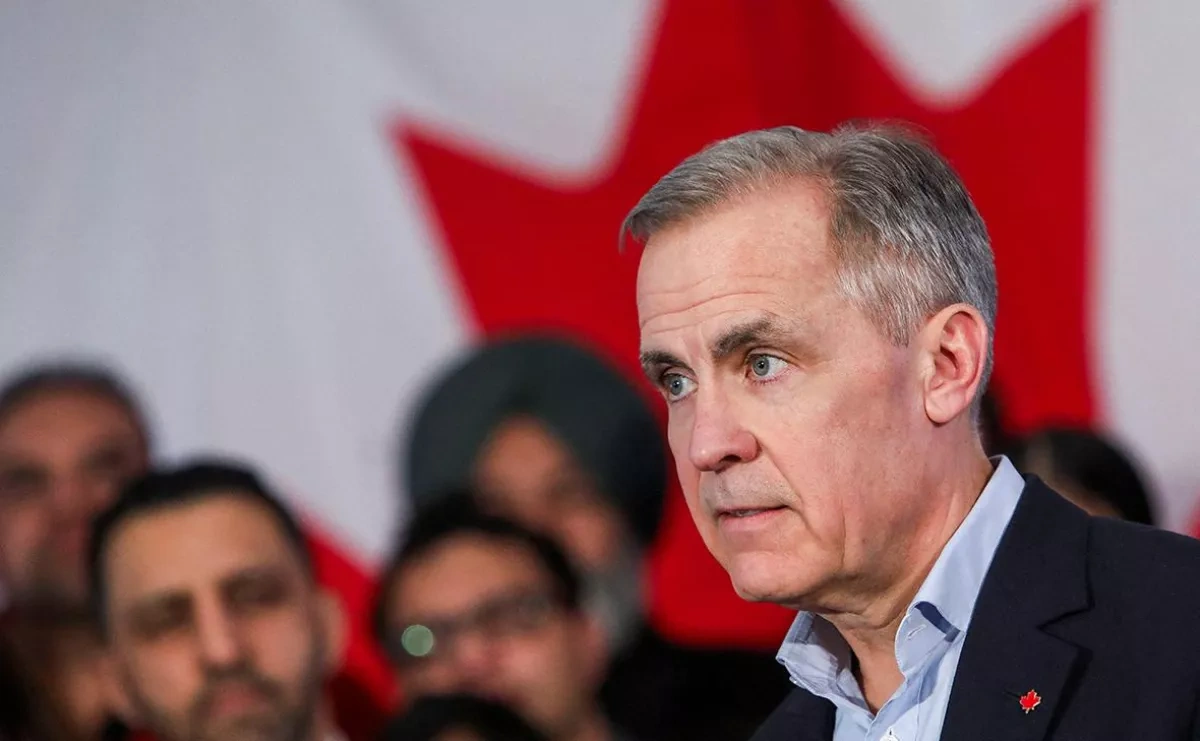
EU capitals have responded cautiously to Canada’s push for a closer and potentially “unique alliance” with the bloc, tempering Prime Minister Mark Carney’s call for “middle powers” to unite in the face of pressure from the United States and China.
Carney, who is visiting France and Britain this week, told the Financial Times that Europe should deepen its economic partnership with Canada. He had previously floated the idea of “associate membership” for Ottawa.
But the initiative has failed to persuade governments concerned about granting Canada preferential access to the EU market, according to five EU diplomats involved in discussions.
Instead, sceptical member states have suggested improving the implementation of existing agreements, the diplomats said. There is broader agreement, however, on strengthening cooperation with Canadian defence manufacturers and companies involved in critical-mineral mining.
“We love the Canadians but everyone is very realistic about what’s possible and what’s not,” one EU diplomat said. “Saying ‘everything but membership’ sounds good, but came across as not really thought through,” the diplomat added. “But I don’t fault [Carney] for trying.”
Another diplomat said concerns about how US President Donald Trump could respond to a substantially closer EU-Canada relationship were also shaping the position of some capitals. Countries that depend heavily on NATO protection against Russian threats, including the Baltic states, were particularly cautious, a third diplomat said.
“Of all the third countries, Canada is one of the few that we all want to get closer to right now,” a fourth diplomat said. “But even with them, we all know we have to be careful when you start talking about trade access and preferential treatment.”
Carney has sought to position Canada as a catalyst for cooperation among Western liberal democracies, arguing that closer coordination is needed to protect multilateral institutions facing pressure from the Trump administration’s assertive foreign policy. Canada is one of only two countries, alongside China, to have imposed retaliatory tariffs on the United States in response to Trump’s trade war.
As part of his campaign to strengthen ties with the EU, Carney will attend European Commission President Ursula von der Leyen’s annual State of the Union address in Strasbourg on Wednesday and deliver his own speech to the European Parliament on Thursday.
Carney introduced the term “middle powers” in a speech at the World Economic Forum in Davos in January, arguing that such countries should come together to withstand the influence of superpowers such as China and the United States. Von der Leyen has broadly endorsed the concept.
But at a meeting last week of ambassadors from EU member states preparing for Carney’s visit, one ambassador reportedly said the bloc was “not a ‘middle power’” and that Canada, being much smaller, should not expect special treatment, according to people briefed on the exchange.
“Many capitals feel that there needs to be a bit of a sense of realism,” a fifth EU diplomat said.
The diplomat pointed to the fact that 10 EU countries, including France and Italy, have yet to ratify the Comprehensive Economic and Trade Agreement, or CETA, signed with Canada in 2017. Ratification has been delayed by objections from several national parliaments to provisions that would give Canadian investors greater rights to sue governments, as well as provisions reducing tariffs on agricultural goods.
CETA is already provisionally in force, meaning most of its provisions — including tariff reductions, customs rules and market access for goods and services — are being applied.
In his FT interview, Carney notably moderated his ambitions, calling instead for the 10 remaining EU countries to ratify CETA.
Full ratification is nevertheless becoming increasingly uncertain. France is heading toward presidential elections, while Italian Prime Minister Giorgia Meloni may have to form an alliance with a far-right nationalist ahead of next year’s general election, potentially weakening prospects for approval in two of the EU’s largest member states.
Differences over rules and standards have also complicated efforts to bring Canada and the EU closer together, particularly given the continuing importance of the US market to Canada. The EU accounts for less than 6 per cent of Canadian goods exports, limiting the potential for significantly deeper trade ties.
Beef illustrates the difficulties. Canada exports no beef to the EU despite having access to a low-tariff quota under CETA because Canadian producers use growth hormones that are prohibited under EU rules.
Other trade disputes remain unresolved. The EU wants Canada to remove tariffs on European steel and certain products, including nails, and to ease “Buy Canadian” requirements that favour domestic production over imports.
Ottawa, meanwhile, has raised objections to the EU’s proposed “made in Europe” policy and environmental regulations that it says will increase costs for key Canadian exports such as lumber and aluminium.
The two sides are nevertheless seeking to conclude a digital trade agreement before an October 29-30 summit in Montreal.
EU governments are also mindful that many Canadian regulations are set at the provincial level, limiting the federal government’s ability to deliver changes it has promised.
By Tamilla Hasanova