BAKU, Azerbaijan, September 9. The
implementation of the goals of the Paris Agreement needs to be
accelerated as climate impacts continue to intensify worldwide,
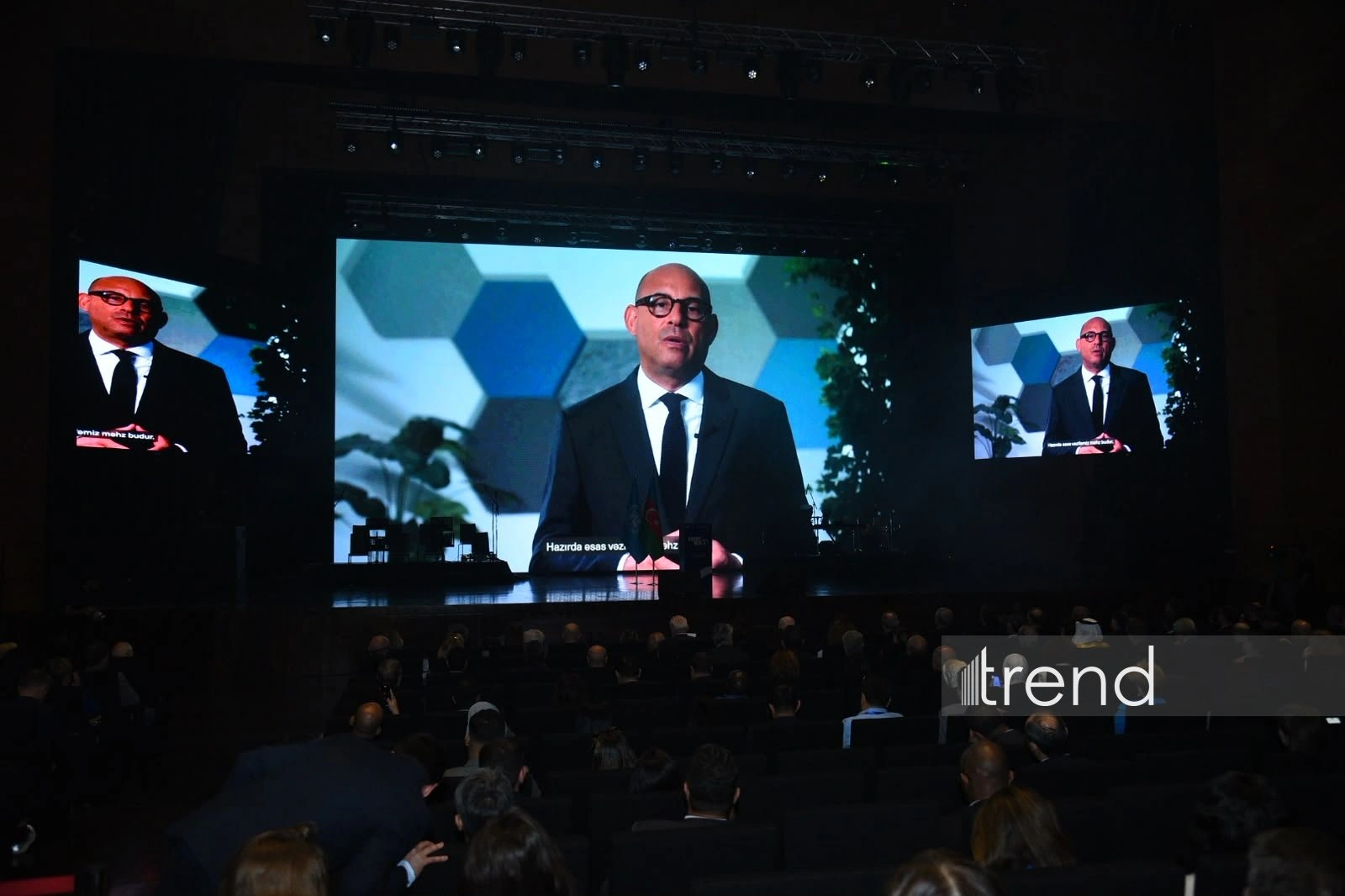
Executive Secretary of the United Nations Framework Convention on
Climate Change (UNFCCC) Simon Stiell said during Baku Climate
Action Week, Trend's
correspondent reports from the event.
According to him, COP29 in Baku became an important milestone in
international climate cooperation. “At COP29, countries agreed on a
new global climate finance goal of $300 billion annually by 2035,
and called on all parties to work together to scale up climate
finance from public and private sources to at least $1.3 trillion
per year by 2035,” Stiell said.
He noted that the Baku Roadmap to mobilize $1.3 trillion
continued this work through practical steps aimed at ensuring that
financing reaches the areas where it is needed most. “Returning to
Baku means more to me than symbolism. It is a starting point for
implementing commitments and a test of whether promises made in
negotiation rooms are being transformed into projects, investments
and real protection for people on the ground,” the UNFCCC executive
secretary said.
He stressed that international climate cooperation is producing
results and that without it, humanity would be moving toward
catastrophic levels of warming. “Investment in clean energy now
exceeds $2 trillion annually. Renewable energy has overtaken coal
as the world’s largest source of electricity generation, and this
gap will continue to grow,” Stiell said.
He emphasized that the transition to clean energy is
irreversible, while climate-related consequences are also becoming
more severe. “Every region is facing stronger heatwaves, floods,
droughts, wildfires and food insecurity, and every economy is
exposed to these risks. That is why every fraction of a degree
matters,” Stiell noted.
He added that from Baku Climate Action Week to COP31 and beyond,
efforts must focus on accelerating the implementation of the goals
of the Paris Agreement.
The third day of the Baku Climate Action Week 2026 (BCAW 2026)
is underway.
The program of the third day will focus on issues such as the
transition from climate commitments to concrete action, climate
financing, youth participation in climate processes, artificial
intelligence and climate technologies, energy efficiency, methane
emissions reduction, water resources management, and cultural
heritage protection.
Representatives of governments and international organizations,
experts, financial institutions, the private sector, and civil
society from various countries are attending the events.
Now in its third year, Baku Climate Action Week is being held in
parallel with the UN Framework Convention on Climate Change
(UNFCCC) Climate Week for the first time this year. The Fourth
Climate Week and Baku Climate Action Week will feature a series of
sessions, panel discussions and other events on climate change,
climate finance, sustainable development and accelerating climate
action.
BCAW 2026 will continue until September 11.