BAKU, Azerbaijan, September 9. Uzbekistan and
Serbia are expanding scientific and technological cooperation in
crop breeding, modern seed production and nursery development, with
the two countries working to develop high-yield varieties adapted
to Uzbekistan’s climate.
This was reflected in the statement by the Ministry of
Agriculture of Uzbekistan.
The cooperation involves Serbia’s Institute of Field and
Vegetable Crops in Novi Sad and focuses on developing varieties and
hybrids of fruits and vegetables that can withstand heat, drought
and various diseases.
Scientists and specialists from the two countries are working to
exchange expertise, apply advanced breeding methods, develop
varieties with strong genetic potential and test them under
Uzbekistan’s local conditions.
Particular attention is being paid to producing high-quality
seeds and planting materials, preserving and multiplying varietal
characteristics, and transferring scientific developments into
commercial agricultural production.
The cooperation also includes plans to establish a modern
nursery production system in Uzbekistan based on advanced
technologies. Serbian experience is expected to be adapted to local
conditions through joint projects.
“The partnership with Serbian specialists provides an
opportunity to combine scientific expertise and practical
experience to develop varieties and hybrids that are better adapted
to Uzbekistan’s climate and production conditions,” the Uzbek side
said.
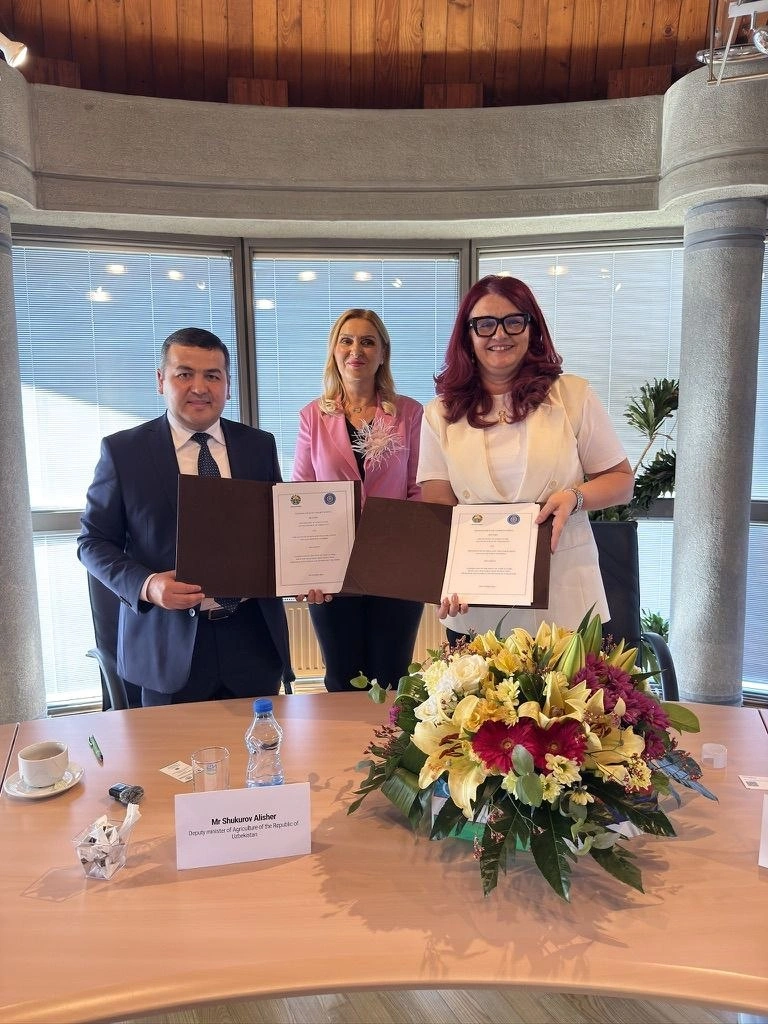
The two countries have signed relevant cooperation agreements
following a series of meetings, providing a framework for expanding
joint research and combining scientific capacity with practical
agricultural expertise.
Future cooperation is expected to include joint scientific
research, field trials, specialist exchanges, professional
development and internship programs.
The partnership comes as Uzbekistan seeks to strengthen domestic
breeding and seed-production capacity and introduce technologies
that can improve agricultural productivity and resilience to
climate change.
The cooperation with Serbian researchers could also support the
development of a more modern nursery and planting-material
production system, while helping bring new breeding technologies
and scientific results into agricultural practice.
The sides are expected to continue working on practical projects
aimed at increasing the availability of quality seeds and planting
materials, strengthening local breeding capabilities and developing
climate-adapted horticulture and vegetable production in
Uzbekistan.