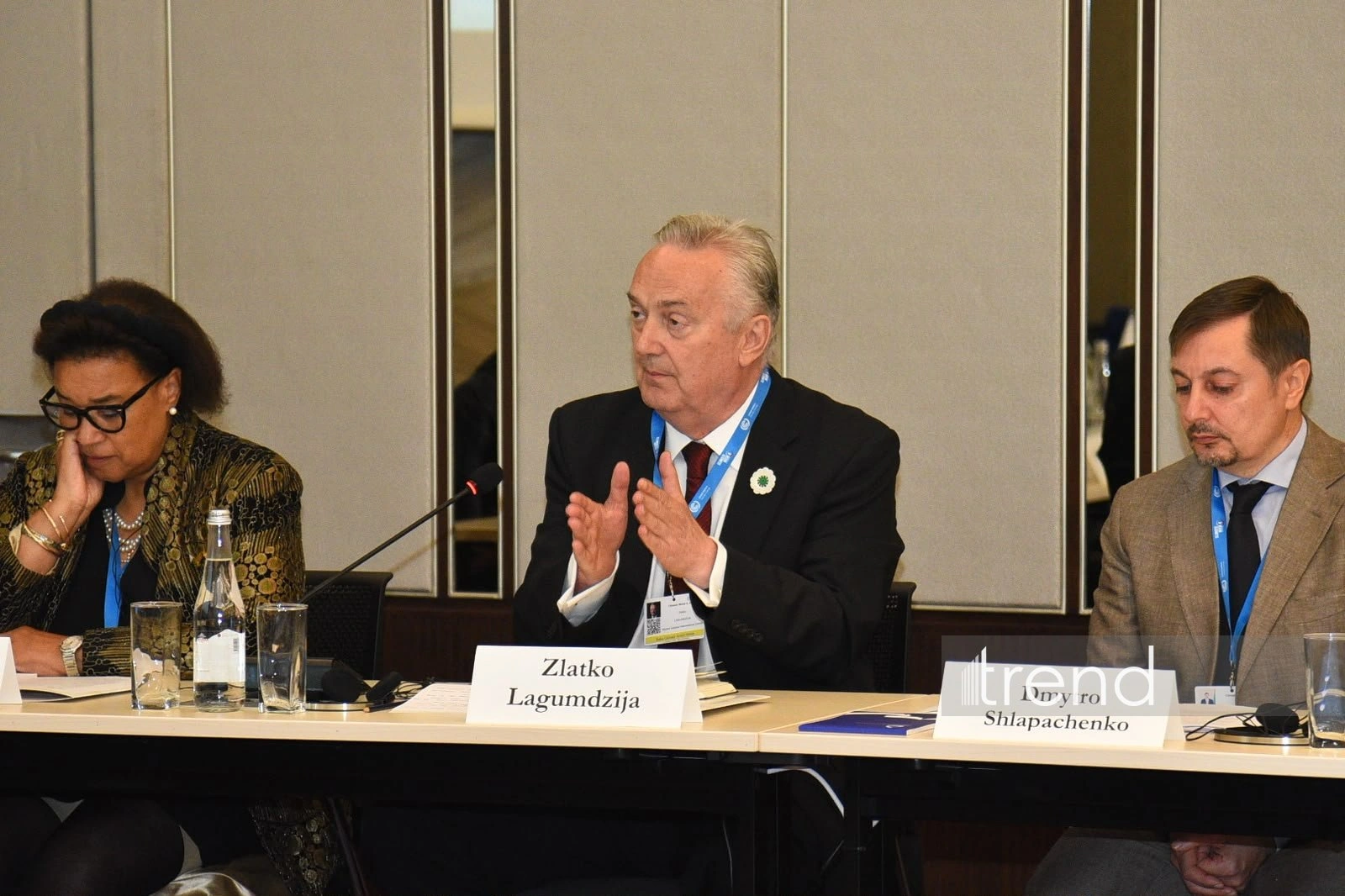
BAKU, Azerbaijan, September 9. The poorest
results on the Sustainable Development Goals (SDGs) are in the
areas of food and cities, Permanent Representative of Bosnia and
Herzegovina to the UN and former Prime Minister of the country,
Zlatko Lagumdzija, said during the 2026 Baku Climate Action Week
(BCAW 2026), Trend's correspondent reports from the event.
According to him, recent reports on the implementation of the
SDGs show that the situation is of serious concern.
He noted that with five years to go before the deadline for the
implementation of the SDGs, progress on only 15% of the goals is on
track.
“Only 15% of the SDGs are on track to be achieved. Another 15%
are on track to be achieved, meaning they have worsened since 2015.
About two-thirds face serious constraints and are unlikely to be
met,” he explained.
According to Lagumdzija, positive results have been achieved
mainly in the areas of internet, digital transformation, and the
transition to renewable energy.
“The best results are related to digitalization and energy
transition. However, the weakest indicators are for SDG 16, which
covers peace and security, and SDG 2, which is related to food,” he
pointed out.
He stressed that the negative results on food are not limited to
hunger, but obesity also remains a serious challenge.
The UN Permanent Representative noted that in order to achieve
the SDGs, governments must have appropriate policies and mechanisms
for their implementation, along with the goals set by them.
"The main problem is not the goals themselves, but the means to
achieve them and the implementation of those means," he said.
Lagumdzija added that special attention should be paid to six
key transformations for the implementation of the SDGs. These
include education, health, energy, sustainable land and food
systems, sustainable cities, and digital transformation.
According to him, governments are paying more attention to
technology, digitalization, and energy. However, the results in the
direction of sustainable food and land systems, as well as urban
development, are weaker.
"Additional impetus and a more serious approach are needed in
these areas. The six key transformations remain the main roadmap to
success. But among them, we need to pay more attention to food and
sustainable land," he stressed.
Lagumdzija also noted the rapidly expanding opportunities in the
field of digital transformation and artificial intelligence.
"Everything is developing rapidly in the direction of digital
transformation, and artificial intelligence is one of the main
topics on the agenda today. We are in a technologically good
position. But how we use these technologies is another matter."
The third day of the Baku Climate Action Week 2026 (BCAW 2026)
is underway.
The program of the third day will focus on issues such as the
transition from climate commitments to concrete action, climate
financing, youth participation in climate processes, artificial
intelligence and climate technologies, energy efficiency, methane
emissions reduction, water resources management, and cultural
heritage protection.
Representatives of governments and international organizations,
experts, financial institutions, the private sector, and civil
society from various countries are attending the events.
Now in its third year, Baku Climate Action Week is being held in
parallel with the UN Framework Convention on Climate Change
(UNFCCC) Climate Week for the first time this year. The Fourth
Climate Week and Baku Climate Action Week will feature a series of
sessions, panel discussions and other events on climate change,
climate finance, sustainable development and accelerating climate
action.
BCAW 2026 will continue until September 11.