BAKU, Azerbaijan, September 9. It is essential
to link climate ambitions with concrete action across all sectors
of the economy and bring governments together with businesses,
investors, cities, civil society and other non-state actors,
Trend’s correspondent
reports from the event.
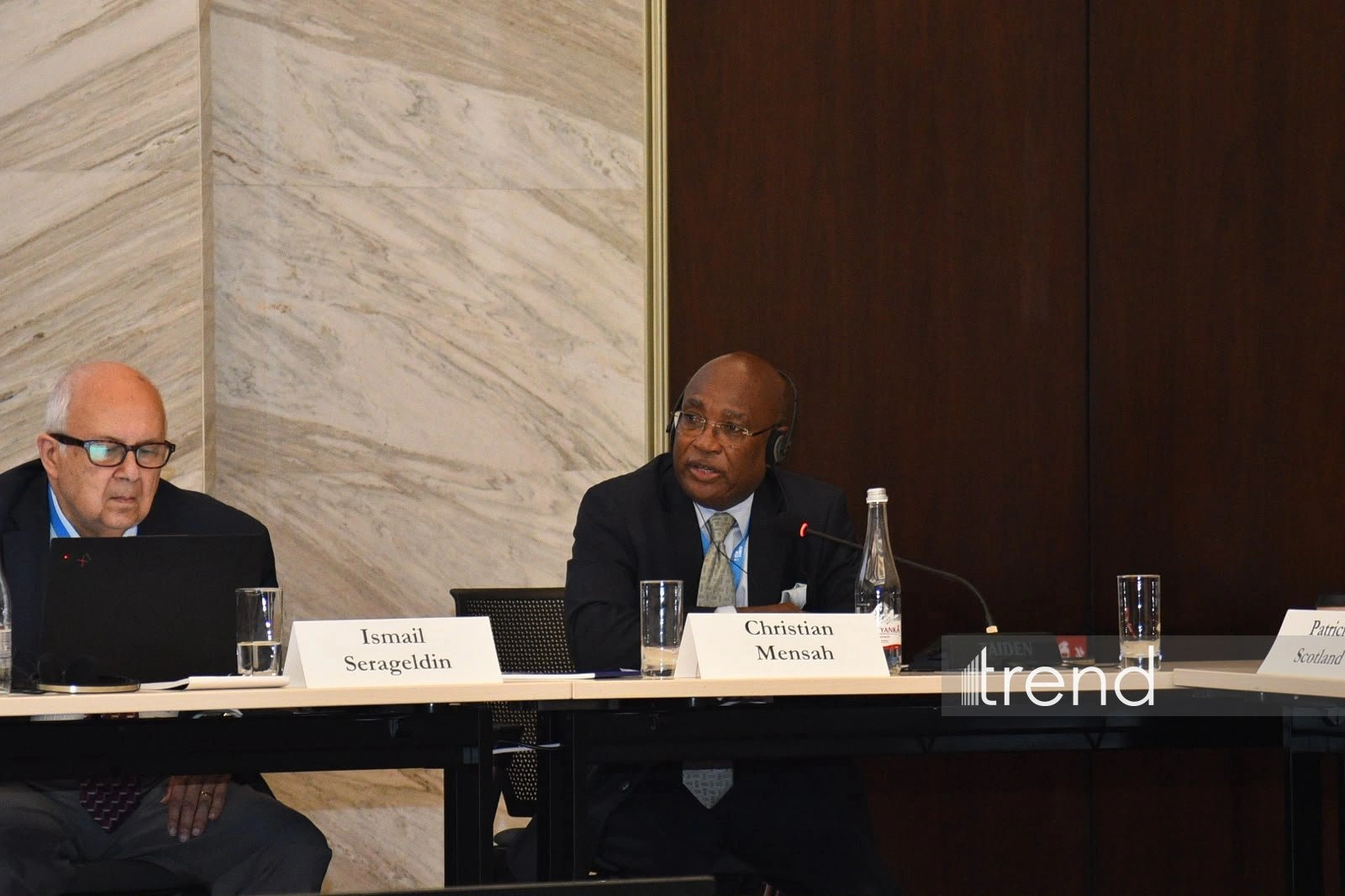
Christian Mensah, a Ghanaian and former secretary of the
UN-Habitat Governing Bodies and head of intergovernmental
relations, made the remarks at Baku Climate Action Week 2026 (BCAW
2026).
He said adopting climate commitments was not enough, adding that
the key challenge was creating the conditions needed to turn those
commitments into concrete action.
“Our role is to link climate ambitions with action across all
sectors of the economy. To do this, we bring governments together
with businesses, investors, cities, civil society and other
non-state actors. As UN Climate Champions, we are here. Our
responsibility is not only to promote commitments but also to
create the conditions for turning those commitments into action,”
he said.
Mensah noted that COP29 could make a difference in this regard,
while Baku Climate Action Week was important for ensuring the
continuity of the results achieved.
“Ensuring implementation requires continuity, and it is
important to keep people at the center. We can make as many
political statements as we want, but if they do not affect people’s
lives, then we have not achieved results,” Mensah emphasized.
He said that alongside investment, partnerships were also
essential for climate action.
“Investment is not simply a relationship between a donor and a
recipient. We also need to find ways to finance projects through
local capacities. We should not always wait for the arrival of the
huge $1.3 trillion in financing,” he said.
According to Mensah, climate action cannot advance through
governments’ efforts alone.
“Governments create an enabling environment and set the
political direction. Businesses invest, cities implement, financial
institutions mobilize capital, innovators develop solutions, and
civil society helps ensure that action is inclusive and
accountable,” he said.
He emphasized the need to move away from an approach centered on
individual conferences toward a model based on continuous dialogue
and implementation in climate leadership.
“A child in Sudan should know why we are going to Antalya. That
child should not simply read in a newspaper that people in suits
held a major meeting in Antalya and enjoyed the beach. That child
should know that the decisions made there affect their farm, their
ability to attend school, flood prevention and their life in
general,” Mensah said.
He also highlighted the importance of the zero-waste approach in
climate action.
“Implementing the zero-waste concept shows that implementation
is ultimately about changing systems. Waste is not only an
environmental issue. We approach it as an issue of resource
efficiency, the economy, business and communities,” Mensah
said.
According to him, a circular economy requires businesses to
rethink their approach to production and consumption, cities to
improve waste management systems, investors to finance new
technologies and infrastructure, and citizens to participate in
behavioral change.
Mensah also praised Türkiye’s efforts under its Zero Waste
initiative.
“Türkiye, under the leadership of Emine Erdoğan, wife of
President Recep Tayyip Erdoğan, has achieved significant success in
this area. That is why zero waste can become an important part of
global climate discussions,” he said.
The third day of Baku Climate Action Week 2026 (BCAW 2026) is
underway.
The third day’s program focuses on such issues as moving from
climate commitments to concrete action, climate finance, youth
participation in climate processes, artificial intelligence and
climate technologies, energy efficiency, methane emissions
reduction, water resource management and the protection of cultural
heritage.
Representatives of governments and state institutions from
various countries, international organizations, experts, financial
institutions, the private sector and civil society are
participating in the events.
Baku Climate Action Week is being held for the third time and,
for the first time this year, is taking place in parallel with the
UNFCCC Climate Week. A series of sessions, panel discussions and
other events on climate change, climate finance, sustainable
development and accelerating climate action will be held as part of
the Fourth Climate Week and Baku Climate Action Week.
Baku Climate Action Week 2026 will continue through Sept.
11.