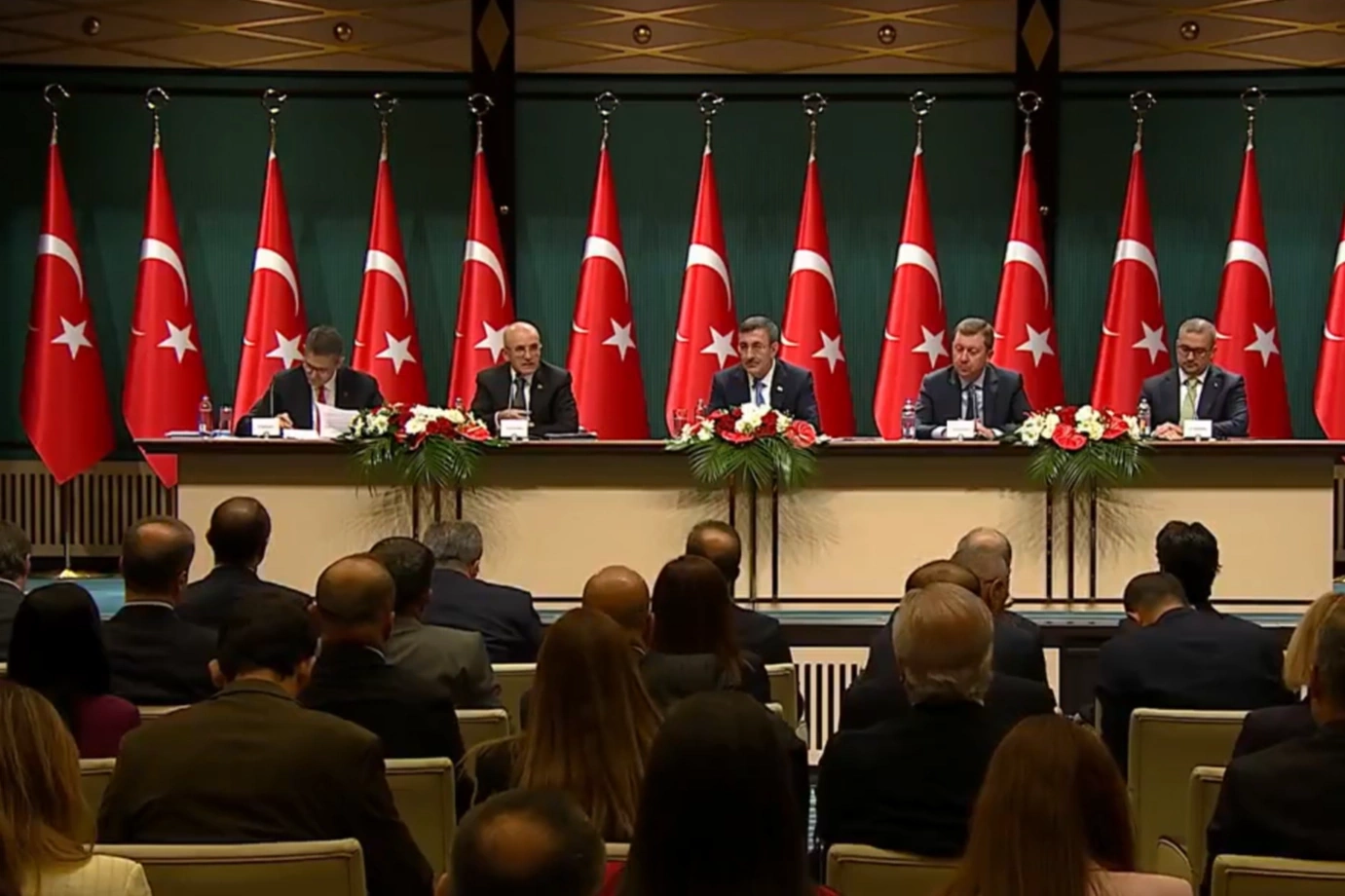
BAKU, Azerbaijan, September 7. Turkish Vice
President Cevdet Yılmaz spoke at the presentation of the
Medium-Term Economic Program (OVP) for 2027–2029 and outlined the
targets for the 2027–2029 period.
Yılmaz noted that one of the main objectives of the program is
to combat inflation. According to him, inflation, which reached
75.5% in May 2024, has declined as a result of the policies being
implemented.
He said that, as of August 2026, inflation stands at 31.5%, and
expressed expectations that the figure will fall to 28.4% by the
end of the year.
In his speech, Yılmaz highlighted the program’s main
targets:
- reduce inflation to single digits in the long term; inflation
is expected to reach 28.4% by the end of 2026;
- create 2.1 million new jobs and reduce unemployment to below
8%;
- increase GDP to more than $2.2 trillion;
- raise exports of goods and services to $450 billion;
- increase GDP per capita to $25,000.
Around $104 billion will be allocated to the reconstruction of
regions affected by the 2023 earthquakes during the 2023–2026
period, while total spending is expected to exceed $116 billion by
the end of 2027. Construction of 455,000 properties for rights
holders has already been completed.
Particular attention is being paid to economic security and
resilience, including reducing dependence on imported energy and
critical resources, strengthening food security, developing the
defense industry, healthcare, semiconductors and artificial
intelligence, as well as increasing the resilience of cities to
natural disasters.
Under the program, defense spending is planned to increase by
229%, spending on social housing by 150%, and investment in railway
projects by 49%. Investment in irrigation is also set to increase
by 42%, drinking water by 71%, organized agricultural zones by
103%, and MTA investment in the mining sector by 139%.
Overall, the Turkish government intends to focus on reducing
inflation, increasing employment, expanding production and exports,
strengthening energy and technological independence, and increasing
social investment.