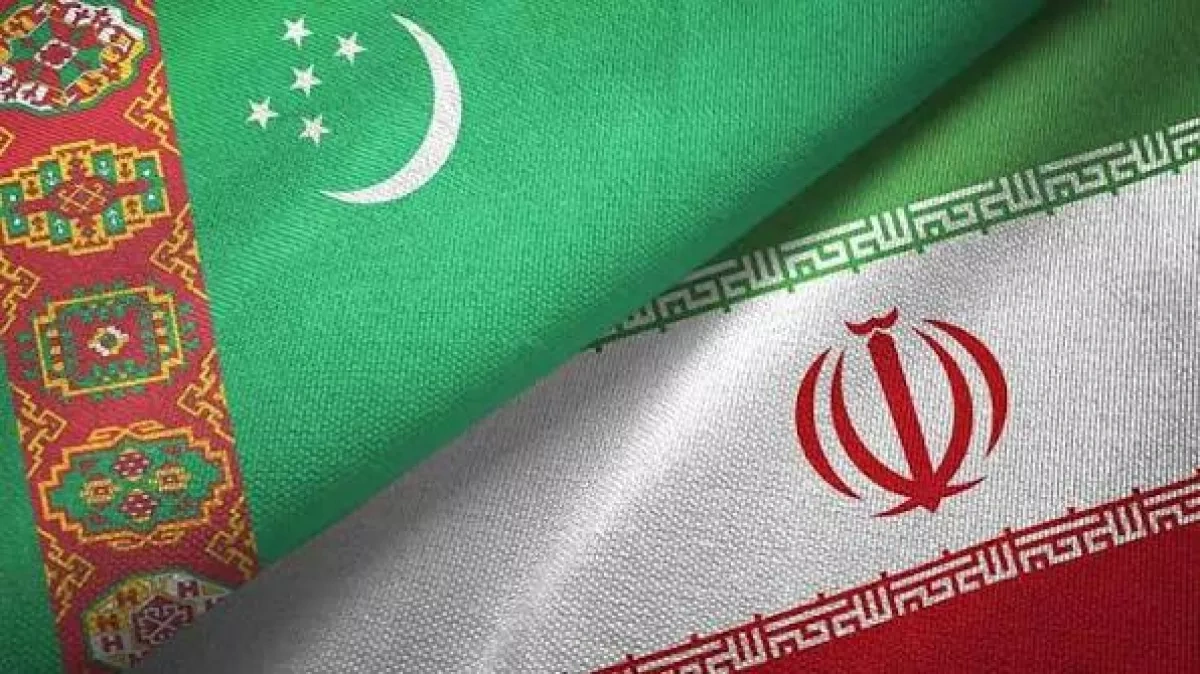
As military operations in and around Iran enter their seventh month, the last outcome most of Tehran’s neighbours want is for the conflict to spread into additional territory. Iran has land borders with only two other Caspian littoral states, Azerbaijan and Turkmenistan. For the latter, which is also the only Central Asian country sharing a land border with Iran, this geographical reality is an important factor in Ashgabat’s pragmatic approach to Tehran as it simultaneously seeks to broaden cooperation across multiple other areas.
During the past six months, Turkmenistan has handled the Iran war and its wider regional repercussions with considerable caution, as an analysis by the US-based National Interest magazine highlights.
Their paper notes that in a region where even carefully worded political statements can have far-reaching geopolitical implications, Ashgabat has worked to preserve its longstanding relationship with Tehran without jeopardizing its relations with either the United States or Israel.
Rather than publicly aligning itself with one side, Turkmenistan has continued engaging with Iran while avoiding statements or measures that could be interpreted as support for any party to the conflict. This approach has enabled Ashgabat to retain its neutral position while keeping diplomatic channels open to both Washington and Tehran and avoiding moves that could signal a strategic alignment.
According to the outlet, Iran has, for its part, generally respected Turkmenistan’s long-established policy of permanent neutrality. This has allowed the two countries to build their relationship primarily around economic cooperation without extending it into a formal security partnership.
The National Leader of the Turkmen people and Chairman of the People’s Council (Halk Maslahaty) of Turkmenistan Gurbanguly Berdimuhamedov’s decision to congratulate Mojtaba Khamenei following his elevation to become the Islamic Republic’s third supreme leader further demonstrated this policy. Such a move, which other regional leaders, including Azerbaijan's President Ilham Aliyev, also undertook, highlighted Ashgabat’s readiness to maintain engagement with Iran’s leadership despite the escalation of hostilities.
At the same time, Turkmenistan was able to deliver humanitarian assistance to Iran without apparently creating tensions with the Trump administration, similar to Azerbaijan. Collectively, these actions indicate that Ashgabat has turned neutrality into a practical instrument of diplomatic risk management: keeping communication channels open with competing powers, safeguarding existing bilateral interests, and reducing the possibility that closer relations with one actor will damage ties with another.
This approach also fits into a broader “multi-vector” foreign policy pursued by Turkmenistan and its Central Asian neighbours. The strategy is designed to widen international partnerships and strengthen economic links with a range of external actors, with particular emphasis on transport and transit infrastructure connecting the region through North-South and East-West corridors.
For Central Asia’s landlocked countries — and Uzbekistan, which is doubly landlocked — retaining workable relations with Iran therefore carries considerable strategic value. Iran provides the region with its most direct overland access to the Persian Gulf and, from there, international markets. That geographic advantage remains important despite the additional logistical and financial challenges created by Western sanctions imposed on Tehran.
Such a strategy is particularly important for Turkmenistan because of its geographical closeness to Iran, longstanding economic and cultural links with its southern neighbour, and deeply rooted commitment to permanent neutrality. Instead of allowing the conflict to compel it to choose between competing partners, Ashgabat has concentrated on keeping diplomatic channels functioning, safeguarding economic interests and preventing the broader regional crisis from destabilizing its foreign relations.
As Bruce Pannier, a fellow at the Turan Research Center and board member of the Caspian Policy Center, explained in an interview with this author, “[Officials in Turkmenistan] don’t take sides and they have kept the doors open in their relationship with Iran…I would say [the Ashgabat-Tehran relationship] hasn’t been damaged by what has happened in the last six months.”
By Nazrin Sadigova