BAKU, Azerbaijan, September 7. Mutual trade
turnover between Uzbekistan and Turkmenistan has exceeded $1.2
billion.
This was reflected in a statement published by the press service
of the Turkmen government, following the remark made by Uzbek
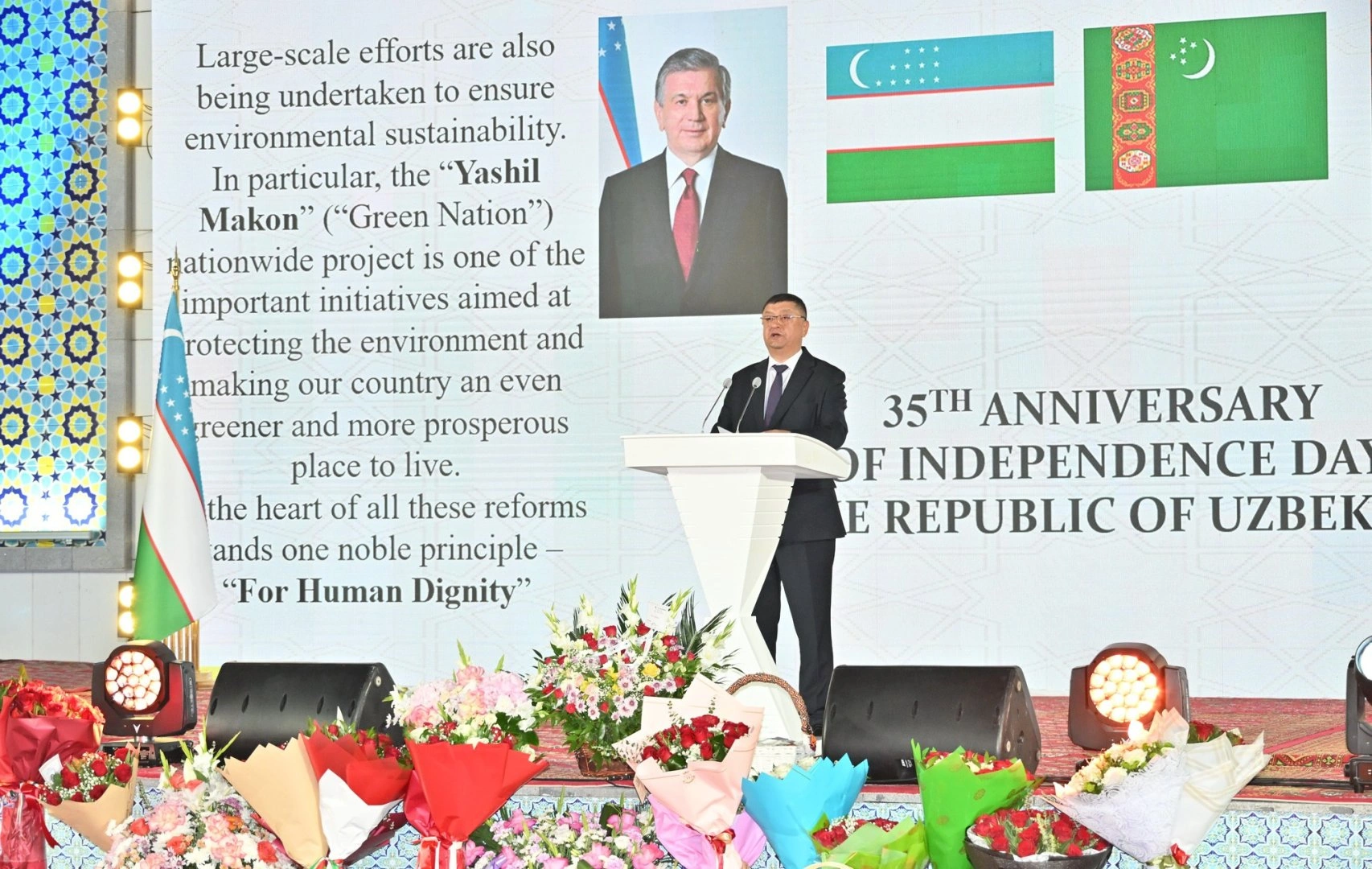
Ambassador to Turkmenistan, Ravshanbek Alimov, at an event
dedicated to the 35th anniversary of Uzbekistan's independence
"Ambassador Alimov added that the figure is expected to reach $2
billion. Furthermore, he highlighted the strategic nature of
Uzbekistan-Turkmenistan relations and the high level of trust
between the two countries," the information says.
"Thanks to the open and trusting dialogue between the leaders of
our countries - Shavkat Miromonovich Mirziyoyev, President of the
Republic of Uzbekistan; Serdar Gurbangulyevich Berdimuhamedov,
President of Turkmenistan; and the National Leader of the Turkmen
people, Chairman of the Halk Maslahaty of Turkmenistan, Gurbanguly
Malikgulyevich Berdimuhamedov - Uzbek-Turkmen cooperation is
reaching a qualitatively new level in the political, trade and
economic, transportation, and cultural and humanitarian spheres,"
Alimov said.
Trend's analysis
suggests that the push to increase trade between Uzbekistan and
Turkmenistan is increasingly driven by the changing structure of
both economies. Uzbekistan is expanding industrial production and
looking for additional markets for construction materials,
industrial goods, equipment and other manufactured products.
Turkmenistan, meanwhile, is entering a new investment cycle that is
generating demand for construction, infrastructure and industrial
supplies. This creates a natural complementarity: Uzbek producers
gain access to a nearby market with growing investment demand,
while Turkmenistan can source a wider range of industrial and
construction products from a neighboring manufacturing economy.
Another factor is the growing focus on industrial cooperation
rather than simple trade. Recent Uzbek-Turkmen business contacts
have increasingly centered on joint production, investment
projects, and the participation of Uzbek companies in construction
and industrial projects in Turkmenistan. This model could help both
countries expand trade volumes while also creating new production
capacity and supply chains. Against this backdrop, the target of
increasing bilateral trade to $2 billion reflects not only a desire
to sell more goods, but also an attempt to build a deeper economic
relationship based on complementary production and investment
needs.