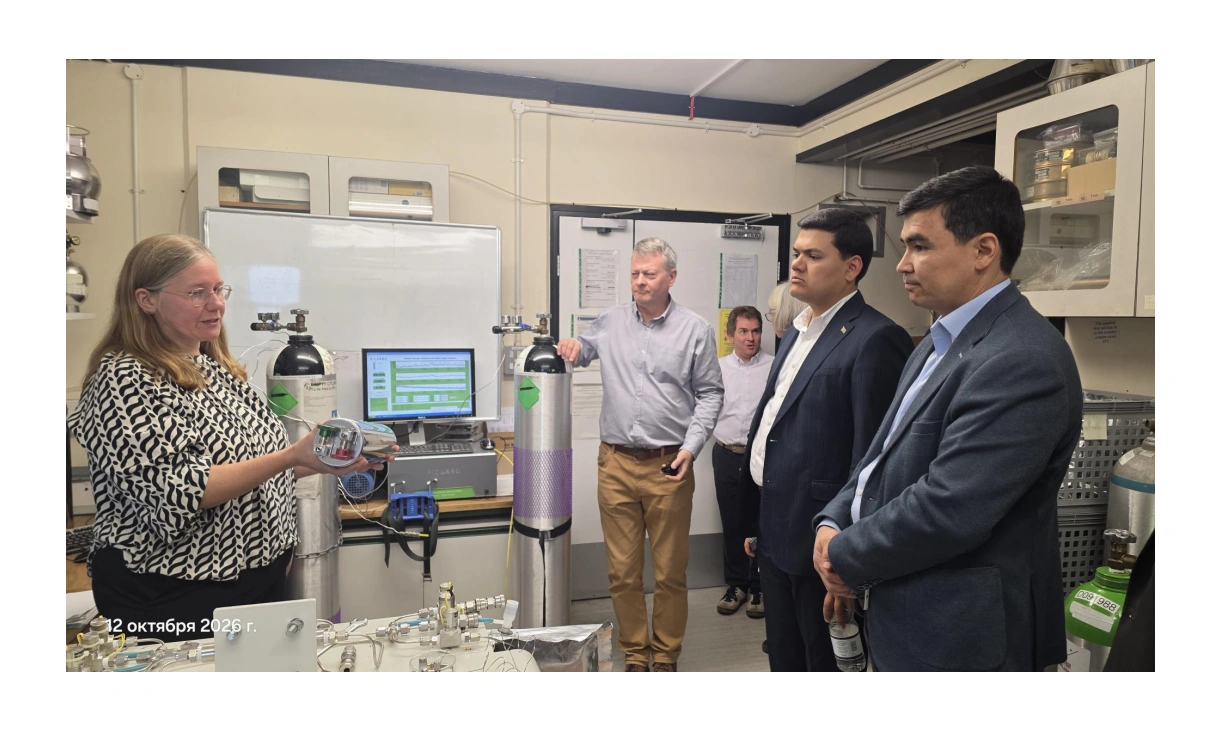
BAKU, Azerbaijan, October 29. Turkmenistan’s
specialists have examined UK practices for monitoring and reducing
methane emissions in the oil and gas sector during a study visit
co-funded by the European Union and the German Agency for
International Cooperation (GIZ).
According to a press release published by the Delegation of the
European Union to Turkmenistan, the visit took place from October
12 through 16, 2026, under the EU project “Policy Dialogue and
Climate Action 2024–2029.”
During the visit, representatives of Turkmenistan’s ministries
and agencies studied British approaches to monitoring, verifying
and reducing methane emissions in London, Aberdeen, Peterhead and
the Teesside region.
The program included briefings with the UK Department for Energy
Security and Net Zero and other government bodies responsible for
climate policy and methane emissions reduction. The delegation also
visited Shell’s St Fergus gas plant and the CATS gas terminal,
operated by Wood Group.
Meetings with Offshore Energies UK and Score Group Limited
focused on industry practices and technologies for reducing methane
leaks. The delegation also discussed satellite-based monitoring
with GHGSat and met with researchers from the Greenhouse Gas
Research Group at Royal Holloway, University of London.
Experts from bp presented their approaches to managing methane
emissions and gas flaring.
Particular attention was given to the EU Methane Regulation,
which establishes requirements for monitoring and mitigating
methane emissions in the fossil fuel sector, including provisions
affecting imports into the European Union.
“Gaining familiarity with these regulatory mechanisms holds
significant importance in the context of exploring prospects for
cooperation in the European energy market and adapting
infrastructure to international environmental standards,” the press
release stated.
The knowledge gained during the visit is expected to support the
practical implementation of methane emissions reduction measures in
Turkmenistan and contribute to the objectives of the Global Methane
Pledge.
For reference, the German Agency for International Cooperation
(Deutsche Gesellschaft für Internationale Zusammenarbeit, or GIZ)
is a German development agency that implements projects on behalf
of the German government, focusing on sustainable economic
development, energy, governance, and climate policy across more
than 130 countries.