BAKU, Azerbaijan, August 11. Uzbekistan’s
forthcoming Surkhandarya–China Business Forum in Termez could
reinforce the country’s efforts to attract Chinese investment
beyond its major economic centers while positioning the southern
region as an emerging platform for trade, manufacturing, and
regional connectivity.
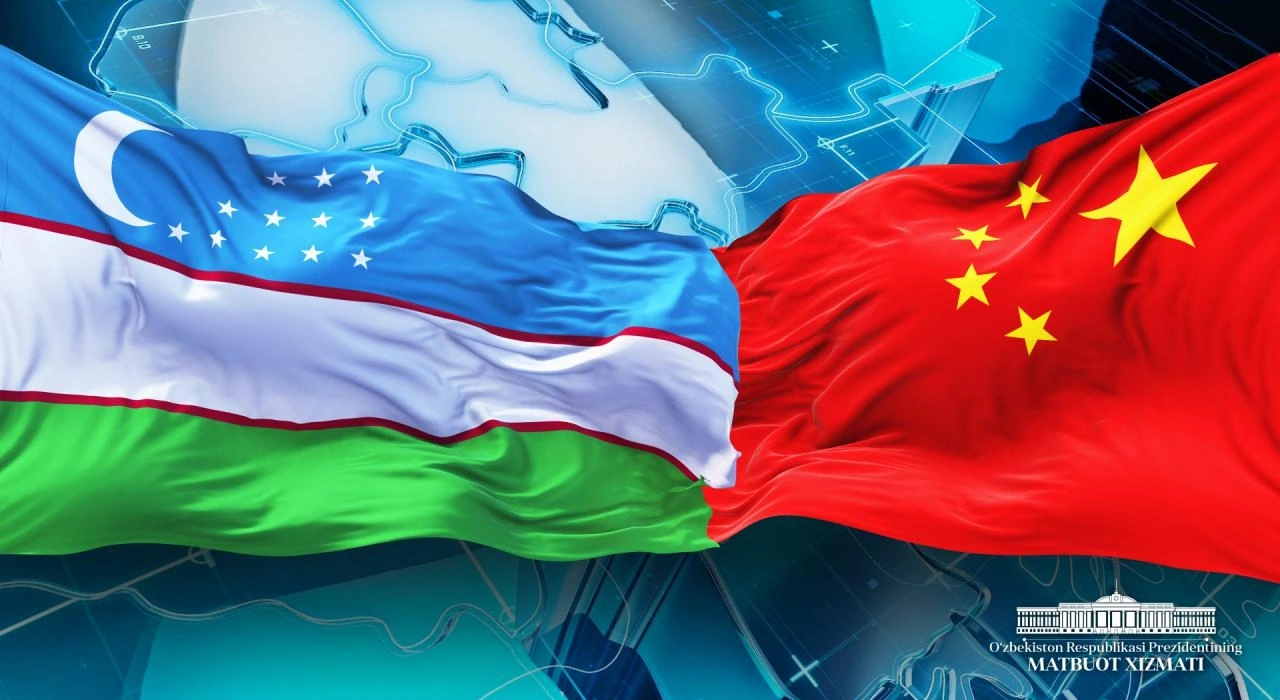
Scheduled for August 15, the forum will bring together
government officials, investors, and businesses from Uzbekistan and
China to discuss opportunities for expanding trade and developing
joint investment projects. The event will also feature a “Made in
Uzbekistan” exhibition, showcasing the production and export
potential of Uzbek companies.
The forum’s format is particularly significant, as it brings
together two priorities that have increasingly shaped Uzbekistan’s
economic engagement with China: attracting investment into domestic
production and expanding international market access for Uzbek-made
goods.
China has already established itself as Uzbekistan’s largest
trading partner. According to Uzbekistan’s National Statistics
Committee, bilateral trade reached $9.5 billion in the period from
January through June, exceeding trade with Russia, which stood at
$7 billion, and Kazakhstan, at $2.8 billion.
At the same time, Chinese companies have continued to expand
their presence across Uzbekistan’s industrial economy. The
country’s Ministry of Investment, Industry and Trade reported that
bilateral trade had tripled over the past five years, approaching
$18 billion by the end of 2025. During the same period, cumulative
Chinese foreign direct investment increased fivefold to $17
billion. More than 6,000 enterprises with Chinese capital are
currently operating in Uzbekistan.
This expansion increasingly goes beyond conventional trade.
Recent projects and negotiations indicate a growing focus on
localization, industrial production and technology transfer.
For example, China's Qingdao Junling Transformers discussed a
project in Uzbekistan's Fergana region that would initially involve
assembling transformers using imported components before moving
toward full-cycle, localized production. Chinese companies are also
considering manufacturing projects in Fergana covering construction
materials and metal structures.
Such projects illustrate the type of investment Uzbekistan is
increasingly seeking: not simply capital inflows, but production
facilities that can create jobs, develop local supply chains and
potentially generate exports.
This makes the "Made in Uzbekistan" exhibition in Termez
particularly relevant. By presenting locally manufactured goods
directly to Chinese businesses, the event could help shift the
relationship from an investment-centered model to a more balanced
one that involves exports and integration into international supply
chains.
Uzbekistan has already been working to address some of the
practical obstacles to this process. In July, the country's State
Customs Committee discussed with China's Optima Integration Group
measures to facilitate Uzbek exports to China, including
registration with China's General Administration of Customs,
sanitary and phytosanitary requirements, technical regulations and
logistics. The sides also discussed establishing direct links
between Uzbek producers and Chinese importers and improving
logistics chains.
Financial cooperation is also becoming an important component of
the bilateral relationship. In June, the National Bank of
Uzbekistan signed a 700 million yuan ($100 million) loan agreement with China Eximbank to expand long-term
financing for Uzbek businesses, support investment projects and
facilitate imports of Chinese equipment. The NBU said it has
secured more than 11.5 billion yuan ($1.6 billion) in credit lines
to date.
"I am grateful for the continued trust of our partners at China
Eximbank and look forward to further strengthening our cooperation
as we support Uzbekistan's long-term economic development," NBU
Chairman Alisher Mirsoatov said.
The agreement highlights the growing role of yuan-denominated
financing in supporting trade, investment and economic cooperation
between Uzbekistan and China.
The choice of Termez also gives the forum a broader regional
dimension.
Located in southern Uzbekistan, Termez is strategically
positioned for trade routes connecting Uzbekistan with Afghanistan
and wider South Asian markets. This makes investment in
manufacturing and logistics in Surkhandarya potentially relevant
not only to Uzbekistan's domestic market but also to regional trade
flows.
The importance of logistics is increasing as Uzbekistan and
China develop new transport infrastructure. The two countries are
working on the China-Kyrgyzstan-Uzbekistan railway, with
construction proceeding according to schedule. Uzbekistan and China
have described the project as important for increasing
international freight traffic, developing regional transport
corridors and strengthening trade and economic relations across
Central Asia.
Air connectivity is developing alongside rail infrastructure.
Uzbekistan Airports and China's Loong Air are exploring direct
flights between Xi'an and Fergana, reflecting growing business ties
and the rising presence of Chinese-invested companies in the
Fergana Valley. The proposed route would complement existing
flights to Tashkent and Samarkand and improve access to one of
Uzbekistan's major economic regions. Together with the
China-Kyrgyzstan-Uzbekistan railway, the development highlights
Uzbekistan's efforts to strengthen both passenger and cargo
connectivity with China. For Surkhandarya, this broader trend is
significant as Uzbekistan increasingly seeks to connect its
regional economic centers with Chinese investment, trade and
transport networks.
Improved connectivity could increase the attractiveness of
regions outside Tashkent for Chinese investors, particularly where
industrial production can be combined with access to transport
corridors and neighboring markets.
Energy and industrial cooperation provide another indication of
the depth of the economic relationship. Uzbekneftegaz is currently
working with Chinese companies including CNPC, CCDC, Jereh Group
and Honghua Group on drilling, oil and gas projects, equipment
supplies and digital technologies. Recent discussions have included
the supply of drilling rigs, modernization of operations and the
introduction of automated drilling and real-time monitoring
systems.
The scope of cooperation is also expanding into construction,
renewable energy, mining, agriculture, advanced technologies and
export-oriented manufacturing. A recent Uzbekistan-China business
forum involving companies from China's Inner Mongolia Autonomous
Region focused on precisely these sectors.
Against this backdrop, the Surkhandarya-China Business Forum can
be viewed as part of a wider effort to decentralize investment and
establish stronger economic links between Chinese businesses and
Uzbekistan's regions.
For Surkhandarya, the challenge will be to convert business
contacts and memorandums into actual production facilities, export
contracts and long-term partnerships. For Chinese investors, the
region's value will depend on the availability of infrastructure,
industrial sites, raw materials, skilled labor and efficient access
to domestic and regional markets.
The forum therefore has significance beyond the two-day business
agenda. By bringing Chinese capital and technology together with
Uzbek production capacity and regional logistics, the event could
further position Surkhandarya as an industrial and trade gateway in
southern Uzbekistan.
More broadly, the event reflects the evolution of
Uzbekistan-China economic ties from a relationship dominated by
trade and individual investment projects toward a more integrated
model based on industrial localization, technology transfer,
exports and regional connectivity.