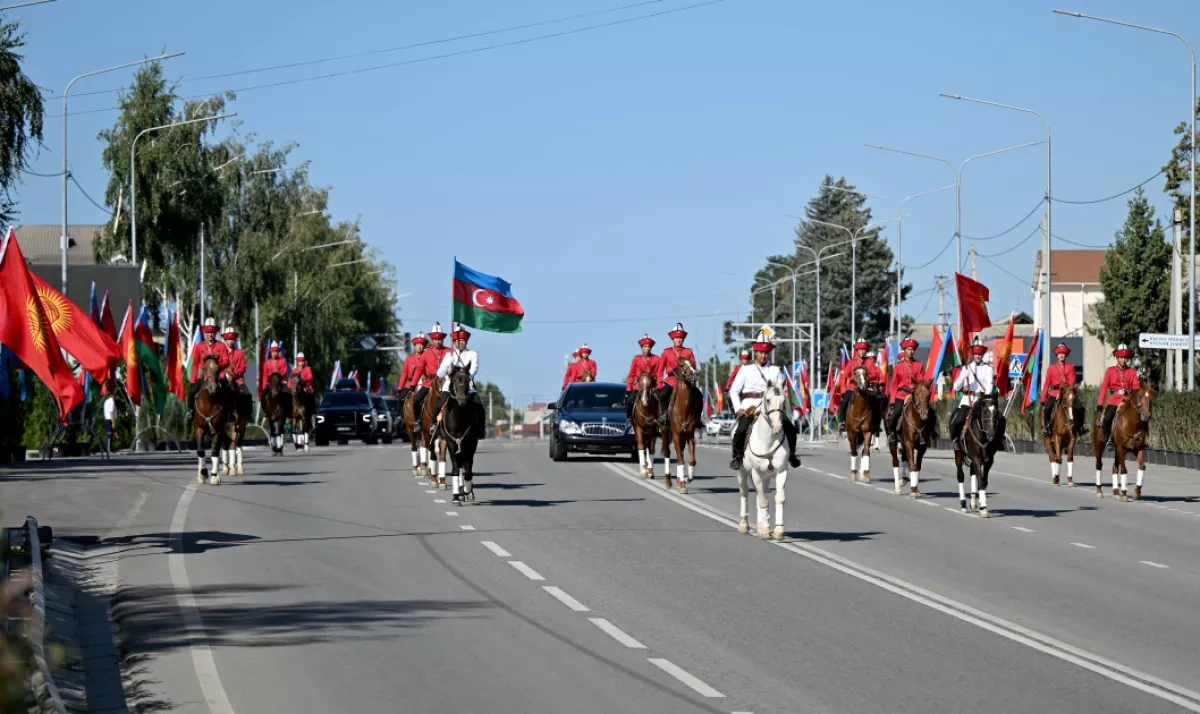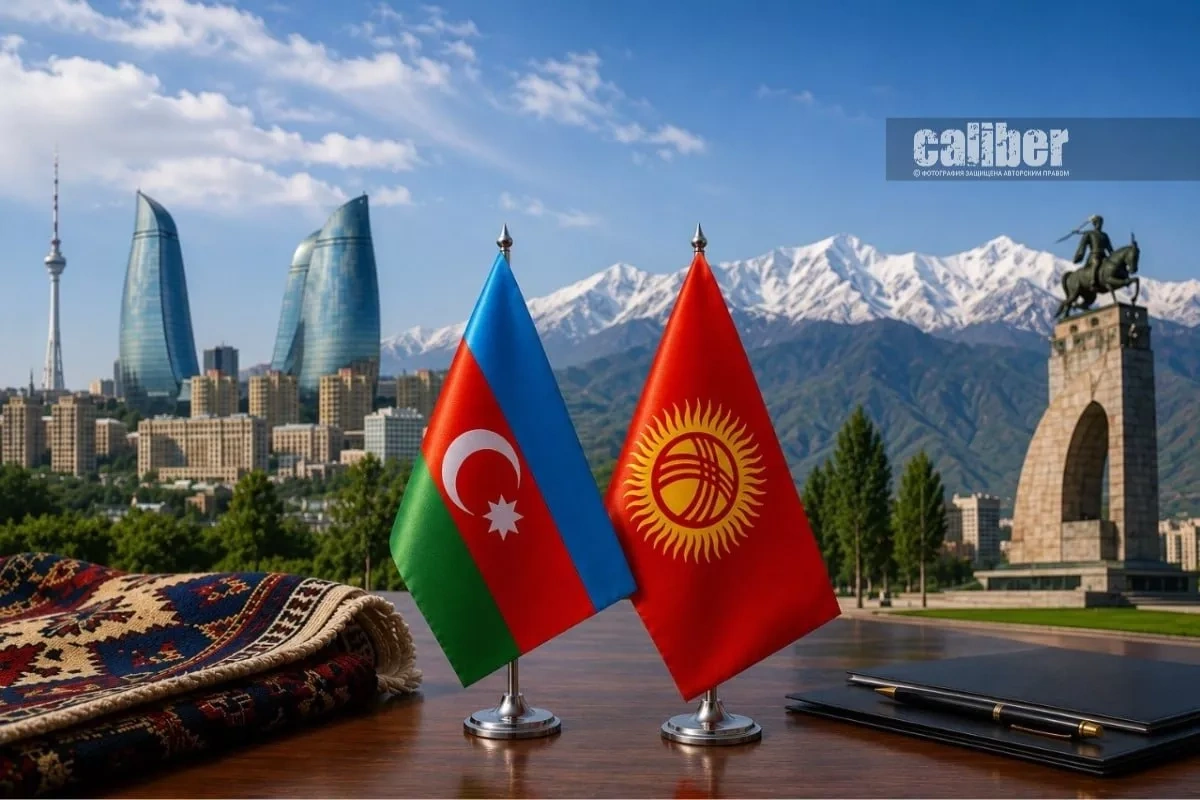
The state visit of Azerbaijani President Ilham Aliyev to Kyrgyzstan, which began on July 30, along with the informal summit “Central Asia – Azerbaijan” taking place these days in the Kyrgyz city of Cholpon-Ata, should be viewed as another stage in a trajectory whose upward momentum is difficult to match anywhere else in the post-Soviet space.
Just a few years ago, relations between Baku and Bishkek were largely limited to participation in multilateral summits. Today, the two countries are moving toward an allied format — the highest level of relations — which they have reached through a consistent and rapid process.
The
The chronology of this rapprochement reads like a carefully calibrated sequence of steps. Diplomatic relations between the two countries were established in January 1993; however, their historical foundation was laid by Heydar Aliyev’s visit to Kyrgyzstan in August 1995 for the summit of Turkic-speaking states and the celebrations marking the millennium of the epic poem “Manas.”
A qualitative shift came in recent years: over a five-year period, the two sides exchanged thirteen high-level visits, while a total of 105 documents have been signed between the two countries.
President Ilham Aliyev made his first state visit to Bishkek on October 11–12, 2022, during which the Declaration on Strategic Partnership was adopted and the Friendship Park was inaugurated. In April 2024, President Sadyr Japarov paid a reciprocal state visit to Baku, further deepening the achievements already made.
The current visit marks a transition to a new level of relations: the Treaty on Allied Relations has been signed, elevating ties to the highest stage of cooperation.
Every step along this
The substantive core of this cooperation has become the Azerbaijan–Kyrgyz Development Fund, and its trajectory demonstrates better than any political rhetoric that real economic ties stand behind the declarations.
Established in 2022, the Fund proved its relevance in such a short period that its authorised capital had to be increased to $100 million in order to meet the growing volume of applications from entrepreneurs. To date, the institution has financed strategic projects worth a total of $52.7 million, while around ten additional applications are currently under consideration.
Importantly, these funds are being directed toward sectors of critical importance for the Kyrgyz economy: the construction of a small hydropower plant on the Tyup River, the country’s first carpet factory in the Chuy Region, as well as logistics and tourism projects.
The carpet production project deserves particular attention. A country renowned for its ancient carpet-weaving traditions is receiving not finished carpets from a brotherly Turkic state, but a factory that will produce them itself — a development carrying a deeper symbolic meaning.
This rapprochement has a solid foundation that many artificially constructed alliances lack — a shared civilisational basis. Azerbaijan and Kyrgyzstan are connected by Turkic kinship, historical routes of the Great Silk Road, as well as linguistic and cultural affinity.
This unity is not a narrative invented by political strategists to serve short-term interests; it exists objectively, and modern institutional architecture is naturally built upon it.
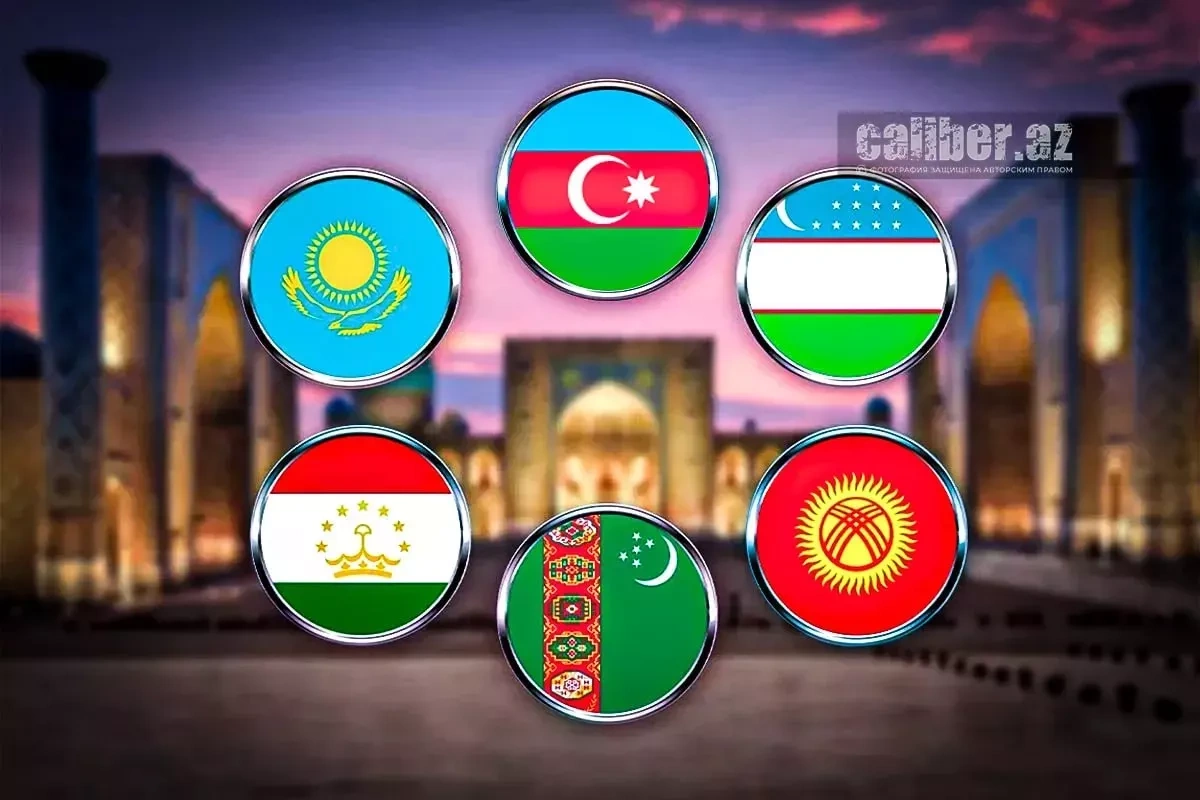
The Organisation of Turkic States provides the political framework for cooperation, establishing a common value-based and strategic space for all Turkic peoples. The “Central Asia – Azerbaijan” format, referred to by experts as C6, focuses on the practical implementation of joint projects.
These mechanisms do not compete with each other; rather, they reinforce one another, creating a multi-level system of regional integration in which politics, economics, and culture operate in tandem.
The Kyrgyz vector gains particular significance due to the geography of the broader Eurasian transit network. Azerbaijan has long and confidently positioned itself as a key link in the Middle Corridor — a transport route connecting China and Central Asia with Europe, bypassing both the northern route through Russia and the southern route through Iran.
For Central Asian states that lack direct access to open seas, the Azerbaijani route via the Caspian Sea and onward to the West represents a gateway to global markets and, therefore, a strategic necessity.
By integrating into this framework, Kyrgyzstan gains a friendly neighbour and partner. Azerbaijan, in turn, is becoming a system-forming hub of a new Turkic Eurasia, where flows of goods, energy, and people are connected from the Tien Shan Mountains to the Mediterranean.
Significantly, this rapprochement is not limited to economics and logistics but encompasses virtually the entire spectrum of interstate relations. Cultural exchanges are expanding, direct air connectivity is developing — Azerbaijan’s national carrier, AZAL, operates four regular flights per week on the Baku–Bishkek route, as well as seasonal flights to Issyk-Kul — while contacts between the regions of the two countries continue to strengthen.
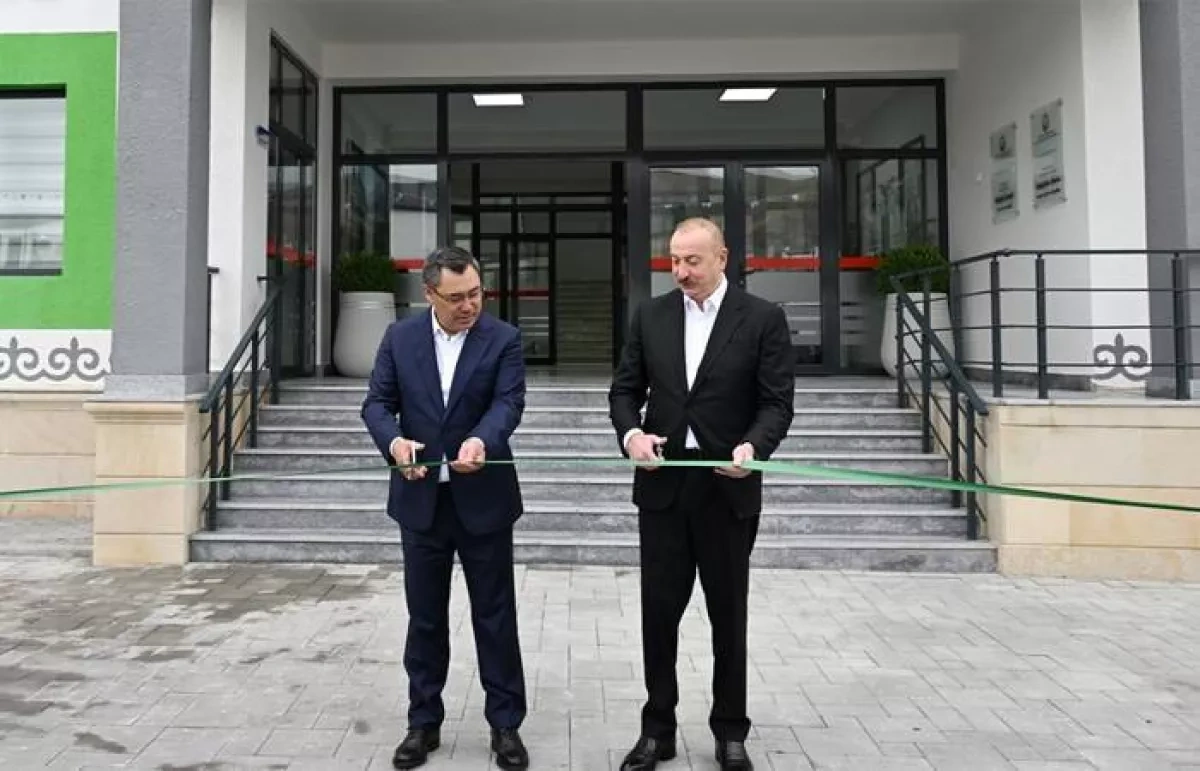
With Baku’s support, a Heydar Aliyev educational complex, Friendship Park, and a Nizami Ganjavi school have been opened in the capital of Kyrgyzstan. In April 2024, with the participation of the two countries’ leaders, a ceremony was held to unveil a monument to Chinghiz Aitmatov.
This dense human and humanitarian fabric is what distinguishes a genuine alliance from a paper one: governments sign agreements, but partnerships come to life through connections between people.
A special mention should be made of the fact that this alliance is genuinely reciprocal, and nowhere is this reciprocity more evident than in the approach to Karabakh. Kyrgyzstan did not remain a bystander in the process of rebuilding Azerbaijan’s liberated territories; instead, it became a direct participant.
With financial support from the Kyrgyz government, a secondary school named after Aikol Manas was built in the village of Khidirli in the Aghdam district. The school was officially opened in the summer of 2025 with the participation of the presidents of both countries. The symbolism of this gesture is unmistakable: the Kyrgyz side gave an Azerbaijani village a school bearing the name of its own national epic, just as Azerbaijan gave Bishkek a school named after Heydar Aliyev.
The two nations exchanged not merely diplomatic courtesies, but the names of their national figures, embedding them into each other’s daily lives.
This was complemented by a touching practical gesture — 225 yaks donated by Kyrgyzstan for breeding on the highland pastures of the liberated territories.
An alliance in which one side helps the other rebuild land regained after occupation is a bond tested through action.
The Kyrgyz case carries significance that goes beyond the framework of bilateral relations, as it serves as a model for Azerbaijan’s broader Central Asian policy. Baku has been consistently and quietly building relations with each country in the region along a similar pattern: political rapprochement backed by an investment fund and concrete projects, rooted in Turkic solidarity and integrated into the logic of the Middle Corridor.
What is emerging as a result is not merely a collection of bilateral ties, but a coherent geo-economic space in which Azerbaijan plays the role of a connecting link. The C6 format, institutionalised in 2025, simply formalised processes that had already been actively developing by that time. Regional experts describe it as historically natural, and it is difficult to disagree with that assessment.
Behind all of this lies a consistent strategy that the Azerbaijani state has been implementing over an extended period. Its logic is simple and therefore convincing: rather than seeking external patrons, Turkic states are increasingly relying on one another, transforming a shared heritage into shared interests — and those interests into functioning institutions and infrastructure.
The relations between Baku and Bishkek, which have now reached their highest level, provide clear evidence that this model works. The alliance the two countries are moving toward is not a symbolic gesture, but the natural outcome of a long-term process.
And it is precisely this organic character that gives it its enduring strength.