BAKU, Azerbaijan, July 21. Berlin has become
the venue where Azerbaijan and Germany confirmed their readiness to
elevate bilateral relations to a new level.
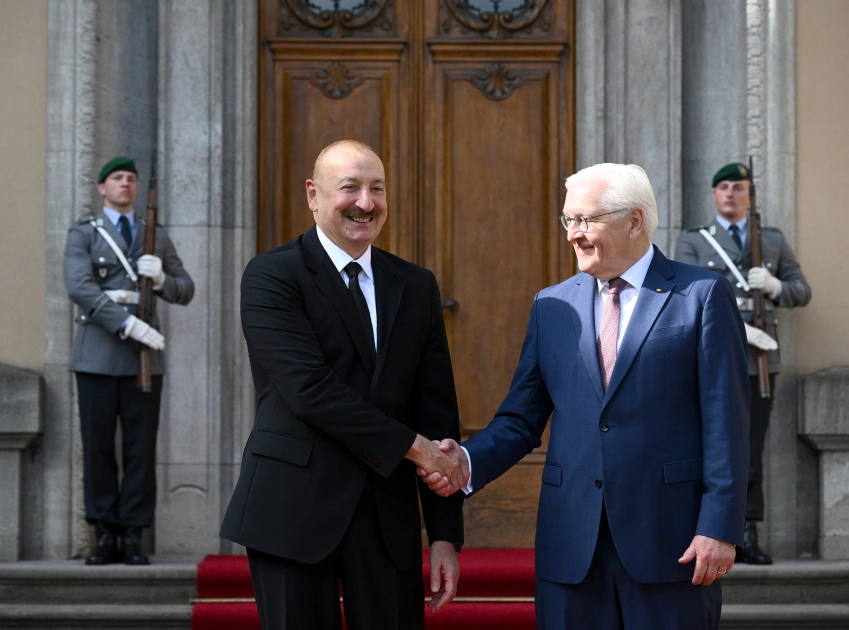
President Ilham Aliyev's visit to Germany marked one of the most
significant developments in bilateral relations in recent years.
Talks with German President Frank-Walter Steinmeier and Federal
Chancellor Friedrich Merz demonstrated that cooperation between the
two countries is gradually expanding beyond the traditional energy
agenda and taking on a more strategic character.
The dialogue with Steinmeier is particularly noteworthy, as it
has consistently developed in a constructive manner. The German
president visited Azerbaijan several times during his tenure as
foreign minister, is well acquainted with the region, and remains
one of Germany's most influential foreign policy figures.
During their meeting in Berlin, Steinmeier described Azerbaijan
and Germany as "an island of stability" against the backdrop of
developments in the region and around the world. The remark
reflected not only a high level of political trust but also both
countries' determination to deepen cooperation amid continued
global uncertainty.
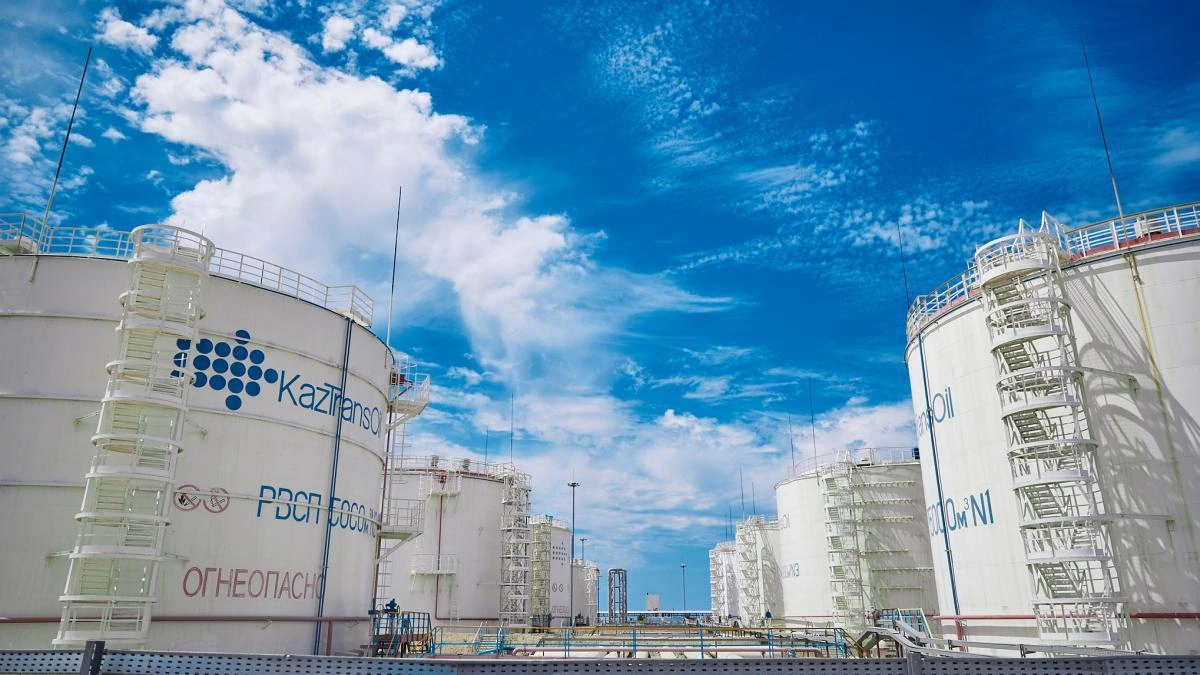
Another important outcome was Germany's recognition of
Azerbaijan's growing role in strengthening Europe's energy
security. The issue has gained additional significance since direct
supplies of Azerbaijani gas to Germany via the Southern Gas
Corridor began in January 2026. The total volume of the relevant
contracts currently stands at around 2 billion cubic meters
annually.
President Ilham Aliyev stressed that energy cooperation
continues to expand. "Today, our gas is delivered
to 10 European Union member states, which is undoubtedly a
significant contribution to energy security.Considering that
Azerbaijan also exports its oil to Germany and is determined to
deliver its green energy to the Europe in the future, cooperation
in the energy sector will be very wide-ranging,"
he said.
Economic indicators reinforce this trend. Bilateral trade
between Azerbaijan and Germany reached approximately 1.7 billion
euros in 2025, while trade turnover approached $573 million in the
first six months of 2026. Germany remains among the largest buyers
of Azerbaijani crude oil, importing more than 360,000 tons worth
around $211 million according to the latest data. Azerbaijan, in
turn, imports German machinery, industrial equipment, vehicles, and
electronics, while German foreign direct investment in Azerbaijan
reached $26.3 million last year.
The key political outcome of the visit was the signing of the
Joint Declaration on the Strategic Agenda for Bilateral Partnership
between the Republic of Azerbaijan and the Federal Republic of
Germany. The document formalizes a new stage in bilateral relations
and envisages broader cooperation across nearly all major areas,
including the economy, energy, transport connectivity, science,
innovation, education, digital transformation, and security.
Commenting on the agreements, President Aliyev said:
" I am confident that the documents signed today
will elevate our relations to a new level. We had
already wished for the start of a strategic dialogue, and we have
achieved it."
Federal Chancellor Friedrich Merz also highlighted the positive
trajectory of bilateral ties. "I am delighted that relations
between Germany and Azerbaijan are developing very dynamically,"
Merz said, adding that greater regional stability creates
additional opportunities for economic cooperation.
Transport connectivity also featured prominently in the
discussions. Against the backdrop of continuing tensions in the
Middle East, concerns surrounding the Strait of Hormuz, and efforts
to establish more resilient trade routes, Germany is increasingly
viewing the Middle Corridor as one of the most promising links
between Europe and Asia. Accordingly, the two sides discussed
Azerbaijan's role as a key hub along the route.
President Ilham Aliyev emphasized that transport cooperation is
becoming one of the most promising pillars of the bilateral
agenda.
"German–Azerbaijani cooperation is also of great importance
regarding connectivity and transit capabilities, as German
companies have achieved significant success in this field," he
said, adding that Azerbaijan continues to modernize its transport
infrastructure and strengthen its role as a bridge between Central
Asia and Europe.
Regional security was another major topic of the talks.
President Steinmeier congratulated President Aliyev on the progress
achieved in the peace process between Azerbaijan and Armenia, while
Chancellor Merz described the initialed peace agreement as a
historic opportunity to finally overcome a decades-long conflict.
For Berlin, the issue carries not only political but also economic
significance, as a stable South Caucasus is becoming an
increasingly important part of emerging transport and energy
corridors linking Europe and Asia.
President Aliyev also underscored the broader significance of
bilateral ties. "Germany, as a leading country in the European
Union, is increasing its influence in the South Caucasus.
Azerbaijani-German relations will contribute not only to bilateral
ties, but also to cooperation, peace, and tranquility throughout
our region," he said.
This assessment captures the broader outcome of the Berlin
visit. Azerbaijan-Germany relations are steadily evolving into a
strategic partnership encompassing energy, transport, investment,
digital technologies, and regional security. At the same time,
President Aliyev's direct dialogue with Germany's leadership
remains one of the key drivers of this process, translating
political understanding into concrete agreements and long-term
projects. The strategic declaration signed in Berlin demonstrates
that both countries view this stage not as the conclusion of
another diplomatic visit, but as the foundation for further
deepening their partnership.