BAKU, Azerbaijan, July 21. Uzbek President
Shavkat Mirziyoyev ordered a review of 9.3 trillion soums (about
$776.6 million) worth of unsold assets held by commercial banks and
called for stronger import substitution policies in regions where
imports continue to outpace exports.
This was reflected in the statement published by the official
channel of the Press Secretary to the President of the Republic of
Uzbekistan.
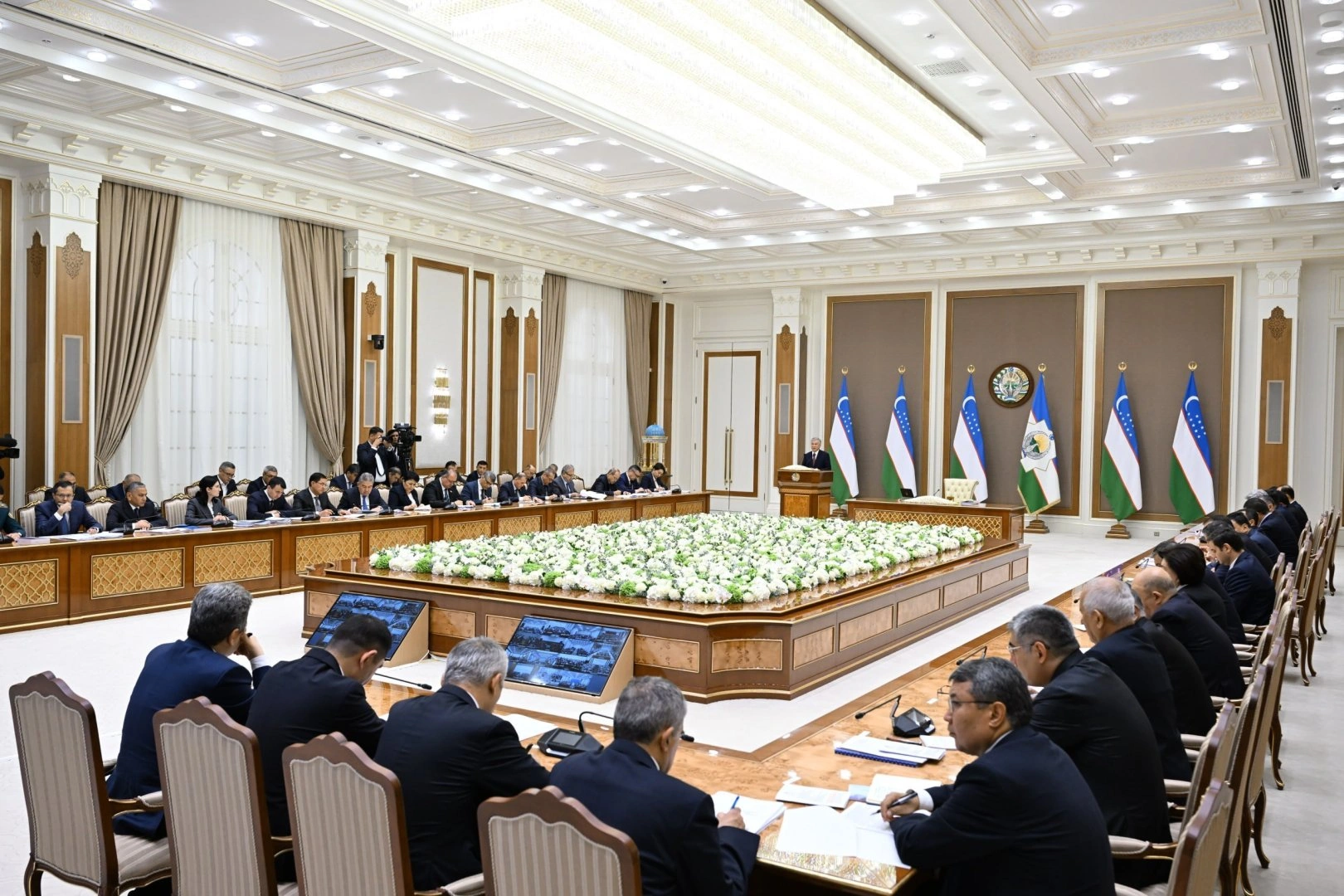
The directives were issued during a government meeting reviewing
Uzbekistan's economic performance in the first half of 2026.
According to Mirziyoyev, commercial banks currently hold 2,411
properties with a combined book value of 9.3 trillion soums (about
$776.6 million) that remain unsold.
The president instructed officials to examine why each asset
continues to remain on bank balance sheets and ensure that
marketable properties are not being withheld from potential
buyers.
"The reasons why every asset remains on banks' balance sheets
will be analyzed," Mirziyoyev said. "Where there are buyers but
assets are being artificially held back, the rule of law must be
ensured."
Mirziyoyev also criticized widening trade imbalances in several
regions, noting that imports have been growing faster than exports,
increasing pressure on regional economies.
According to figures presented during the meeting, imports
exceeded exports by $1.9 billion in Tashkent region last year,
while the gap reached $1.4 billion in Samarkand region.
The imbalance also stood at $866 million in Andijan region, $792
million in Jizzakh region, and $662 million in Bukhara region.
The president said regional authorities must take greater
responsibility for addressing these disparities by expanding
domestic production and increasing export-oriented
manufacturing.
"Every regional governor must thoroughly analyze this situation
and take concrete measures to expand import-substituting industries
and export-oriented production," Mirziyoyev said.
The measures form part of Uzbekistan's broader economic strategy
to strengthen domestic manufacturing, improve the trade balance and
stimulate private investment. By encouraging local production to
replace imported goods while expanding export capacity, the
government aims to enhance industrial competitiveness, reduce
external vulnerabilities and support long-term economic growth.