BAKU, Azerbaijan, July 21. Uzbekistan and India
have discussed expanding cooperation across trade, investment and
political dialogue as the two countries seek to deepen their
multifaceted strategic partnership.
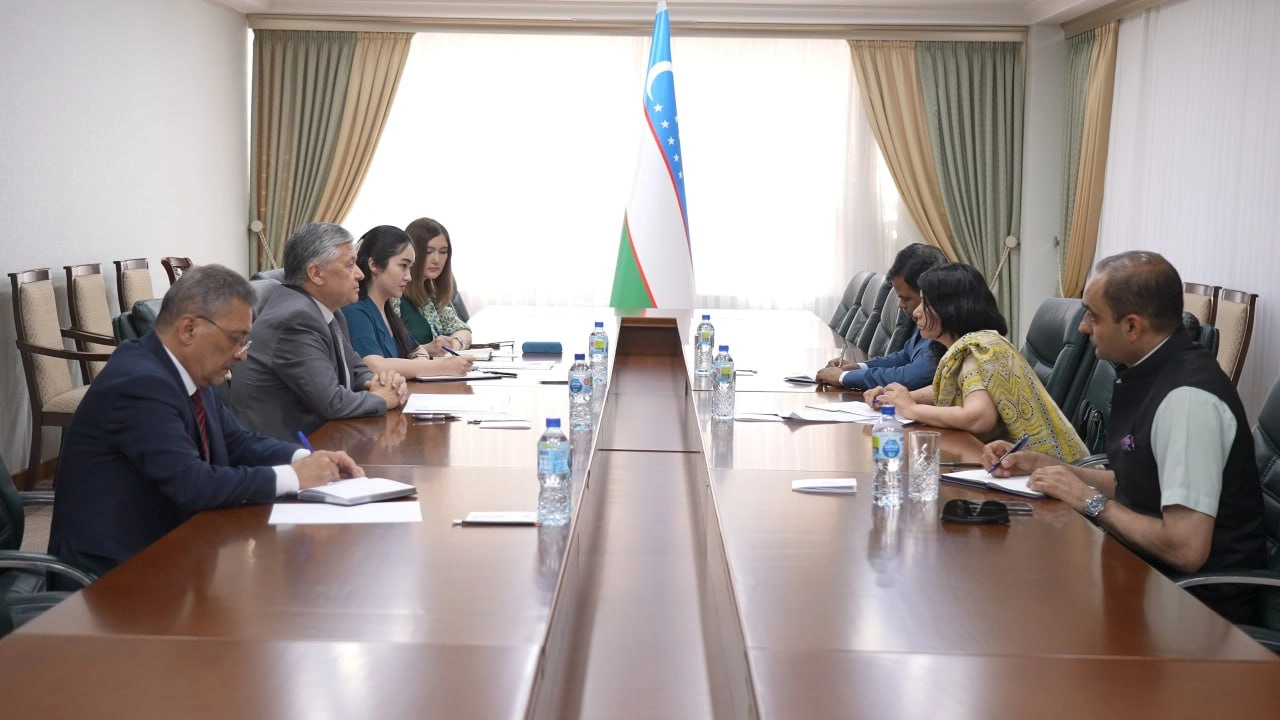
This was reflected in the statement by the Ministry of Foreign
Affairs of Uzbekistan following a meeting between Uzbek First
Deputy Foreign Minister Bahromjon Aloyev and India's Ambassador to
Uzbekistan Smita Pant to review the current state of bilateral
relations and identify priorities for further cooperation in key
sectors.
The talks focused on strengthening political engagement,
broadening trade and investment ties, expanding cultural and
humanitarian exchanges, and coordinating positions on international
issues of mutual interest.
"The parties discussed the current state and future prospects of
the multifaceted partnership between Uzbekistan and India," the
ministry said.
The two sides also exchanged views on intensifying political
dialogue and advancing practical cooperation across a range of
priority areas.
"The discussions covered the activation of political dialogue,
further expansion of bilateral cooperation in the trade, economic,
investment, cultural and humanitarian spheres, as well as current
issues on the international agenda," the ministry said.
The meeting reflects the growing momentum in Uzbekistan-India
relations, which have expanded significantly in recent years as
both countries pursue closer economic integration and broader
diplomatic engagement. India has emerged as an increasingly
important partner for Uzbekistan in sectors including
pharmaceuticals, information technology, education, healthcare,
renewable energy and manufacturing.
Investment cooperation has also become a key pillar of the
relationship, with both governments encouraging greater
participation by Indian businesses in Uzbekistan's economic
modernization and industrial development programs. Officials have
also sought to strengthen commercial ties by facilitating business
contacts and expanding opportunities for private-sector
collaboration.
Beyond economic cooperation, Tashkent and New Delhi have
continued to deepen political consultations and coordinate their
approaches on regional and international issues through regular
diplomatic engagement. Cultural and educational exchanges have
likewise remained an important component of bilateral relations,
supporting broader people-to-people ties between the two
countries.
"The meeting reaffirmed both sides' commitment to further
strengthening cooperation across priority sectors and maintaining
an active political dialogue," the ministry said.
The latest discussions underscore Uzbekistan's broader foreign
policy objective of diversifying international partnerships while
reinforcing cooperation with key Asian economies through expanded
trade, investment and diplomatic engagement.