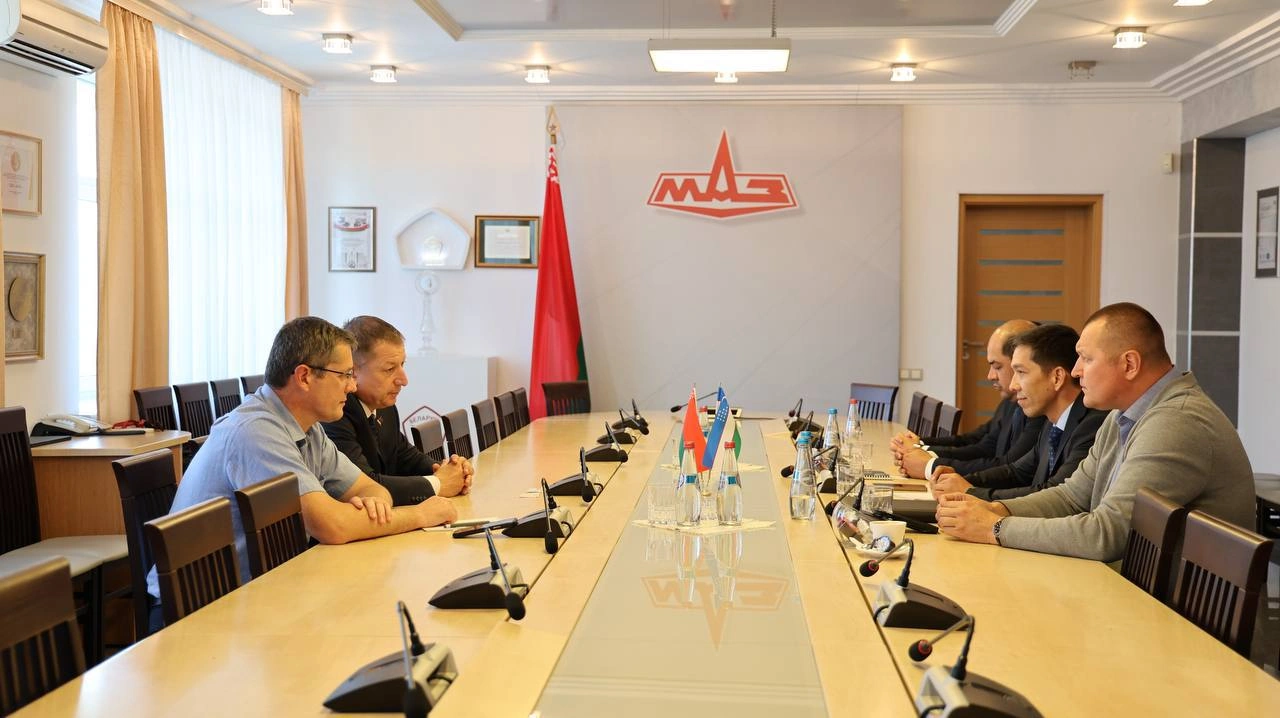
BAKU, Azerbaijan, July 20. Uzbekistan's
Migration Agency has reviewed recruitment procedures and working
conditions for Uzbek nationals employed at the Minsk Automobile
Plant (MAZ).
This was reflected in the statement by the Uzbek Migration
Agency, following the delegation led by Deputy Head of Uzbekistan's
Migration Agency Elyor Toshtemirov's working visit to Belarus.
According to the Migration Agency, the delegation included
representatives of the Uzbek Embassy in Belarus, who held talks
with the management of the Minsk-based vehicle manufacturer.
During the meeting, the sides discussed procedures for
recruiting Uzbek citizens to work at MAZ, including candidate
selection, interview processes, workplace training, and measures to
help newly hired employees adapt to their working and living
environment.
"We discussed the mechanisms for hiring Uzbek specialists, as
well as approaches aimed at ensuring their professional training
and successful adaptation after arriving at the enterprise," the
Migration Agency said.
The delegation also inspected the company's production
facilities, canteen, dormitory, and other social infrastructure to
assess the living and working conditions provided to foreign
employees.
According to the agency, more than 120 Uzbek citizens are
currently employed at MAZ. Workers receive average monthly salaries
ranging from $800 to $1,000, making the enterprise one of the
destinations for Uzbek labor migrants seeking employment
opportunities in Belarus.
Officials also met directly with Uzbek employees during the
visit. The discussions focused on labor rights, compliance with
migration legislation, and the responsibilities of both employers
and employees under Belarusian law.
"Particular attention was paid to explaining the importance of
observing labor and migration legislation and protecting the legal
rights of Uzbek citizens working abroad," the agency said.
Uzbekistan has intensified efforts in recent years to improve
the management of external labor migration by expanding cooperation
with foreign employers, monitoring employment conditions, and
increasing consular support for its citizens overseas. Official
visits to enterprises employing significant numbers of Uzbek
workers form part of these measures, with authorities seeking to
ensure that recruitment is conducted transparently and that
migrants have access to appropriate working, accommodation, and
social conditions.