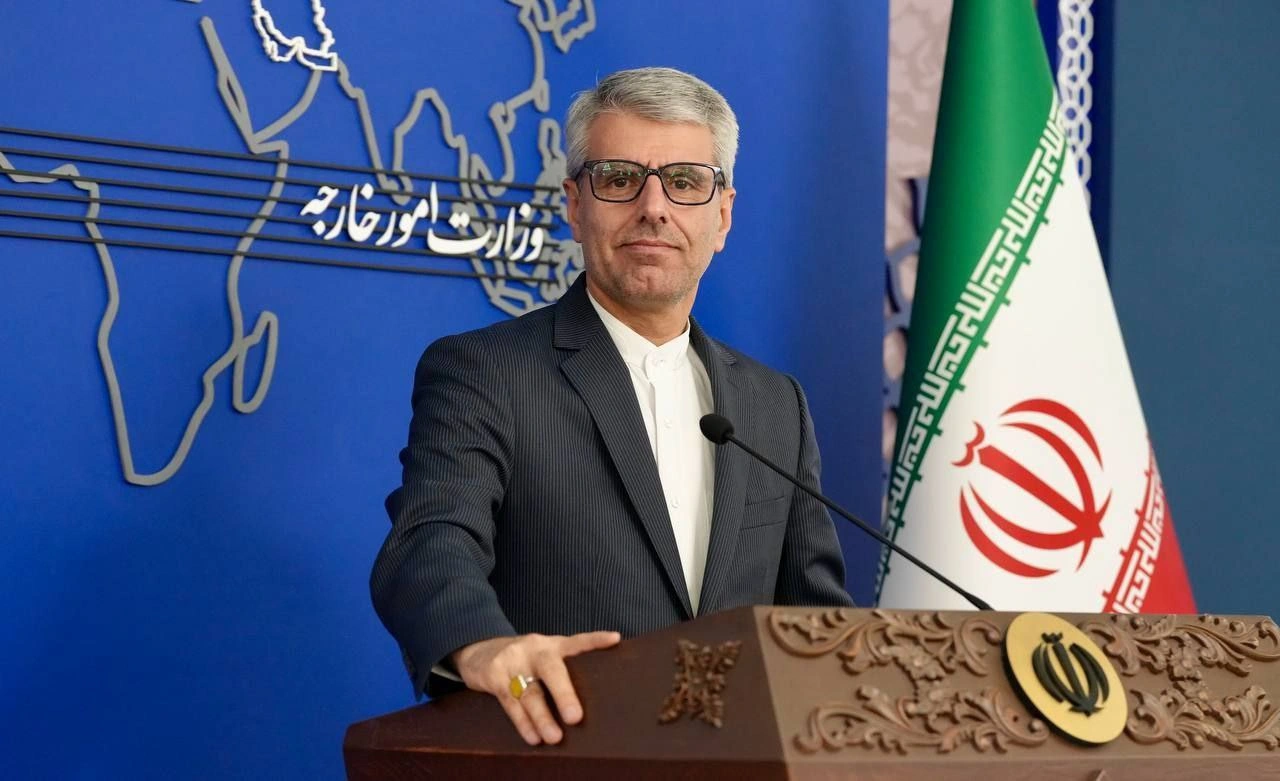
BAKU, Azerbaijan, July 20. Iran, together with
Oman as the two coastal states, is working to establish necessary
mechanisms and take measures regarding the Strait of Hormuz,
Iranian Foreign Ministry spokesperson Esmail Baghaei said at a
press conference in Tehran on July 20.
"Iran does not want the Strait of Hormuz to once again become a
tool for threatening the country's security and national interests.
It is clear that Iran and Oman are the coastal states of the
strait. Iran is determined to take the necessary measures to ensure
that the Strait of Hormuz is not misused to harm the country's
interests and to exercise its authority," Baghaei said.
He added that Iran believes these efforts should be carried out
through cooperation between the two coastal countries.
According to Baghaei, Iran has been in contact with Oman
regarding the Strait of Hormuz since the first days of the
restoration of the ceasefire between Iran and the United States
(April 7–8). He said Tehran is continuing consultations with the
Omani side.
The latest escalation in US-Iran relations began on July 8. On
that day, U.S. armed forces carried out several waves of strikes
against Iranian territory, reportedly in response to an attack on a
commercial vessel in the Strait of Hormuz, marking the first such
action after a memorandum was signed between Washington and Tehran.
On the same day, U.S. President Donald Trump announced the
suspension of the ceasefire regime with Iran. In response, Tehran
began strikes against U.S. facilities located in Bahrain, Jordan,
Qatar, Kuwait, the United Arab Emirates, and Oman.
On July 20, the U.S. Central Command (CENTCOM) said it had
successfully completed its ninth consecutive night of strikes
against Iran.