BAKU, Azerbaijan, June 29. President
Kassym-Jomart Tokayev has proposed a structured approach to
advancing bilateral relations by developing a comprehensive
"roadmap" focused on energy, investment, transport connectivity,
agriculture, digitalization, and tourism.
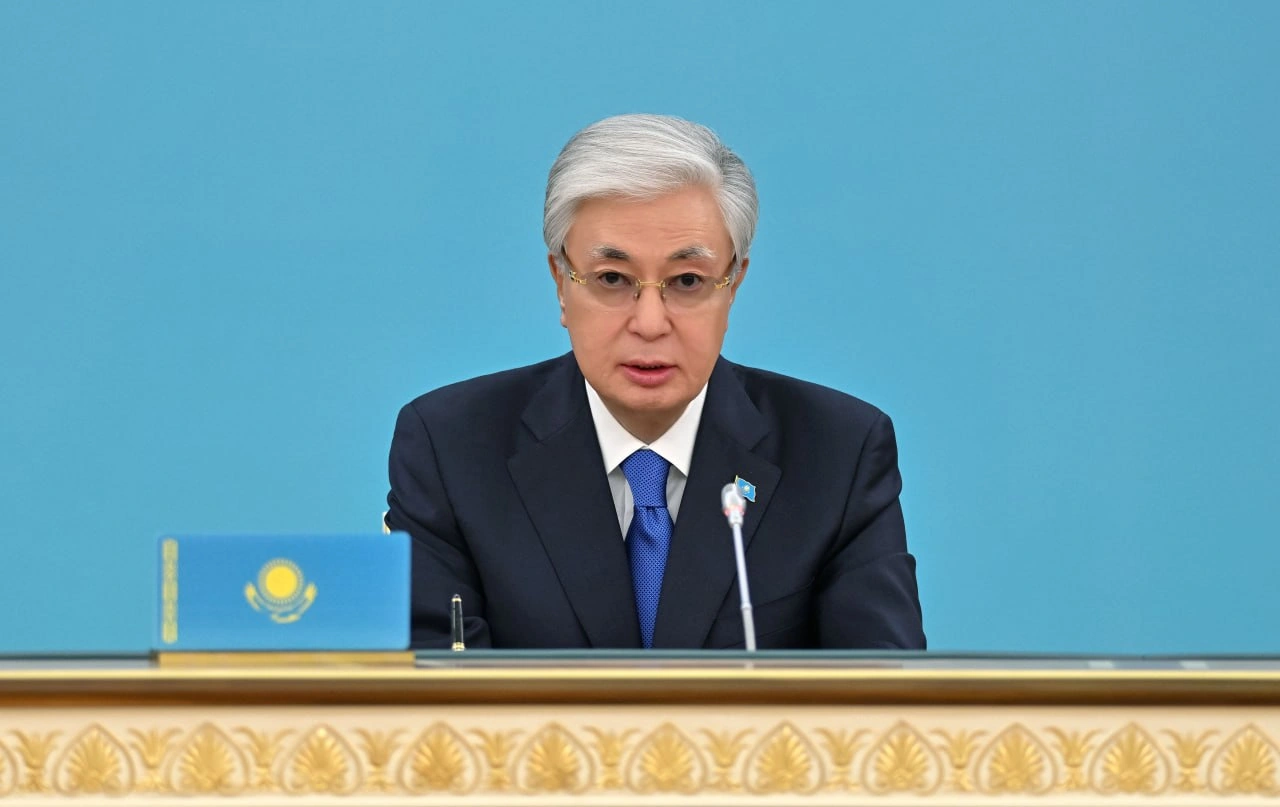
This was announced by the press service of the Kazakh
President, citing Kassym-Jomart Tokayev's remarks at the
expanded-format meeting with Georgian Prime Minister Irakli
Kobakhidze in Astana.
According to the press service, during the talks, both sides
confirmed their mutual commitment to advancing high-impact
investment projects. In particular, as key stakeholders in the
Trans-Caspian International Transport Route (TITR, or Middle
Corridor), Kazakhstan and Georgia intend to implement coordinated
measures to upgrade transport-logistic infrastructure, expand
container shipping operations, harmonize tariff policies, and
accelerate cross-border digitalization.
The press service notes that transit cargo volumes along the
TITR have increased 3.5 times over the past five years. To sustain
this momentum, regional logistics planners project that the number
of container trains operating on the route will reach 3,000 by
2029.
President Tokayev emphasized that in addition to its existing
operations at the port of Batumi, Kazakhstan is actively exploring
opportunities to expand its maritime presence across other Georgian
port zones. Last year, a new multimodal terminal was successfully
commissioned at the port of Poti with the participation of Kazakh
investors. Looking ahead, the development of the Anaklia deep-sea
port project stands out as another highly attractive asset for
strengthening interregional maritime infrastructure.
Digitalization and artificial intelligence were also identified
as primary drivers for future technological integration. The
delegations confirmed their readiness to exchange operational
expertise in digital governance, online public service delivery,
and advanced GovTech solutions. To support this sector, Kazakhstan
welcomes the participation of Georgian startup teams and tech firms
in programs hosted by the Astana Hub and related regional
technology initiatives.
Furthermore, the participants focused on expanding bilateral
ties in healthcare, education, culture, and tourism. Tokayev noted
that Georgia remains an exceptionally popular destination for
Kazakh tourists, adding that Kazakhstan is equally prepared to
welcome a growing number of Georgian visitors.
"Our countries are united by deep historical roots, common
cultural values, and strong ties between our peoples, which are the
foundation of our close partnership. We have just held a fruitful
exchange of views, during which we reaffirmed our common commitment
to the development of bilateral cooperation," Tokayev said.
He emphasized the importance of regular cultural exchanges and
proposed organizing reciprocal Days of Culture between the two
nations.