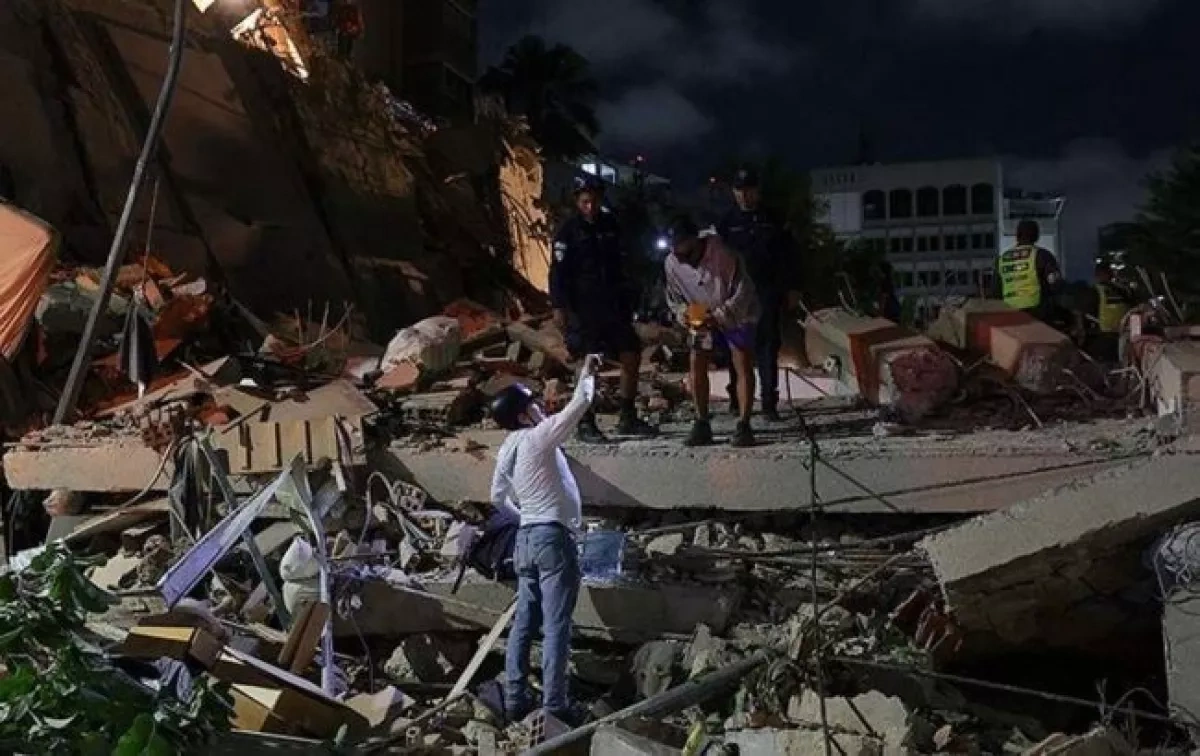
Venezuela's powerful earthquakes this week damaged nearly two million buildings and caused an estimated $6.7 billion in direct losses, according to a rapid assessment released by the United Nations Development Programme (UNDP).
The report, published on June 26, estimates that the direct economic damage is equivalent to about 6% of the combined gross domestic product of the country's five hardest-hit states, including the capital, Caracas, and Yaracuy state, where the epicentre was located. The UNDP said the total economic impact, including indirect losses, could be as much as three times higher, Bloomberg reports.
According to the assessment, around 8.6 million people were exposed to ground shaking strong enough to cause at least moderate damage to infrastructure, with northern Venezuela experiencing the most severe impacts. Of the estimated 1.7 million affected buildings, approximately 1.2 million were located in areas of strong shaking, while about 5,000 were in zones that experienced "violent" seismic intensity.
As of the morning of June 26, Venezuelan authorities reported nearly 600 deaths and around 3,000 injuries. More than 200 aftershocks had also been recorded.
The UNDP said the disaster is expected to place additional strain on Venezuela's fragile economy, which had only recently begun recovering after months of U.S. restrictions on oil exports.
Since assuming office in January, interim President Delcy Rodríguez's administration has sought to increase oil production, attract foreign investment and introduce reforms aimed at expanding private sector participation in the economy.
Although the country's oil industry escaped major physical damage, the earthquakes are expected to weigh on the broader economic recovery. Venezuela's defaulted sovereign bonds, which had rallied following the capture of former President Nicolás Maduro by U.S. forces, have declined in recent trading as investors assess the financial impact of the disaster. The country's benchmark 2027 dollar bonds fell to 48 cents on the dollar on June 26, their lowest level since April.
By Sabina Mammadli