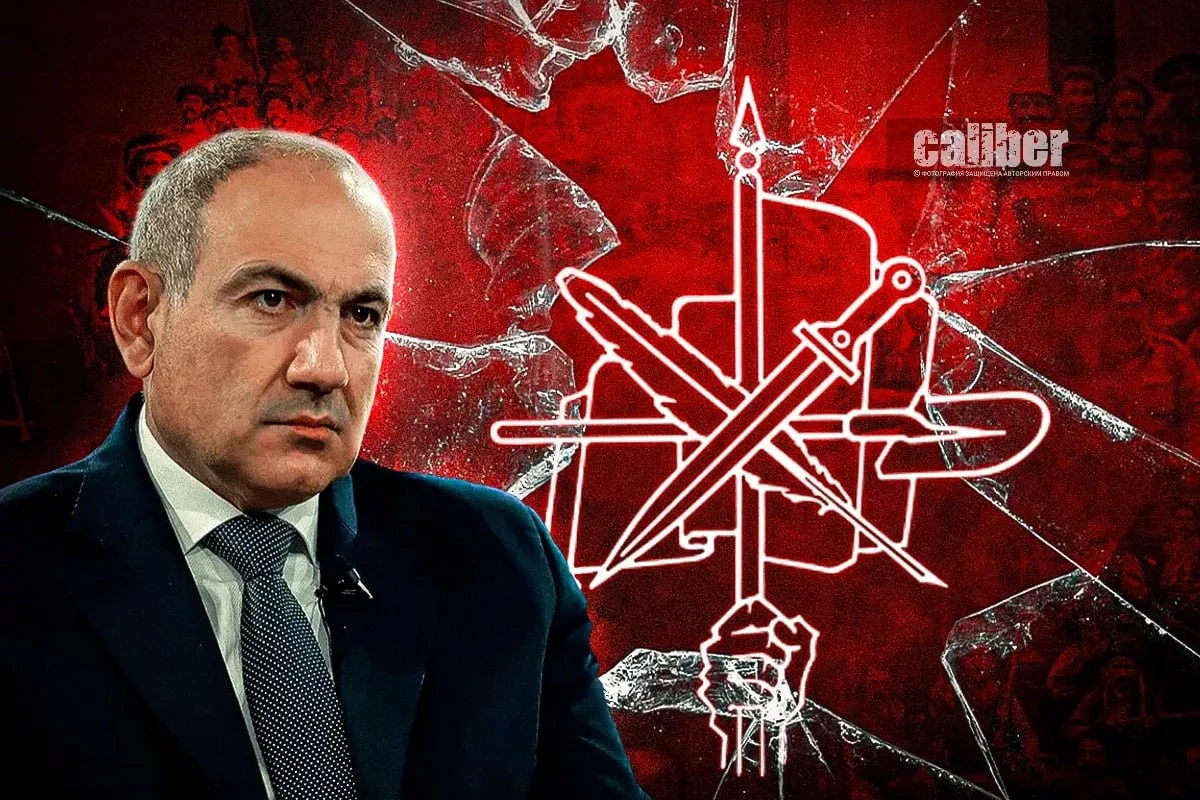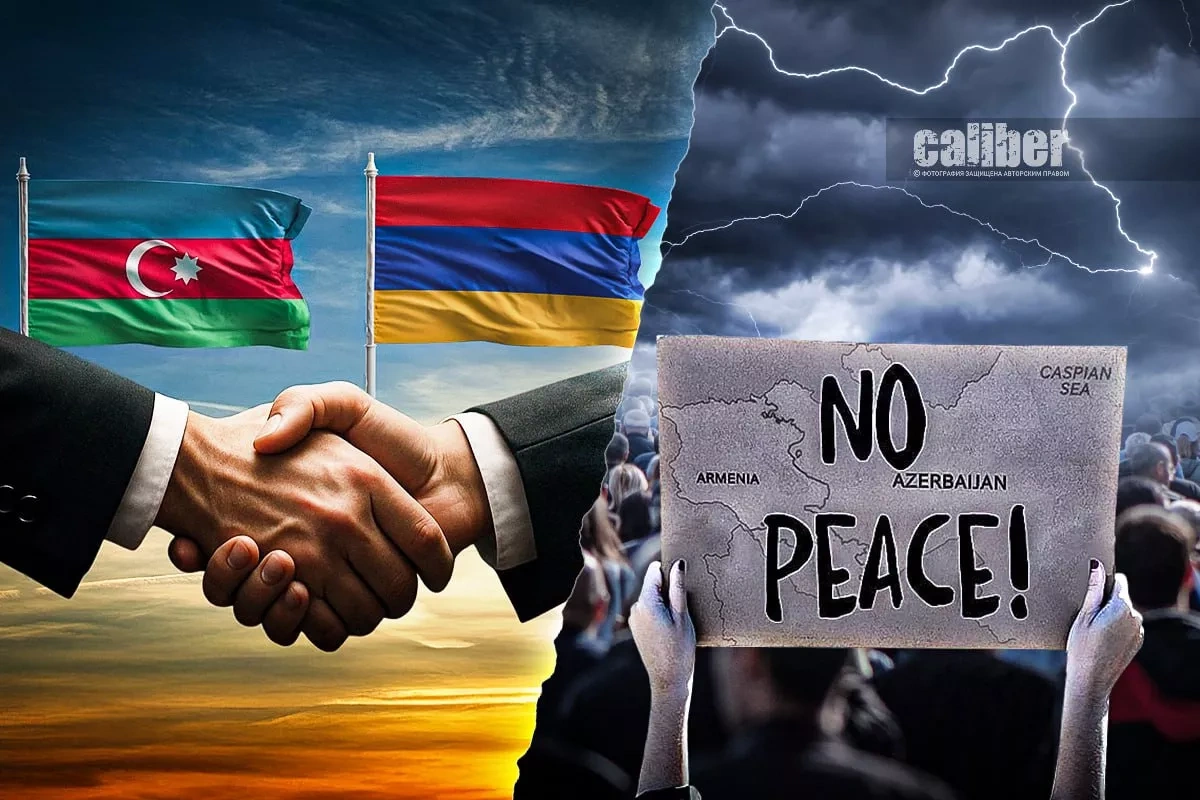
On June 26, the Central Council of the Hay Dat (also spelled Hai Tahd — Ed.) Committee—the lobbying arm of the Armenian Revolutionary Federation (Dashnaktsutyun)—issued a statement targeting Prime Minister Nikol Pashinyan. In particular, it accused him of "ignoring nearly half a million voters who, in the recent elections, supported political forces that have not come to terms with the loss of Karabakh," and, more broadly, of "renouncing everything Armenian and of national significance."
The statement came in response to remarks made by Pashinyan himself a day earlier. The Prime Minister openly declared that the ARF Dashnaktsutyun's lobbying network in the U.S. Congress was promoting initiatives aimed at reviving the so-called "Karabakh movement," describing these efforts as an attempt to drag Armenia into yet another adventure.
The result is a telling picture: Armenia's leader publicly accuses the revanchist lobby of reckless adventurism, while the lobby, in turn, brands him a traitor to the nation. Yet behind this exchange of accusations lies a far more important question—one that remains unanswered: What does official Yerevan intend to do next, beyond trading accusations?
To Pashinyan's credit, he has adopted a clearer position—at least rhetorically—than many had expected. By describing the revanchist agenda as an adventure and the initiatives promoted by the ARF Dashnaktsutyun's lobbying network in the U.S. Congress as an external game running counter to Armenia's own interests, he has moved beyond the carefully calibrated rhetoric that Yerevan relied on for years. In effect, the Prime Minister has acknowledged an obvious reality: those who present themselves in Washington and European capitals as defenders of Armenian interests are, in fact, dragging the country back into the very conflict that has already exacted a heavy price. It is a welcome acknowledgement. The problem is that, in Armenian politics, a vast gulf separates acknowledgement from action—and so far Pashinyan has taken no meaningful steps to bridge it.
Yet the responsibility to do so rests squarely with him. The peace agenda formalised in Washington in August 2025 was not signed by Azerbaijan alone—it was signed by Armenia as well. Signing a peace agreement entails far more than a passive commitment to refrain from war; it requires an active commitment to build peace: recognising the neighbouring state's territorial integrity, abandoning territorial claims, and defusing rather than fuelling revanchist sentiment. This demands sustained and systematic effort. Yerevan cannot simultaneously endorse peace on paper while shrugging its shoulders as its own diaspora organisations and domestic revanchist forces seek to undermine it.
The argument that "this is not our initiative—it is the work of the lobby" is unconvincing. That lobby acts in Armenia's name, draws legitimacy from an Armenian electorate, and advances an Armenian revanchist agenda. Consequently, responsibility for its actions ultimately rests with the Armenian state.
Until now, it has largely been Azerbaijan that has confronted revanchist structures—and done so alone. Year after year, Baku has exposed the activities of the overseas "representative offices" of the now-defunct separatist entity on international platforms, unravelled the machinery behind anti-Azerbaijani resolutions, and documented disinformation and defamatory campaigns originating from diaspora organisations. Meanwhile, Armenia has largely stood aside, as though none of this were being carried out in its name or within its own political and informational sphere. But a peace agreement signed by both sides leaves no room for such detachment. Yerevan is now obliged to confront those seeking to undermine the peace through the same diplomatic, legal, and informational means employed by Baku—both domestically and abroad.
The domestic dimension of this effort is, in fact, even more important than the external one, because it is at home that the narratives later projected abroad are first cultivated. The half a million votes cast for revanchist forces in the recent elections were neither a statistical anomaly nor simply the product of diaspora influence. Rather, they reflect the outcome of decades during which ethnic hostility towards Azerbaijanis was systematically fostered in Armenia through the media, political rhetoric, and, above all, the education system. The textbooks from which several generations of Armenians were taught portrayed their neighbour as an "eternal enemy" while presenting the occupation of another state's territories as a "sacred mission."
A child who is taught from the first days of school that the people living next door are an "enemy nation" grows into a voter who supports revanchism not out of malice, but because it has become an integral part of the worldview instilled from childhood. The Azerbaijani side has repeatedly presented the international community with evidence of this long-standing indoctrination, including educational materials recovered from the liberated territories, where school textbooks openly promoted hostility. The half a million votes cast for revanchist forces are the direct harvest of those years of cultivation. As long as the soil remains poisoned, every new electoral cycle will produce the same crop. No diplomatic initiative can outweigh what is planted in children's minds from the first year of school.
It follows that any genuine struggle against revanchism cannot be reduced to shutting down a handful of overseas offices or exchanging sharp words with the ARF Dashnaktsutyun. It demands something far more difficult from the Armenian state: a fundamental reassessment of the narratives that have shaped public consciousness for decades. The message of peace and good-neighbourly relations must not be reserved for international briefings aimed at foreign audiences. It has to be delivered at home—in schools, in the public sphere, and wherever tomorrow's electorate is formed. That is where the dividing line lies between genuine peace and peace that exists only on paper.
Genuine peace requires the courage to confront one's own revanchists—a task that is invariably more difficult than standing up to an external adversary, because it strikes at the most sensitive chords of national pride and invites accusations of betrayal, precisely the charges that the Hay Dat Committee is already directing at Pashinyan. Declaratory peace is far less demanding: sign an agreement, utter the right words, then allow events to take their course while sheltering behind the claim that an independent lobbying network lies beyond the government's control. For now, Pashinyan appears to be balancing between these two
Azerbaijan has already completed its part of the journey: it restored its territorial integrity, offered peace, formalised that peace with a signed agreement, and continues to give it practical substance through concrete steps. The next move belongs to Armenia. The question is no longer about the signature—which is already on the document—but about what must follow it.