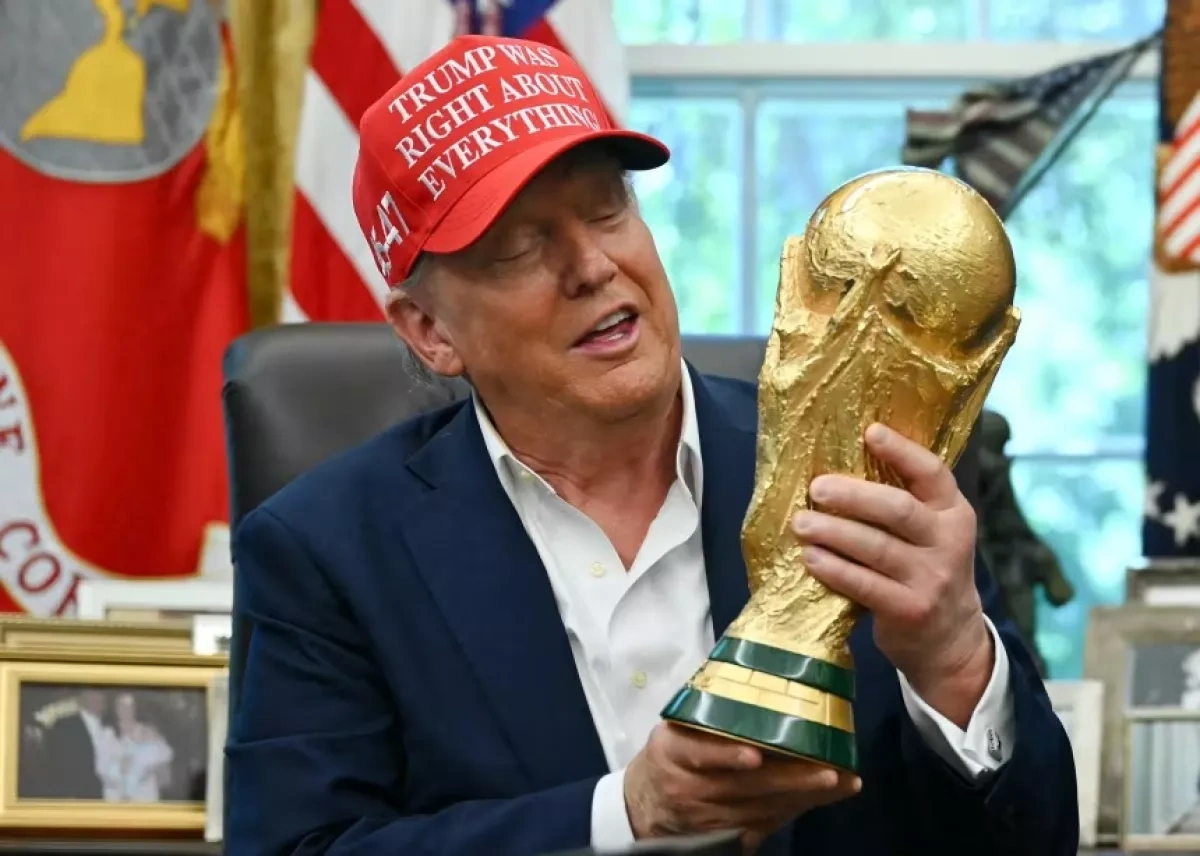
U.S. President Donald Trump is expected to present the FIFA World Cup trophy to the tournament winners following the final in New Jersey on July 19, placing him at the centre of one of the world's most-watched sporting events. However, a CNN analysis argues that the ceremony could carry political sensitivities regardless of which team emerges victorious, given the Trump administration's recent disputes with numerous countries participating in the competition.
If the United States were to win the tournament, the report notes that several key members of the national team reflect the country's immigrant heritage. Among them is forward Folarin Balogun, who was born in New York to a Nigerian mother before spending much of his life in the United Kingdom.
CNN highlighted the contrast between such stories and Trump's efforts to restrict birthright citizenship, which is currently protected by the U.S. Constitution and remains the subject of legal challenges.
Should another nation claim the title, Trump could find himself congratulating players from countries that have recently faced criticism, trade measures or diplomatic pressure from Washington.
The analysis points to Iran, whose national team remains in the tournament despite heightened tensions following recent military conflict involving the United States. It also references Spain, which Trump reportedly criticised over its opposition to the U.S. military campaign against Iran.
Several traditional U.S. allies in Europe have also experienced strains in relations with Washington. CNN cited Trump's past criticism of NATO allies and comments directed at countries including Belgium, Norway, France and Germany.
The report further noted disagreements with fellow World Cup co-hosts Canada and Mexico over trade, tariffs and border issues. Elsewhere, Trump's administration has pursued policies affecting countries across Latin America, including Brazil, Panama, Colombia and Argentina, while also engaging in disputes with South Africa and other nations.
According to CNN, Trump's "America First" approach has reshaped U.S. foreign relations, strengthening ties with some governments while creating friction with others. As a result, the trophy presentation could place the U.S. president face-to-face with players representing nations that have recently been the target of American criticism or policy disputes.
Despite the political backdrop, the analysis concludes that football is likely to remain the primary focus for players and supporters when the World Cup champion is crowned.
By Aghakazim Guliyev