BAKU, Azerbaijan, June 25. President of
Uzbekistan Shavkat Mirziyoyev has instructed government officials
and regional authorities to focus on improving the quality and
effectiveness of investments, emphasizing that every investment
agreement must translate into tangible economic results, including
new projects, jobs, and high-value-added production.
This was reflected in the statement by the Press Secretary to
the President of the Republic of Uzbekistan.
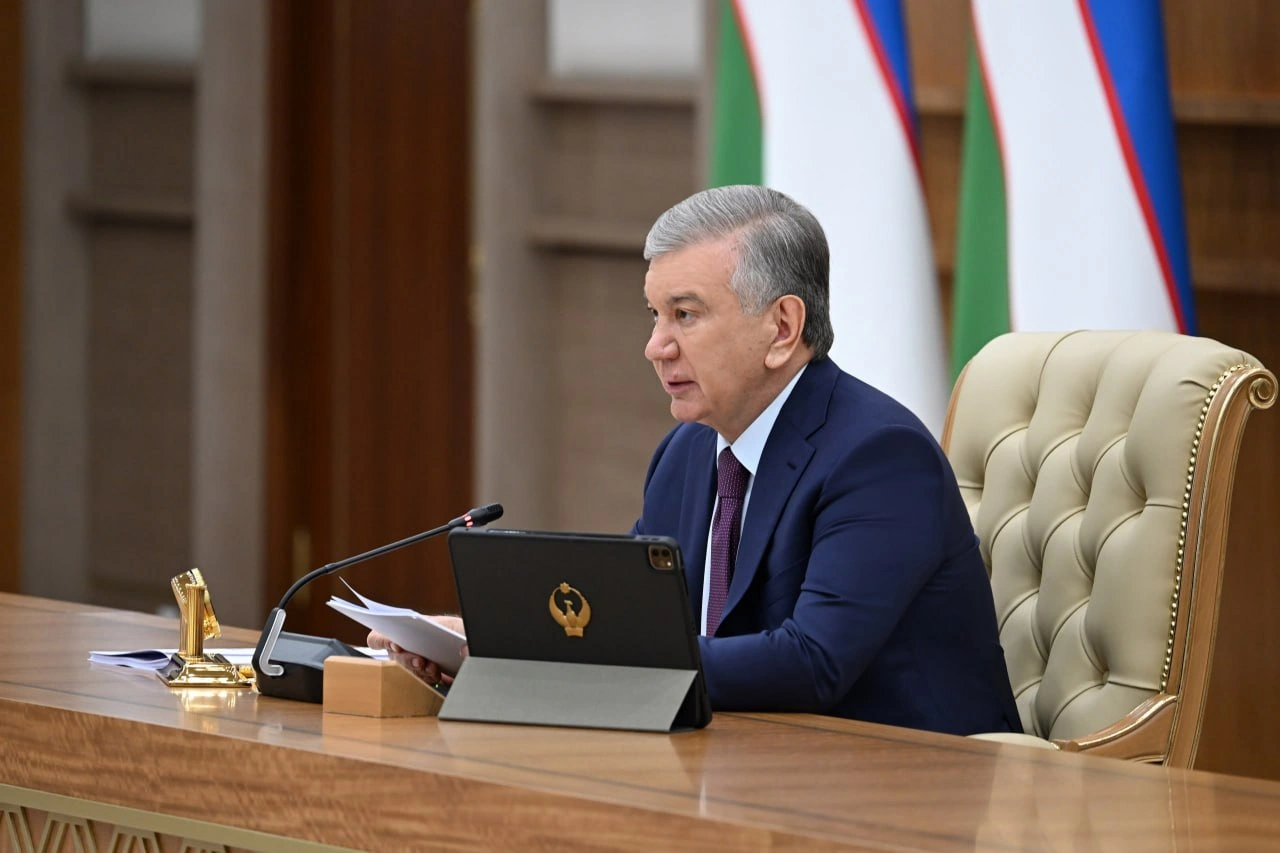
Speaking at a videoconference meeting, the President reviewed
the outcomes of the fifth Tashkent International Investment Forum,
where Uzbekistan signed 177 agreements worth a total of $43 billion
with foreign partners.
“Every agreement must be transformed into a project, jobs, and
products with high added value,” Mirziyoyev said, directing
officials to prepare solutions for 120 proposals put forward by
foreign investors during the forum.
The President noted that while half of all investments attracted
over the past five years were concentrated in four regions, the
economic returns generated by those investments vary significantly.
According to official figures, an investment of one million soms
generates 273,000 soms (about $22,71) in additional gross regional
product in Fergana Region and 262,000 soms (about $21,80) in
Samarkand Region, compared with just 117,000 soms (about $9,75) in
Bukhara Region.
To improve investment planning and maximize regional growth,
Uzbekistan has assigned 14 analytical centers and 37
sector-specific research institutes and universities to support the
development of 12 key industries. These institutions will analyze
regional opportunities, assess market demand, identify priority
investment projects, and help prepare qualified personnel for
emerging sectors.
In the construction materials industry, analytical support will
be provided by the Institute for Macroeconomic and Regional
Studies, the Competition Policy and Consumer Rights Research
Center, the Institute of Materials Science, and the Tashkent
University of Architecture and Civil Engineering. These
institutions will study demand for new materials, determine optimal
project locations, evaluate technological requirements, and
identify workforce needs.
Mirziyoyev also highlighted the rapid transformation of
Uzbekistan’s construction materials sector over the past decade. He
noted that ten years ago domestic production was largely limited to
basic materials such as sand, gravel, bricks, cement, glass, and
slate, covering only 35–40% of construction demand.
Over the last ten years, the sector has attracted $12 billion in
investment and launched more than 4,000 modern enterprises.
Production capacities have been created to fully meet domestic
demand for more than 20 key products, including cement, glass,
basalt-based materials, ceramic products, aerated concrete blocks,
and dry construction mixes.
At the same time, new high-value segments such as thermal
insulation products, composite materials, environmentally friendly
finishing materials, and flooring products have expanded
rapidly.
Today, Uzbekistan produces 98% of the materials required for
residential and industrial construction domestically. As a result,
industry output has increased from 7 trillion soms (approximately
$582.3 million) to 53 trillion soms (about $4.4 billion) over the
past decade, while exports reached $1.2 billion last year.
The President stressed that the industry has successfully
completed a crucial phase of import substitution and must now
evolve into a sector capable of offering comprehensive solutions in
quality, standards, product range, and pricing, while earning the
trust of builders and investors alike.
Exchange rate: $1 USD = 12,020 UZS