BAKU, Azerbaijan, June 25. Uzbekistan is
seeking to modernize its construction materials industry by
encouraging higher-value manufacturing, attracting new investment,
and accelerating energy-efficiency measures across the sector.
This was reflected in the statement by the Press Secretary to
the President of the Republic of Uzbekistan.
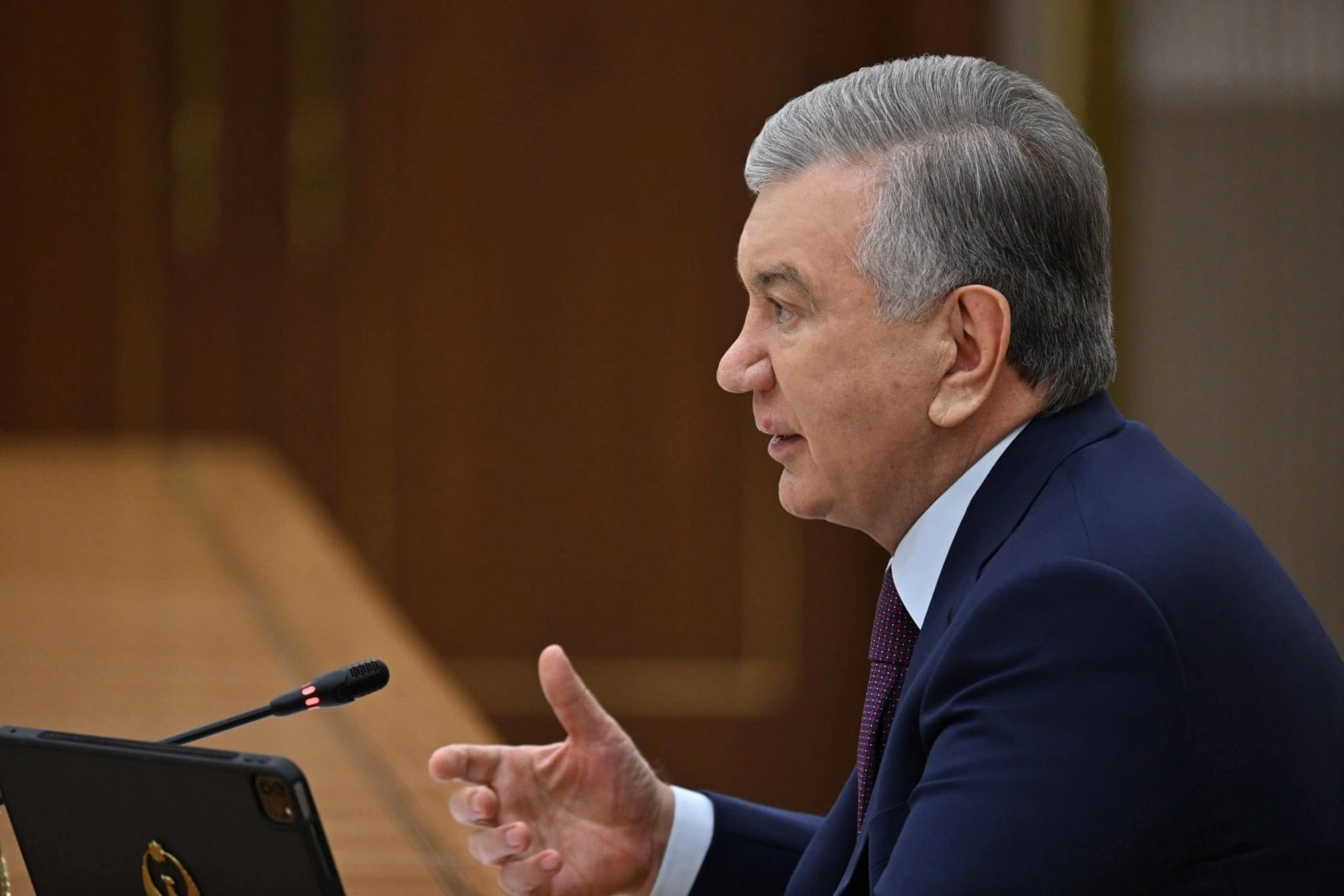
Speaking at a videoconference meeting, President of Uzbekistan
Shavkat Mirziyoyev noted that existing production capacities for
cement, basalt, glass, ceramic tiles and several other products are
already sufficient to meet domestic demand through 2035. As a
result, authorities intend to focus less on expanding output and
more on modernizing facilities and developing products with higher
added value.
One example is a project in the Forish district, where new
basalt fabric production facilities are being established alongside
an existing basalt fiber plant. While a ton of basalt fiber is
valued at around $340, basalt fabric sells for approximately $900
per ton, significantly increasing value creation.
Officials also pointed to opportunities in the cement industry.
Uzbekistan primarily produces standard grades of cement, while 17
currently inactive cement plants could potentially be repurposed to
manufacture specialized cement products with stronger domestic and
export demand.
To support the sector’s transformation, the government has
instructed responsible agencies to approve a dedicated program and
attract investors to at least 50 underutilized
construction-material enterprises by the end of the year.
At the same time, authorities are intensifying efforts to
improve energy efficiency in industrial production. Over the past
decade, the volume of conventional fuel consumed by
construction-material enterprises has been reduced by half. Energy
audits conducted at 34 major companies, which account for 65% of
the industry’s electricity consumption, helped save 240 million
kilowatt-hours of electricity last year alone.
However, officials stressed that additional progress is needed.
Regional administrations have been tasked with launching a
large-scale modernization program aimed at reducing energy
consumption through the replacement of outdated equipment.
Enterprises that switch to energy-efficient kilns, drying furnaces,
mills and other high-consumption machinery will be eligible for
compensation covering 7% of interest costs on loans denominated in
local currency and 4% on foreign-currency loans.
“Under current conditions, when competition in foreign markets
is intensifying and every dollar matters, unconventional solutions
are needed to increase exports,” Mirziyoyev said.
The government has also set a target of introducing
energy-saving technologies at another 38 major enterprises this
year, a move expected to save an additional 400 million
kilowatt-hours of electricity.
Officials believe that combining technological modernization,
greater energy efficiency and the production of higher-value
construction materials will strengthen the industry’s
competitiveness and expand its export potential in the coming
years.