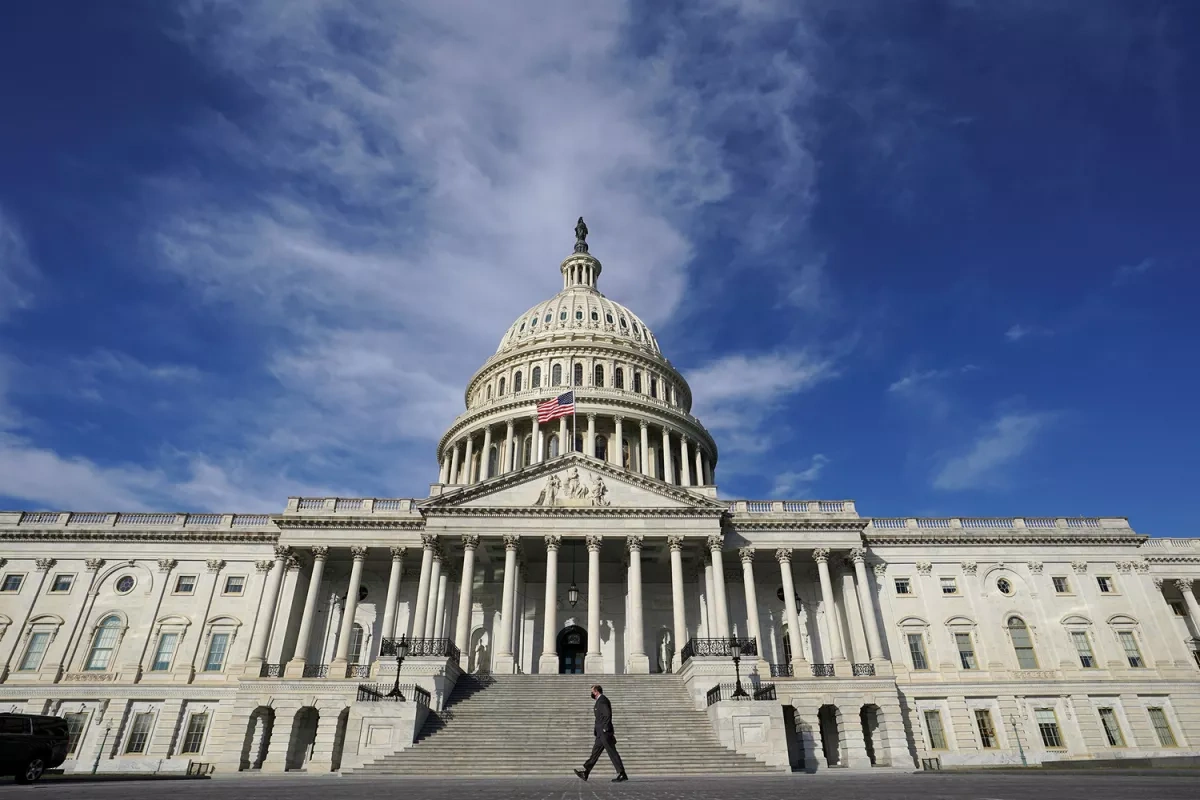
The US Senate approved legislation on June 23 calling on President Donald Trump to end American military involvement in Iran, marking the latest challenge to the Republican president from a Congress that has grown increasingly uneasy over the conflict.
Lawmakers voted 50-48 in favour of the war powers measure, which had already cleared the House of Representatives earlier this month. The vote underscored rising concerns, including among some Republicans, over the military campaign that began on February 28 when US and Israeli forces launched strikes against Iran, according to Reuters.
The move represents the first occasion since the adoption of the War Powers Resolution in 1973 that both chambers of Congress have passed legislation directing a president to withdraw US forces from an active conflict.
The vote also comes as the administration is preparing to seek congressional approval for tens of billions of dollars in additional funding related to the war effort.
At the same time, the Trump administration continues efforts to reach a peace agreement with Tehran. Congressional backing for the resolution is expected to increase pressure on the president to avoid renewing military operations, despite his previous indications that further action could be considered if diplomatic talks fail.
Under the War Powers Act of 1973, resolutions approved by both the House and Senate are not submitted to the president for approval. Congress originally designed the mechanism as a means of limiting or ending military engagements without requiring presidential consent.
However, the legal status of such measures remains disputed. Although no previous war powers resolution had successfully passed both chambers, a 1983 Supreme Court decision concluded that congressional actions with legal consequences generally require presidential signature or veto consideration.
The White House has long argued that the War Powers Act is unconstitutional and therefore does not impose binding obligations on the executive branch.
Responding to the June 22 vote, a White House official dismissed the measure as largely symbolic, arguing that it carries no legal authority because it is not presented to the president. The official also noted that the resolution succeeded only because two Republican senators were absent from the vote.
By Jeyhun Aghazada