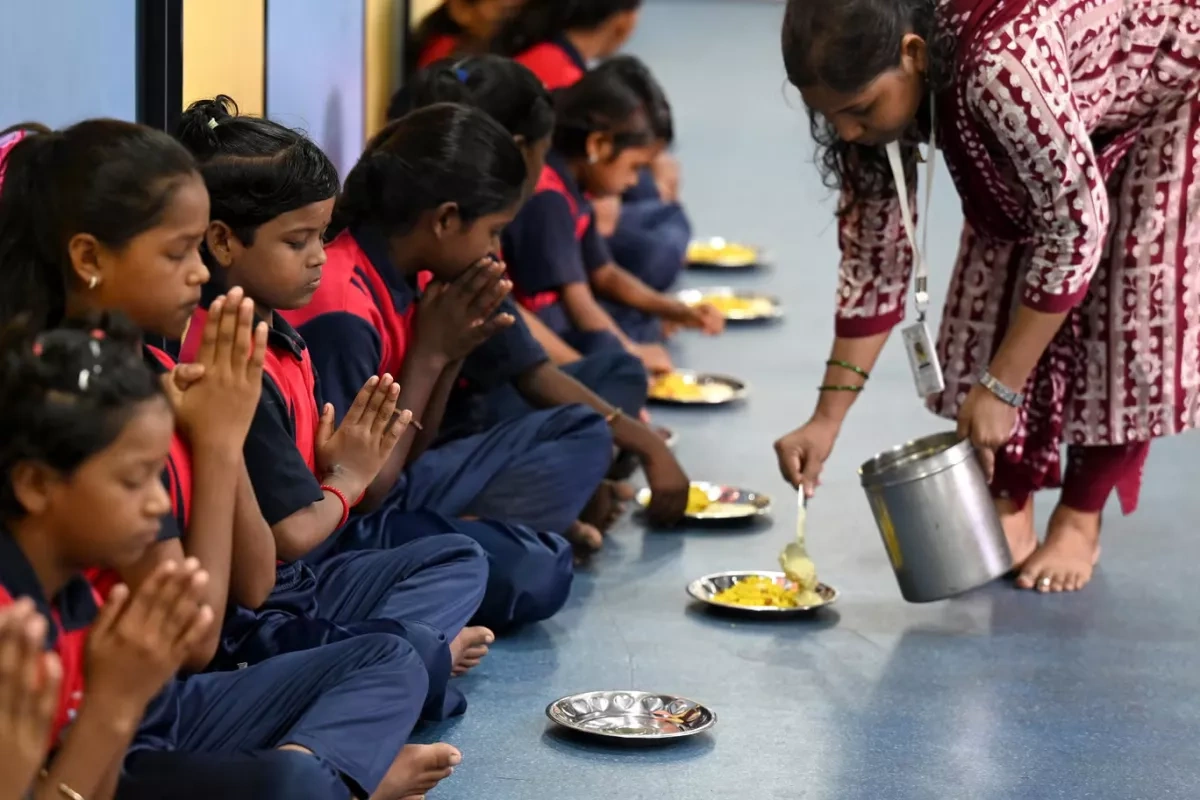
India is undergoing a significant demographic shift as its fertility rate falls below the replacement level for the first time, driven by changing social norms, rising education levels, and evolving attitudes toward marriage and parenthood, according to data cited in The Independent.
The country’s total fertility rate has dropped to 1.9 children per woman, below the 2.1 level required for population stability, marking a major transition for a nation long concerned with overpopulation.
Behind the figures are personal decisions that reflect broader social change. Sharon Michael, 36, is among a growing number of highly educated women choosing not to have children.
“Having kids was never a priority,” she says, adding that her health condition and career ambitions influenced her decision. “I do not see that lifestyle fitting in with a child specifically… I would not be doing justice to either.”
Michael’s experience reflects a wider shift in which motherhood is increasingly viewed as a choice rather than a social expectation. Earlier generations in India often followed a predictable
India’s demographic transformation is backed by national data. Fertility has declined sharply from 3.4 children per woman in the early 1990s to 1.9 today, according to government statistics. Infant mortality has also fallen, while women are marrying later and spending more years in education and employment.
Experts say these changes mirror global trends.
“India’s fertility decline is not a failure - it’s a sign of progress,” said Alicia García-Herrero, chief economist for Asia Pacific at Natixis. “As women gain education, economic options and decision-making power, they are choosing smaller families.”
She added that India continues to benefit from a large working-age population, though warned of long-term demographic challenges as birth rates remain low.
The shift is uneven across regions. Urban centres such as New Delhi report fertility rates as low as 1.2, while poorer states like Bihar remain higher at 2.9, reflecting differences in education, healthcare access, and women’s employment.
Sociologists say the transformation is being driven by multiple factors: rising female education, delayed marriage, improved healthcare, and the increasing cost — both financial and personal — of raising children.
“Higher levels of education, particularly among women, have played a key role,” said development economist Dipa Sinha.
The impact is also visible in changing attitudes toward family life. Some young adults say they no longer see parenthood as a default stage of life.
“I just don’t want to tie myself down to that kind of thing,” said 28-year-old Abhimanyu Sinha, who says more of his peers are expressing similar views.
For those who do choose to have children, decisions are becoming more carefully planned. Mumbai resident Akshita Gupta, a mother of one and expecting her second child, said financial and emotional stability were essential before starting a family.
“We both had our families… and a support system,” she said.
India entered its “demographic dividend” phase in 2005, when the working-age population began outnumbering dependents. That window is expected to last until around 2055, offering a potential economic advantage if employment and productivity keep pace.
However, economists warn of future challenges.
“The real challenge will come in 15 to 20 years with a shrinking workforce and rising elderly dependency,” García-Herrero said.
Governments across Asia have attempted to reverse falling birth rates with financial incentives, but with limited success.
“No Asian country has successfully reversed a low fertility rate despite massive spending,” García-Herrero noted, arguing that the issue is structural rather than purely economic.
By Sabina Mammadli