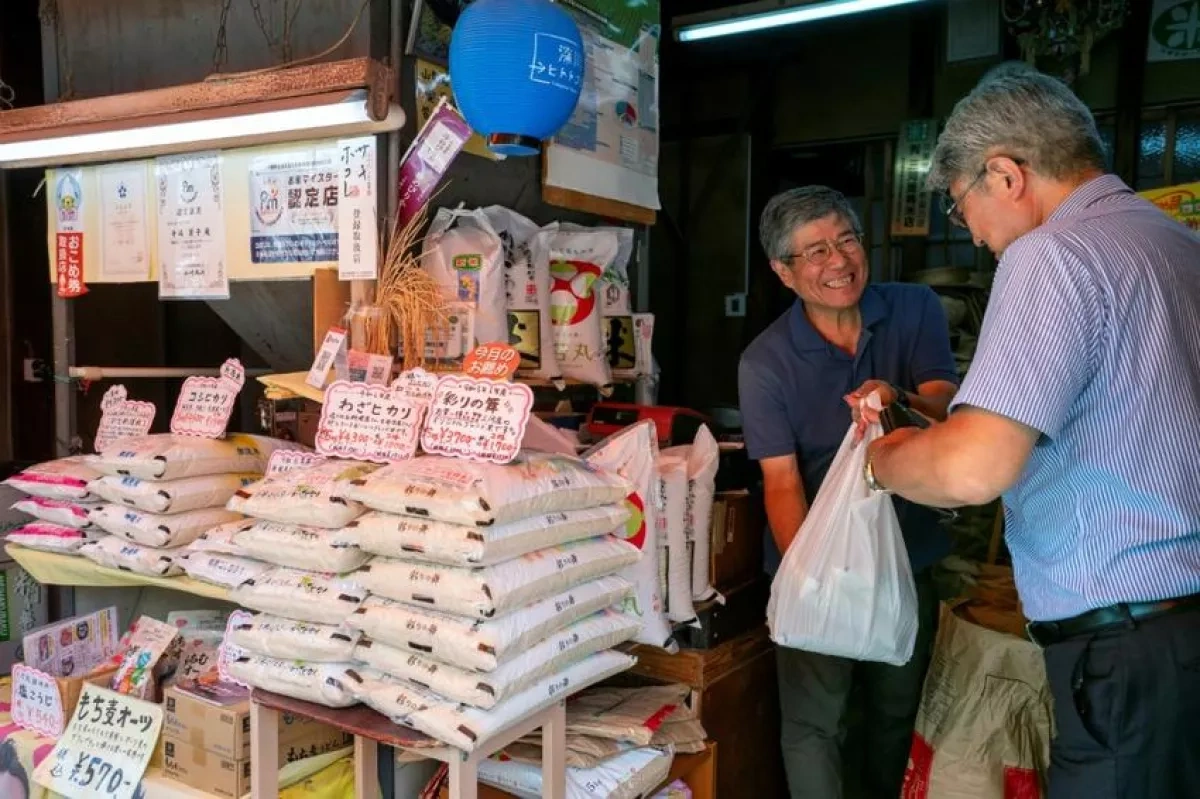
Rice prices in Japan fell in May for the first time in three and a half years, according to a government official, offering some relief after a prolonged surge in the cost of the country’s staple food.
An internal affairs ministry official told AFP that rice prices, excluding the premium koshihikari variety, were 5.4 percent lower in May compared with the same month a year earlier. This marks the first year-on-year decline since November 2022, according to Japan Today.
The drop follows a period of sharp price increases in 2024 and 2025, when Japan faced supply disruptions linked to a combination of extreme weather, market behaviour, and shifting consumption patterns. Analysts say a hot and dry summer in 2023 damaged harvests nationwide, contributing to reduced supply.
The situation was further complicated by reports of traders hoarding rice in anticipation of higher future prices, as well as panic-buying triggered by a government warning about a potential “megaquake” that ultimately did not occur.
At the same time, rising global food prices increased demand for domestic rice, while a record influx of tourists added pressure on consumption levels.
In response to the price spike, the government introduced measures aimed at stabilising the market, including the release of emergency rice stockpiles. The administration, now led by Prime Minister Sanae Takaichi, has faced political pressure over inflation and rising living costs.
The price surge had wider political consequences, contributing to voter dissatisfaction and weakening support for the ruling party. Former Prime Minister Shigeru Ishiba resigned in September after less than a year in office amid growing public frustration and related scandals.
Despite the recent decline, consumers say prices remain high. Tokyo resident Jun Hongo described the drop as helpful but insufficient.
“The other day... I saw a 10-kilogram bag of rice in the 4,000-yen [$25] range for the first time in a long time, so I grabbed it immediately,” he said. “But prices are still expensive compared with a few years ago. They keep blaming the so-called supply chain crunch, but I really wish they will investigate the root cause of all this and make sure prices will stabilise without another massive jump.”
By Sabina Mamamdli