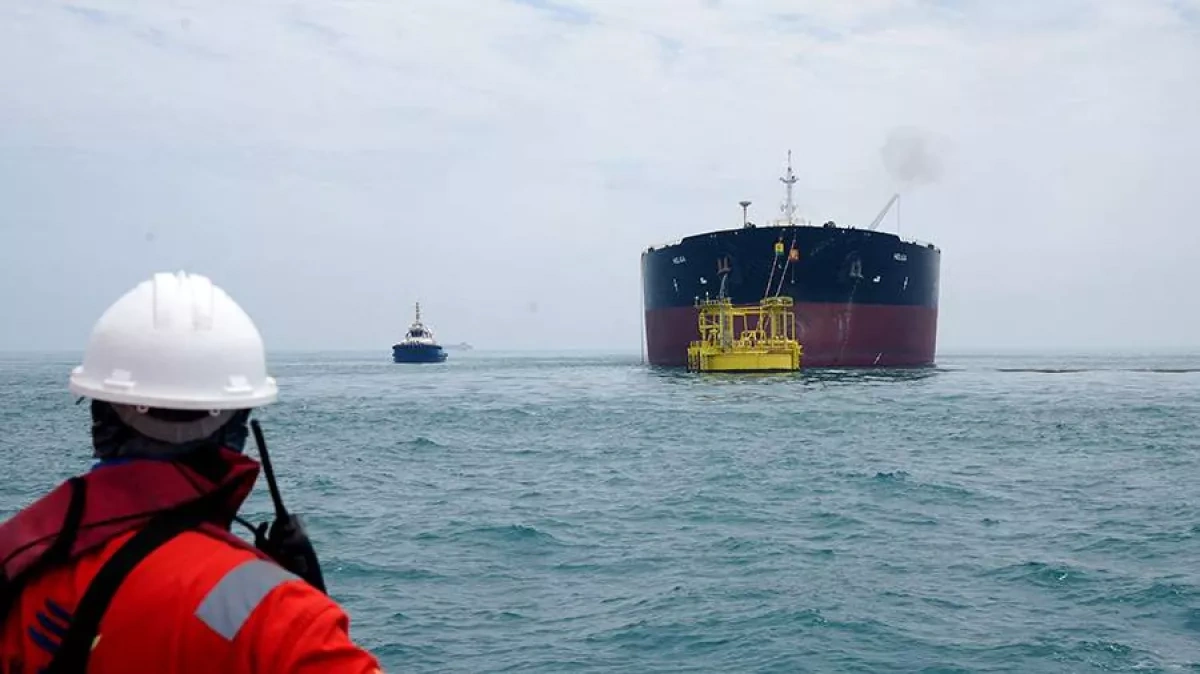
Three Saudi-flagged supertankers carrying a combined 6 million barrels of crude oil transited the Strait of Hormuz on June 18, hours after US President Donald Trump signed a memorandum of understanding with Iran aimed at ending the conflict that has disrupted global energy markets, Reuters reports.
The agreement, also signed by Iranian President Masoud Pezeshkian, entered into force two days earlier than expected. It calls for the immediate reopening of the Strait of Hormuz and the lifting of a US blockade on Iranian ports.
While shipping companies cautioned that restoring traffic through the strategic waterway to pre-war levels would take time due to safety concerns and the need for mine clearance, early signs suggested market confidence was returning. Vessels that had previously concealed their locations by switching off transponders resumed broadcasting their positions as they prepared to transit the strait. Brent crude futures fell a further 2% to below $78 per barrel, their lowest level since the conflict began.
The memorandum launches a 60-day negotiation period intended to produce a final settlement to the war initiated in February by Trump and Israeli Prime Minister Benjamin Netanyahu. However, Israel was excluded from the negotiations despite its military campaign in Lebanon against Hezbollah.
In a significant concession to Tehran, the agreement calls for the “permanent termination” of the conflict in Lebanon and guarantees for the country’s “territorial integrity and sovereignty.”
Nevertheless, fighting in Lebanon continued. Lebanese state media reported that three people were killed in Israeli airstrikes on the southern towns of Kfartebnit and Zebdine on Thursday, while Israeli drones were reportedly seen over Beirut.
Israeli officials have signaled no intention of withdrawing forces from southern Lebanon. A newly released military map showed an expanded Israeli-controlled buffer zone, while officials confirmed ongoing discussions with Washington regarding the future deployment of Israeli troops in the area.
The emerging disagreement over Lebanon has exposed a rare rift between Trump and Netanyahu. While Trump has increasingly criticized Israeli operations, Israel has insisted on maintaining military pressure against Hezbollah.
“Iran and the Americans are done. Fine. In Lebanon it's not over yet,” said Mohammed Doghman, a displaced resident of Nabatieh. “They should give us a final answer: has the war ended for good, or will we return to it again?”
By Vafa Guliyeva