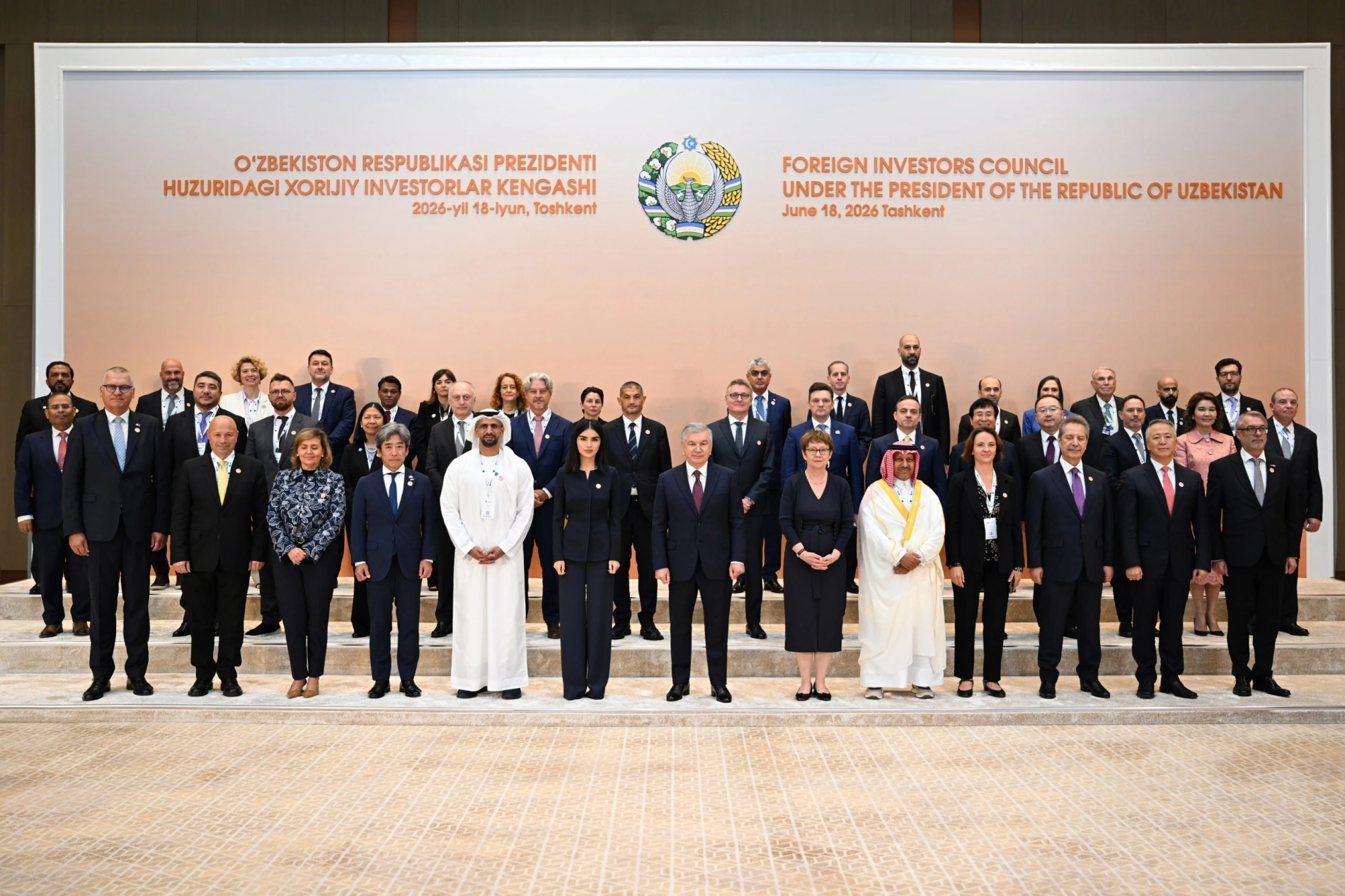
BAKU, Azerbaijan, June 18. Uzbek President
Shavkat Mirziyoyev chaired a plenary session of the Foreign
Investors Council to review progress on investment reforms and
discuss new initiatives.
This was reflected in the statement by the press service of the
Uzbek president, following the plenary session held on June 18 at
the International Congress Center in Tashkent, bringing together
senior executives from international companies, banks, financial
institutions, and global organizations.
Among the participants were European Bank for Reconstruction and
Development (EBRD) President Odile Renaud-Basso and representatives
of investor councils from Central Asia and the South Caucasus.
The session is aimed at attracting foreign capital, modernizing
the financial sector, and strengthening Uzbekistan's position as a
regional investment destination.
Addressing the gathering, Mirziyoyev said the council has
evolved into an important platform for advancing practical reforms
and strengthening cooperation between the government and the
international business community. The council, which now operates
as an independent association, includes 85 companies representing
23 sectors of Uzbekistan's economy.
The president highlighted regulatory reforms implemented with
input from council members, including amendments to the Tax Code,
streamlined financial reporting and regulatory procedures, and the
removal of several requirements for foreign companies using
international financial reporting standards.
Uzbekistan is also continuing efforts to align its legislation
with international practices. Authorities are preparing a law on
alternative investment funds, introducing responsible business
conduct standards, and harmonizing technical regulations with
global requirements. The country has also begun the process of
joining the OECD Declaration on International Investment and
Multinational Enterprises and plans to adopt a constitutional law
establishing the Tashkent International Financial Center.
"The activities of the Council's specialized working groups have
become more systematic. Over the past period, more than 50 meetings
have been held on issues related to financial market development,
the improvement of collateral legislation, responsible business
conduct, tax administration, energy, land administration,
professional training, and other areas of mutual interest to the
state and investors." Mirzyoyev noted.
Ahead of the latest session, international partners submitted
120 proposals that were consolidated into seven priority areas,
including investment climate reforms, taxation and cadastral
systems, banking and finance, corporate governance, energy,
artificial intelligence, and the digital economy.
The proposals also focused on further currency liberalization,
the introduction of modern financial instruments such as Islamic
insurance and green financing, development of the banking asset
market, and wider adoption of environmental, social, and governance
(ESG) principles.
Following the meeting, the government was instructed to
consolidate all recommendations into a unified roadmap with
specific implementation deadlines and monitoring mechanisms.
Officials overseeing Uzbekistan's investment agenda will provide
quarterly progress reports directly to the president.
The session concluded with thematic presentations, remarks from
council members, and a question-and-answer discussion.
The meeting highlights Uzbekistan's continued efforts to
position itself as one of the most investor-friendly markets in
Central Asia. The government's emphasis on regulatory
modernization, international financial standards, OECD integration,
and the planned Tashkent International Financial Center signals a
long-term strategy to attract higher levels of foreign capital. The
inclusion of emerging areas such as artificial intelligence, green
finance, and ESG standards suggests that Tashkent is increasingly
aligning its economic reforms with global investment trends while
seeking to sustain the momentum of its broader New Uzbekistan
reform agenda.