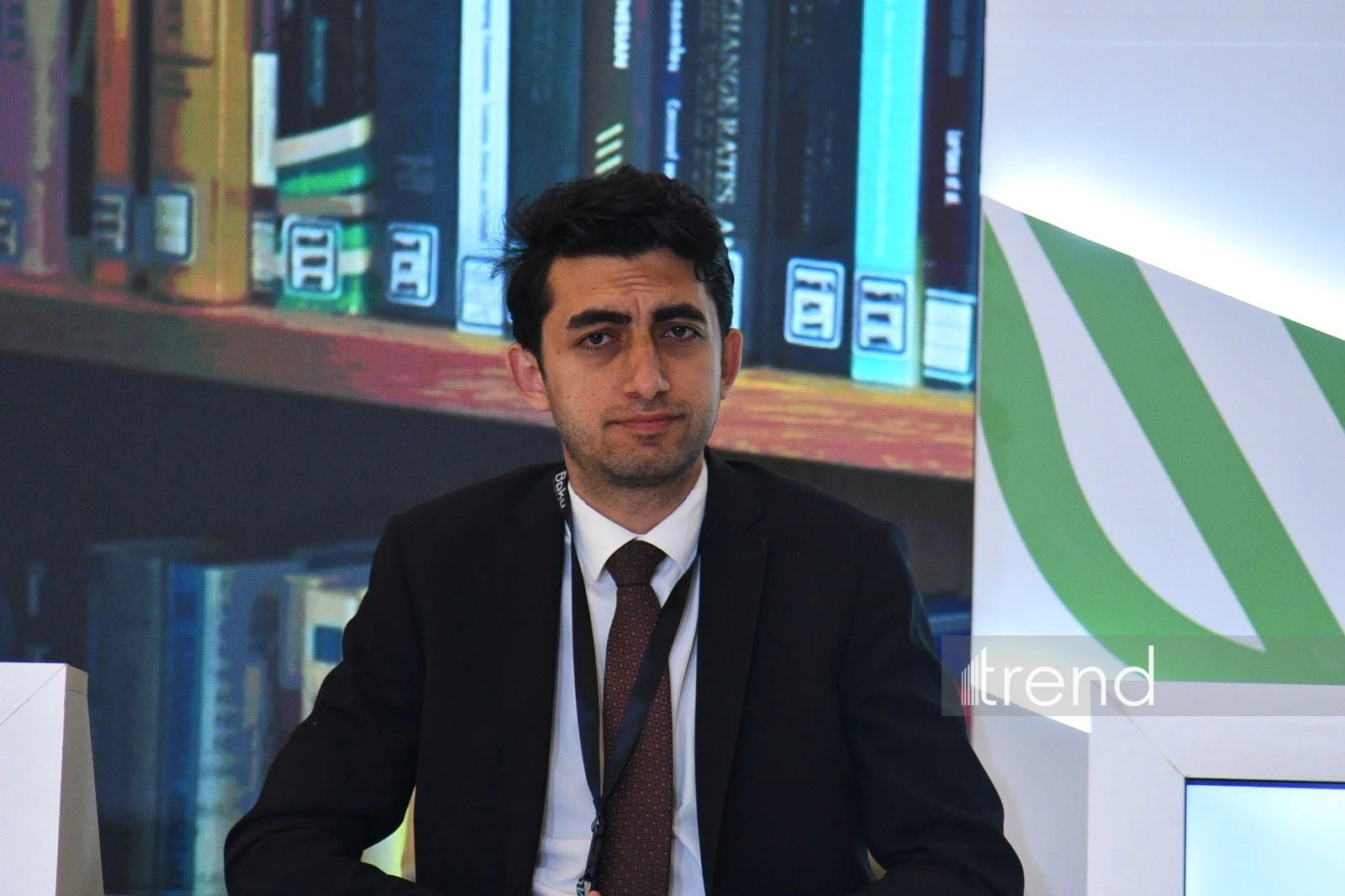
BAKU, Azerbaijan, June 17. Tax, insurance, and
monetary neutrality for Islamic financial instruments is ensured in
Azerbaijan as part of the development of Islamic banking, Executive
Director of the Central Bank of Azerbaijan (CBA), Shahin
Mahmudzade, said at the 14th Islamic Development Bank Group Private
Sector Forum, Trend's correspondent reports from the event.
He mentioned that the volume of sukuk issued in the country is
approximately $0.5 billion, while the volume of associated assets
is approximately $1.3 billion.
"I expect much higher figures in the future," Mahmudzade
emphasized.
He noted that a significant portion of these instruments is
attracted from foreign markets. According to him, research was
conducted during the introduction of Islamic finance in Azerbaijan,
the results of which showed high potential demand.
"About 80% of respondents stated the need for Islamic finance in
Azerbaijan," he explained.
Mahmudzade also informed that some respondents perceived Islamic
finance as charity.
"About 70% believed that banks provide funds free of charge and
do not require repayment," he noted.
He announced that this demonstrates the need to improve
financial literacy in this area. The CBA Executive Director
underscored that neutrality of conditions for both conventional and
Islamic banking was a key principle in developing legislative
amendments.
According to him, this refers to tax, insurance, and monetary
neutrality.
"Without tax neutrality, loans in Islamic finance become more
expensive," he said, adding that the relevant amendments have
already been introduced into the legislation.
He also noted the importance of ensuring neutrality in the
deposit insurance system, including approaches similar to the
takaful system. Mahmudzade said that the third key element is
monetary neutrality, including access to liquidity and central bank
instruments.
According to him, the absence of such mechanisms could reduce
the profitability of liquid assets in Islamic banks. He emphasized
that creating a level playing field will allow Islamic financial
instruments to compete with conventional ones.
"We have created these three levels of neutrality for Islamic
windows," he noted. Shahin Mahmudzadeh added that the industry's
development also depends on the financial sector's activity and
willingness to invest in infrastructure and professional
personnel.
He said that the CBA is ready to support the development of
Islamic finance if there is market demand.
"We are ready to support Islamic windows, but we must see demand
to move toward a fully-fledged Islamic banking sector," he
said.
Mahmudzade also pointed out that separate licensing and
infrastructure for Islamic banking may be developed in the
future.