BAKU, Azerbaijan, June 16. Transport corridors
reduce logistics costs as part of regional integration, enhancing
market access and creating high-yielding cross-border supply
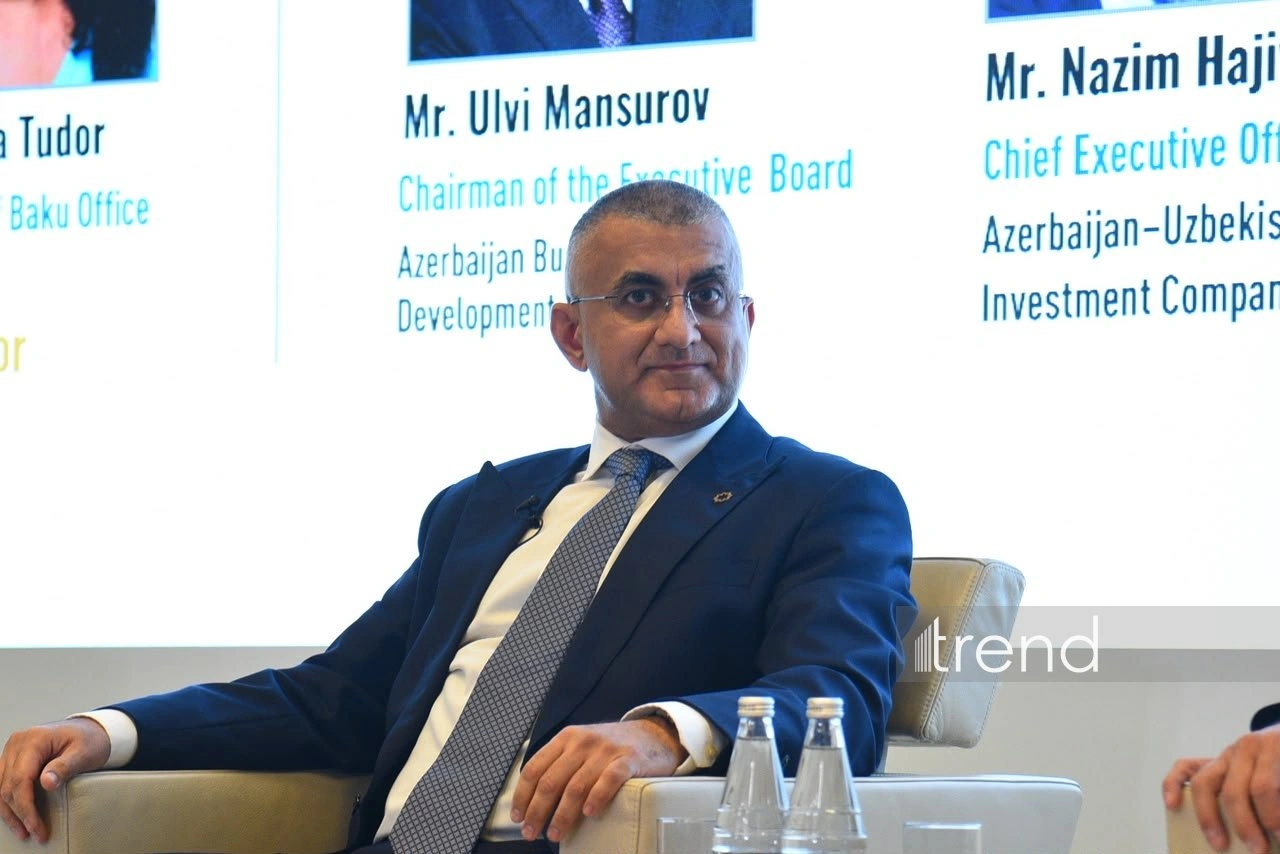
networks, Nazim Hajiyev, CEO of the Azerbaijan-Uzbekistan Joint
Investment Company, said, Trend's correspondent reports from the event.
He made the remark during the "Azerbaijan Investment Outlook
Forum 2026" event held as part of the Annual Meeting of the Islamic
Development Bank (IsDB) Group in Baku.
He noted that the modern approach to investment is no longer
limited solely to the attractiveness of a single country; instead,
the ability to access multiple markets through the same project has
come to the forefront. According to him, the primary question for
investors is no longer "is this country attractive?" but rather
"can this project serve several markets simultaneously and create
cross-border value?"
Nazim Hajiyev emphasized that a vital dynamic is being observed
in this direction within the region, particularly between the
Caucasus and Central Asia.
"Azerbaijan and Uzbekistan serve as an excellent example in this
regard: while both countries offer extensive investment
opportunities individually, together they generate substantial
added value through industrial cooperation and trade-investment
ties. This model practically demonstrates that '1+1 is not just 2,
it is 2.5'—meaning that cooperation creates a synergistic effect
that leads to far higher results," he stated.
He noted that regional integration primarily serves the
development of investment-attractive, cross-border projects, and
the ultimate goal for investors is the implementation of successful
ventures. According to him, regional cooperation makes investment
projects much more competitive.
Hajiyev emphasized that transport corridors are one of the most
typical examples of this dynamic.
"Such projects reduce logistics costs while allowing companies
easier and cheaper access to the markets of several countries. As a
result of this process, projects are being shaped in the region
where raw materials are sourced from one country, manufacturing is
carried out in another, and the finished product is distributed
across the entire region. These kinds of projects attract more
investors because they do not depend on a single country, and
realizing these opportunities would be impossible without the
advantages provided by regional integration," he said.